

Last week, the annual meeting of the National Leadership Council of the American Baptist Churches USA took place in Atlanta under the theme, “Claim, Distinguish and Proclaim the Markers of American Baptists.” That should be considered a big deal for such a time as this in America.
There are moments in the life of a nation when silence becomes a decision. There also are moments in the life of the church when caution becomes cowardice. I fear we are approaching both.
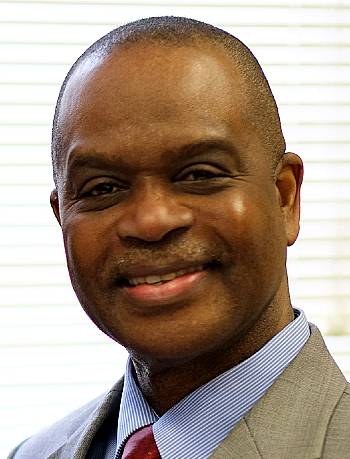
Michael Friday
Both must be met with a robust reclamation of pure Baptist markers and their energetic proclamation and execution via a lifestyle that must be Christian first and American after, but only if the latter conforms with the former.
For generations, Americans have spoken “liberty and justice for all” with something close to reverence. Baptists especially should tremble before those words, because our own story is rooted in conscience, dissent and freedom from coercive power. We are heirs of women and men who understood that no king, parliament, president, court, party, bishop or preacher owns the human conscience.
“We are heirs of women and men who understood that no king, parliament, president, court, party, bishop or preacher owns the human conscience.”
Baptist identity, distinctives, tenets and markers matter now more than ever. It is not nostalgia or denominational vanity. To be Baptist, at our best, is to stand within a Spirit-led tradition that insisted upon fragile freedoms when those freedoms were unpopular, inconvenient or even dangerous.
Walter Shurden named them well: Soul freedom, the freedom of every person to relate to God without religious coercion; Bible freedom, the freedom and responsibility of believers to read Scripture under the Holy Spirit; church freedom, the freedom of local congregations under Christ; and religious freedom, the freedom of all people to practice any religion or no religion without the state’s domination.
Since Baptists were born almost 17 decades before America, and since no Founding Father was Baptist, it is mere coincidence — but a most significant one — that freedoms are not only Baptist treasures; they are essential to any American claim of liberty and justice for all.
When Americans who are Baptists are found faithful to their theological moorings, they would be champions of the First Amendment. Other Baptists in America may speak for themselves; but American Baptists (the “denomination”) hold — not without occasional internal challenge — to this position faithfully.
Salvation and social justice
As well, American Baptists’ theology of salvation is not limited to the individual, their soul and heaven. It is, instead, extended to the community, their society, and their world. Any images of “social gospel” or “social justice” as some “liberal” scourge should be tempered with the question: What true justice is not also salvific or is not also God’s justice? The operative word is “true,” since what continues to pass for justice in America today is frequently selective and partial, and often unfriendly and unfair.
“What continues to pass for justice in America today is frequently selective and partial, and often unfriendly and fair.”
The mention of “social justice” invokes politics — and partisan politics too — in some people’s minds. But consider Thomas Helwys, when he defied state religion, or Walter Rauschenbusch, when he spoke of social salvation, or Martin King Jr., when he challenged segregation, or Fannie Lou Hamer, when she demanded voting rights. Were they all doing politics, or calling for “justice (to) roll down like rivers?”
When prophetic pastors insist Jesus cares not only about souls bound for heaven but bodies crushed on earth by the powerful, the greedy, the hateful, the racist and the liars, should not deeper thinkers hear the Holy Spirit speaking instead of a politician?
Our time requires such truth again.
Public cruelty is being normalized. Truth is treated as tribal property. Corruption and self-enrichment in public life are excused if they serve the preferred side. Litigation, settlements and public power can appear, to many citizens, less like justice than like mechanisms by which the powerful protect themselves and reach into what belongs to the people. Voting protections are weakened while legal machinery burdens minority communities. Immigration enforcement too often treats human beings as disposable. Oversight is resisted. Accountability is mocked. Shame collapses. And too many Christians resile rather than resist.
The church must examine itself. Too many believers tolerate in political leaders immoral conduct they never would accept from pastors, deacons, Sunday school teachers or their own children. Some justify that by making abortion and LGBTQ issues, in particular — both arguably issues of liberty and freedom! — sufficient reason to embrace habitual dishonesty, contempt for the weak, humiliation of enemies, greed without embarrassment, cruelty without repentance and power without humility.
True religious liberty
But what kind of religious liberty survives when democracy decays or when I impose my religious position upon everyone else, selfishly claiming “my” values?
“What kind of religious liberty survives when I impose my religious position upon everyone else?”
Baptists should be among the first to ask that question. We should know better than to bless Barabbas while claiming Jesus, or to render to Caesar what is Christ’s, or to appear on TV to invite people to confess their sins and pray a “salvation prayer” while baptizing a cruel, callous and unrepentant Caesar in anointing oil.
If the Baptist name becomes a cloak for nationalism, cruelty, racial resentment, greed or authoritarian appetite, then we have betrayed a spiritual inheritance.
The church, and especially the Baptist church, must recover its vocation as moral witness rather than political mascot. We need congregations that can defend human dignity without surrendering biblical conviction, and Baptist associations that remember association is neither bureaucracy nor uniformity but shared witness.
I was born into a Baptist family in a country whose Baptist witness was started just after the war of 1812 by Black people, formerly enslaved in America, then enlisted (with the British Army) then emancipated (as the fulfillment of a promise if they fought with the British). Don’t hold that against them — or me! See it as resistance to injustice and the delay of the promise of “liberty and justice for all.”
My seminary training, as well as more than a quarter of my ministry, were then in another country whose Baptist witness was started by a black man who paid for his freedom to escape America — again, resisting injustice and seeking liberty and justice elsewhere, since promised and withheld in America.
Now, here in America the last quarter of a century, I am at home among American Baptists not because we are perfect, but because we are persistent. I was proud to gather with American Baptist Churches USA leaders last week, claiming, distinguishing and proclaiming the markers of American Baptists. That work is urgent because many people have grown weary of denominations, and many enter Baptist churches without ever learning why Baptist freedom matters. Baptists must address this; for not doing so is as dangerous to the faith as not understanding what the true tenets of being American is dangerous to American democracy.
All Baptists in America must become curious again about who we are supposed to be.
The American Baptist tradition has given this nation some of its deepest language for conscience, liberty and dissent. We must not hide that inheritance. All Baptists in America must become curious again about who we are supposed to be.
America’s promise is imperiled. Christian credibility is imperiled. Baptist identity is urgently needed. Now is the time to claim it, distinguish it and proclaim it, not for denominational pride, but for the sake of the gospel, the nation and all who still hunger for liberty and justice for all.
Michael Friday serves as executive minister of the American Baptist Churches of Greater Indianapolis and is author of the book And Lead Us Not Into Dysfunction: the Good, the Bad, and the Ugly, of Church institutions and Their Leaders. He has served Baptists in Trinidad and Tobago, Jamaica, and the USA.