


On Sunday mornings across America, many Black pastors stand behind pulpits carrying far more than sermon notes.
Some are preaching only days after burying another teenager lost to gun violence. Some are trying to comfort congregations anxious about layoffs, housing insecurity, political hostility, public violence or the growing fear that democracy itself is becoming increasingly unstable. Some quietly sit alone in church offices late at night after everyone else has gone home, trying to gather enough spiritual strength to preach hope into communities exhausted by grief.
And then they are expected to preach as though their own souls are untouched by the weight of it all.
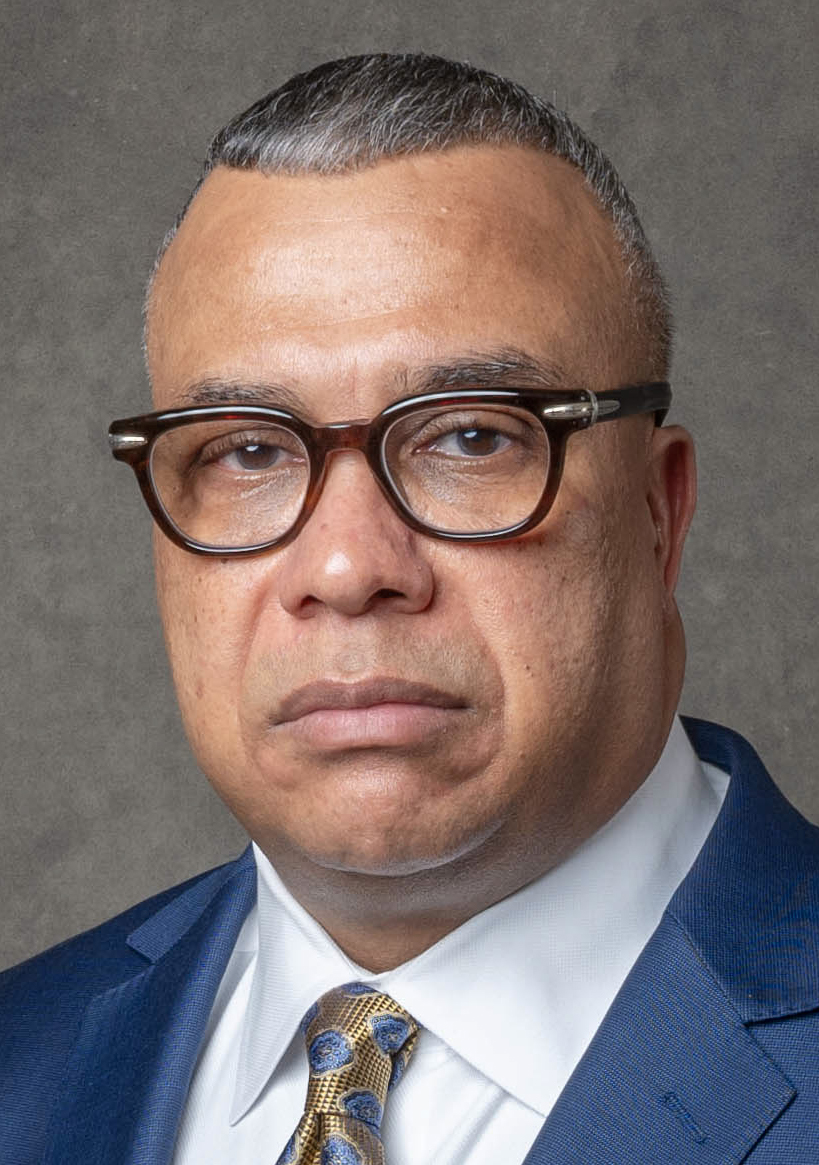
Paris Lee Smith Sr.
After more than 40 years of observation, participation, ministry engagement and close work alongside pastors and congregations, I have watched Black clergy carry both congregational grief and national anxiety simultaneously. I have watched pastors absorb the emotional shockwaves of social collapse while still being expected to function as steady moral anchors for communities under relentless pressure.
Having served as a senior pastor for nearly a decade, I have come to understand that much of this burden remains invisible to the broader public — even while communities depend upon it for survival.
There is a particular exhaustion settling over many Black pastors that cannot be explained merely by long hours, shrinking budgets, political division or post-pandemic ministry fatigue. It is a deeper exhaustion born from carrying the unresolved moral contradictions of a nation while simultaneously trying to shepherd people toward faith, dignity and survival.
Black Church as sanctuary
For generations, the Black Church has functioned as far more than a worshiping institution. It has been sanctuary and strategy room, prayer meeting and political classroom, counseling center and survival network, theological incubator and democratic stabilizer. In moments when America’s conscience fractures, the Black pulpit is repeatedly summoned to provide language capable of holding communities together.
Yet the nation that regularly depends upon Black moral leadership rarely has demonstrated a sustained commitment to protecting the institutions and leaders carrying that burden.
Many Black pastors are tired.
Tired of preaching dignity in systems organized around disposability.
Tired of officiating funerals produced by social neglect while hearing politicians debate whether justice itself has become “too political.”
Tired of helping communities survive democratic instability while churches increasingly reward branding, celebrity, visibility and ideological tribalism over courage, discipleship and truth-telling.
“This fatigue is not merely emotional. It is theological.”
Tired of carrying public grief while privately navigating their own exhaustion.
This fatigue is not merely emotional. It is theological.
Black Church as emergency moral infrastructure
In periods of democratic unraveling, societies instinctively search for institutions capable of preserving moral language. Historically, the Black Church repeatedly has been forced into that role — not because America fully honored the Black Church, but because America repeatedly failed to live up to its own democratic promises.
The Black Church often functions as the nation’s emergency moral infrastructure.
When political institutions lost credibility, Black churches organized hope.
When schools failed, Black congregations educated children.
When neighborhoods were abandoned, churches stabilized communities.
When public language collapsed beneath racism, segregation, violence and economic exploitation, Black preaching insisted that oppressed people still bore the image of God.
That labor always has come with a cost.
An impossible tension
For many Black pastors, ministry now requires navigating an almost impossible tension. Congregations arrive each week carrying the emotional consequences of a society unraveling in real time: Mass shootings, racial violence, attacks on voting rights, educational censorship, economic insecurity, loneliness, political extremism and the erosion of public trust. Pastors are expected to absorb all of it while remaining spiritually composed enough to preach hope every Sunday morning.
“Pastors are expected to absorb all of it while remaining spiritually composed enough to preach hope every Sunday morning.”
The burden is enormous.
Many Black clergy now function simultaneously as theologians, therapists, administrators, organizers, crisis managers, social commentators, fundraisers, livestream hosts and public moral interpreters. Churches that once operated primarily as places of worship increasingly find themselves serving as stabilizing institutions within communities struggling to survive overlapping social, political, economic and spiritual crises.
And still, much of American Christianity remains uncomfortable with the very prophetic witness it publicly celebrates.
Frederick Douglass warned about this contradiction long ago. He understood the greatest threat to Christianity was not unbelief alone but moral silence masquerading as religious faithfulness. He recognized the danger of churches capable of preserving religious ceremony while becoming spiritually adjusted to injustice.
His warning still echoes because too much of American Christianity has mastered the performance of conviction while abandoning the discipline of moral courage.
Churches often celebrate prophetic language historically while resisting prophetic accountability contemporarily. The language of justice is welcomed when attached to the memory of the Civil Rights Movement but treated as divisive when applied to present realities involving voter suppression, racial inequity, poverty, educational inequality, democratic erosion or economic exploitation.
“Churches often celebrate prophetic language historically while resisting prophetic accountability contemporarily.”
Too many churches now confuse partisan intensity with spiritual authority.
Too many pulpits confuse visibility with discipleship.
Too many Christians mistake outrage for prophecy while remaining unwilling to confront the systems producing human suffering in the first place.
The contradiction is devastating.
The Black Church is repeatedly expected to help stabilize the moral conscience of a democracy that significant portions of American Christianity have helped destabilize through nationalism, racial silence, historical amnesia, political idolatry and theological complacency.
A discipleship crisis
That is not merely a political crisis. It is a discipleship crisis.
But prophetic ministry is not the performance of anger. It is the disciplined spiritual labor of carrying communal grief without surrendering moral clarity.
It is the painful work of exposing contradiction while still calling people toward redemption. It is standing inside the tension between despair and hope without allowing cynicism or sentimentality to win. It is telling the truth about suffering while refusing to abandon the possibility of transformation.
That work is exhausting.
And the Black Church itself is not immune from the pressures of exhaustion, institutional decline, performance culture or celebrity-driven ministry models. Black pastors are human. They experience burnout, discouragement, loneliness, financial strain and spiritual fatigue like everyone else. Yet unlike many institutions in American public life, Black churches are still expected to absorb civic trauma while simultaneously providing moral stability for communities under relentless pressure.
“Black churches are still expected to absorb civic trauma while simultaneously providing moral stability for communities under relentless pressure.”
America has grown accustomed to consuming Black prophetic resilience without seriously confronting Black prophetic exhaustion. We quote Martin Luther King Jr. during national holidays while resisting the structural changes his moral witness demanded. We celebrate the courage of the Civil Rights Movement in retrospect while remaining hesitant to support contemporary forms of prophetic truth-saying that challenge political comfort, racial hierarchy, economic inequality or ecclesial complacency.
Celebration without repentance
Celebration without structural repentance becomes another form of extraction. The nation continues drawing from a moral reservoir it refuses to replenish.
This reality raises difficult questions for the broader church. How long can Black churches continue functioning as America’s emergency moral infrastructure while receiving inadequate institutional support? How long can Black pastors continue carrying disproportionate civic, emotional and spiritual burdens while the larger church remains consumed by culture wars, celebrity performance, political polarization and institutional decline?
The future of American Christianity may depend upon whether the broader church can finally learn to hear Black prophetic witness not merely as inspiration during moments of national crisis, but as theological guidance for how to survive one.
Because the Black Church never has simply been protesting injustice. It has been preserving the possibility of human dignity within systems organized to deny it.
And despite exhaustion, many Black pastors continue preaching.
Not because the burden is light.
Not because democracy is stable.
Not because the church has fully awakened to its own contradictions.
But because beneath the exhaustion remains a stubborn theological conviction that truth still matters, people still matter and justice still belongs to the heart of the gospel.
America cannot continue demanding prophetic witness from Black churches while refusing the moral transformation Black prophetic witness requires.
Eventually every democracy must decide whether prophetic truth will remain ceremonial language recited during moments of crisis or become the foundation for genuine repentance, repair and public transformation.
The tragedy is not simply that Black pastors are weary.
The deeper tragedy is that the nation still depends upon the very moral labor it consistently refuses to sustain.
Paris Lee Smith Sr. is a public theologian, pastor and founder of Justice Scholars Society. He is a Ph.D. student in public theology and community engagement at Hampton University School of Religion and writes on democracy, public conscience, ecclesial leadership, institutional crisis and Black prophetic traditions.