

A new film that reframes the pivotal lead-up to D-Day as a character study amid a high-stakes strategic dispute speaks to current events, illuminating how inconvenient truths clash with modern political rhetoric.
Premiering last weekend at No. 7 on the box-office charts, World War II drama Pressure stars Brendan Fraser as General Dwight “Ike” Eisenhower and Andrew Scott as unconventional Scottish meteorologist James Stagg. His series of weather forecasts — “Go, or no go?” Ike asked repeatedly — informed the largest amphibious landing in the history of humankind.
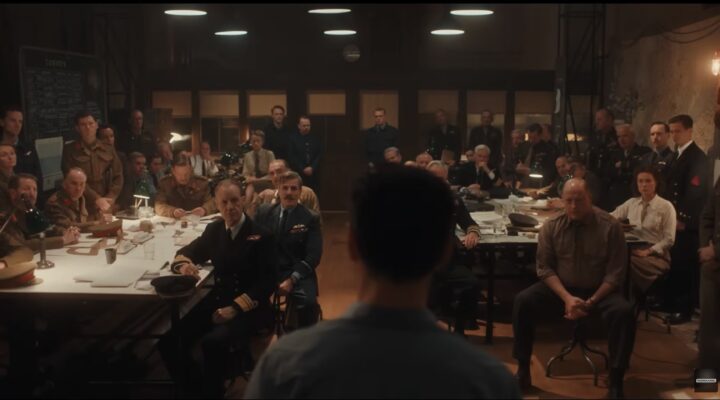
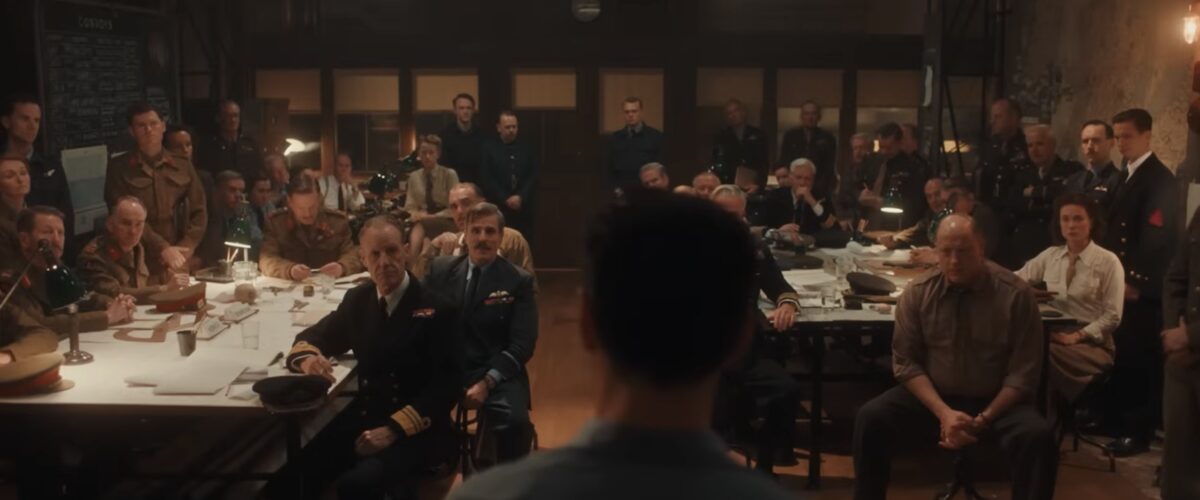
The film ratchets up tension not through warfare spectacle but by revealing the debate over Stagg’s consequential predictions, which went against his peers and every top general’s desired course of action.
Pressure is worth seeing not simply because it’s an edge-of-your-seat thriller with an award-winning cast that expends significant effort to get historical details right. This grand-scale film reveals why small details matter in life and leadership.
Leaders see the big picture
Eisenhower carried the weight of leading an invasion force of more than 11,500 aircraft and 6,900 vessels, from which an estimated 800,000 troops would ultimately land on the Normandy coast in that weeks-long operation.
“The troops, the air and the Navy did all that Bravery and devotion to duty could do. If any blame or fault attaches to the attempt it is mine alone.”
In advance of D-Day, Ike wrote two differing statements giving his response to how it went. If a success, he credited the troops. If it failed, he took the blame. “The troops, the air and the Navy did all that Bravery and devotion to duty could do. If any blame or fault attaches to the attempt it is mine alone,” Eisenhower wrote.
Underlining the cost of war to countless families, the film opens with the horrifying aftermath of Exercise Tiger, an attempt to prepare the multi-national troops for D-Day. Due to cascading errors involving different radio frequencies and poor preparation, 639 men died in the large-scale practice run, some by artillery fire and others from hypothermia.
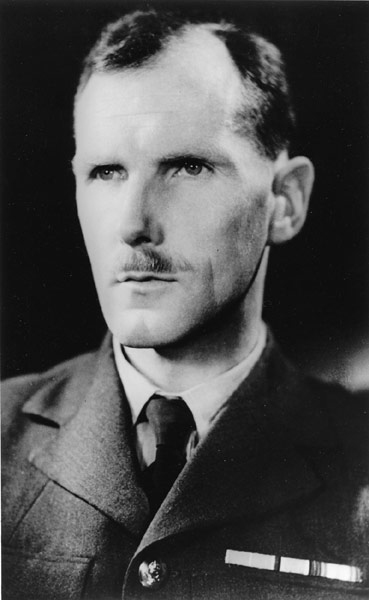
James Stagg
Into this tense environment walked Stagg, a lifelong student of weather patterns who saw bigger realities that other trusted figures in his field missed. “How can the weather be boring?” he asks at one point in the film. “It feeds us. The weather can destroy us. It controls our daily life. I don’t think that’s boring.”
Montages show how observations of wind speed, temperature and other data come in on remote stations and from weather balloons out over the sea, informing hand-drawn charts that were analyzed by Stagg then taken to the war room.
“Get me the data — that’s what counts,” Stagg said.
Scott portrays Stagg, processing reams of data manually, as almost aloof. “He’s not particularly charming or likeable, but that doesn’t mean that he isn’t extraordinarily gifted,” said the actor.
Leaders can take the hard truths
Only recently named Supreme Allied Commander prior to D-Day, Eisenhower had to contend with the egos of decorated military leaders such as British General Bernard “Monty” Montgomery, played by Damian Lewis (Band of Brothers) in the film.
Named group captain of the Allies’ meteorological unit yet without combat experience, Stagg had to face down a war room of powerful generals. In light of thousands of lives at stake, he told them about two powerful storm systems colliding that would be “hell on earth” if D-Day proceeded as initially planned.
Yet Ike’s longtime forecaster Irving Krick, who relied on statistical forecasting, assured the generals conditions would be clear. By pulling charts from past years and assuming the same conditions led to similar outcomes, Krick had been “right” in advance of battles on the African continent.
Knowing unpredictable Northern European weather patterns, Stagg minces no words in criticizing the American forecaster: “He’s selecting the data that suits him and ignoring the rest. We must face the facts — the facts! — however frightening they may be.”
In a decision that proved critical to defeating the Nazi regime, Eisenhower decided to trust Stagg and delay the D-Day invasion.
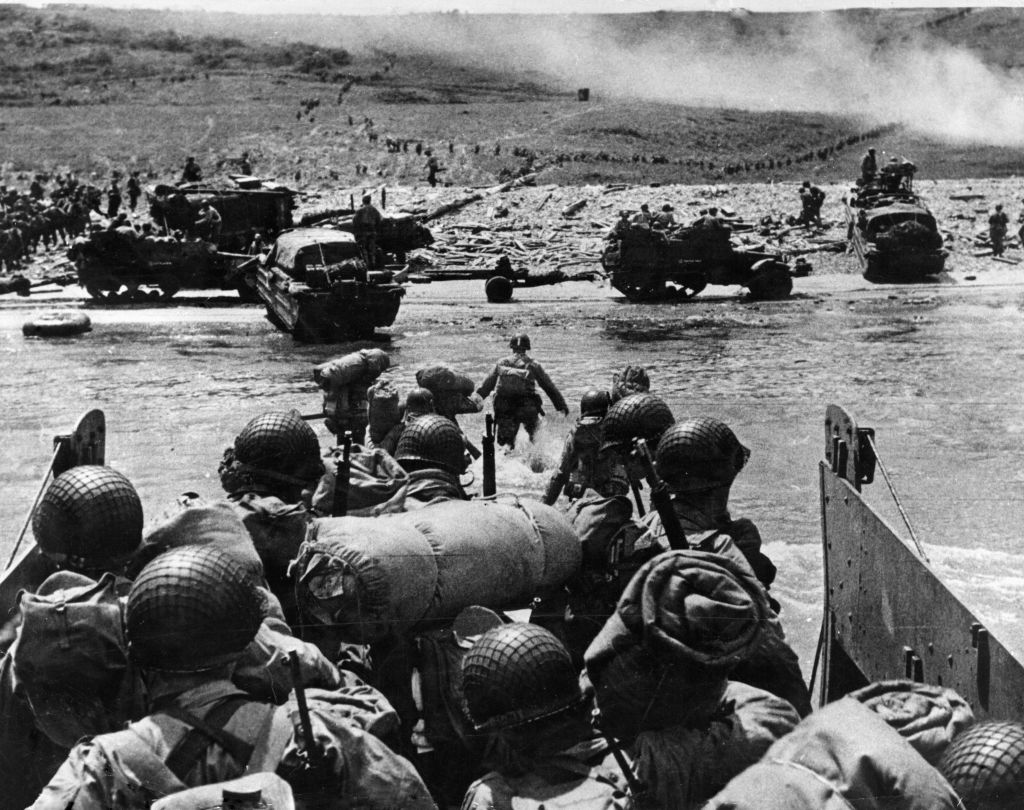
The U.S. troops landing in Normandy, in the area with the code name Omaha Beach. Normandy, 6 July 1944 (Photo by Mondadori via Getty Images)
“So often people just tell leaders what they want to hear,” said Ron Halpern, executive producer of Pressure and former producer at CBS News. “Here was Stagg telling the great General Eisenhower and Monty what they did not want to hear. That takes real guts.”
A contrast with current leadership
The film’s central theme has relevance in the current election season. A tendency to confirm assumptions rather than challenge them can be seen across the ideological spectrum. One role of responsible citizens is to call out the blind spots of those in power.
Consider how Deputy White House Chief of Staff Stephen Miller recently claimed, “Democrats have set up a system to funnel hundreds of billions and ultimately trillions of dollars to migrants that are in our country, oftentimes from places like Somalia.”
Apart from the partisan spin, best estimates of “waste, fraud and abuse” from the Government Accountability Office reveal Miller is overstating his claims by at least a multiple of five — if all supposed fraud was found. It may play for applause at a political rally but it’s not factual.
Beyond debates over transparency and freedom of the press, the second Trump administration has shown little tolerance for dissent within its own ranks. The pattern has been to push out truth-tellers.

Michelle King
Michelle King, who had worked at the Social Security Administration for 30 years, served less than a month as the Trump-appointed acting commissioner of SSA when DOGE staffers sought access to sensitive data of recipients. She refused to comply and was fired.
On the same day Bureau of Labor Statistics commissioner Erika McEntarfer reported that hiring had slowed in the U.S. economy, she was fired in an announcement made by President Trump on his Truth Social platform. “In my opinion, today’s Jobs Numbers were RIGGED in order to make the Republicans, and ME, look bad,” Trump posted.
Strangely, considering the supposed push for government efficiency and rooting out fraud, many experts on auditing the federal budget and finding where to cut were fired during Trump’s first week in office. The role of inspectors general remains understaffed and underutilized.
Former Centers for Disease Control and Prevention Director Susan Monarez, who earned her Ph.D. in microbiology and immunology, was fired after disagreeing with HHS Secretary Robert F. Kennedy’s firing of CDC science experts and his revised recommendations for vaccines.
“He just wanted blanket approval,” Monarez later told a congressional hearing. “Even under pressure, I could not replace evidence with ideology.”
The courage of humility
The team behind Pressure has avoided contemporary political parallels, while hinting about the current relevance of the film’s historical narrative.
“This is a story exploring a different type of heroism — of people speaking truth to power, of having the courage to stand by their convictions, and of the importance of rational thought in times of extreme pressure.”
“This is a story exploring a different type of heroism,” said director Anthony Maras. “Of people speaking truth to power, of having the courage to stand by their convictions, and of the importance of rational thought in times of extreme pressure. I felt it was a story we needed.”
Such remarkable true events prompt the question: Is leadership defined merely by confidence and charisma? Instead, the examples of Eisenhower and Stagg reveal effective leaders are humble, willing to acknowledge when the facts point somewhere unexpected.
Stagg was not the most powerful or popular man in the room. He offered no inspiring speeches and possessed little political skill. His value came from a commitment to reality — “Get me the data” — even when his informed analysis threatened the plans of generals.
Facts do not become less true because they are inconvenient, and the consequences of ignoring them do not become less severe.
Healthy governance of a nation, a church or any institution depends on people willing to speak uncomfortable truths and leaders willing to hear them.
Josh Shepherd is a journalist, editor and communications professional who writes on faith, culture and public policy. His articles have appeared in media outlets including The Roys Report, Christianity Today and Family Theater Productions. He and his family live in Central Florida.