


A nation’s birthday should reveal what it values most.
As America approaches its 250th anniversary, I find myself reflecting less on fireworks and celebrations and more on the meaning of freedom itself. That reflection has led me to a personal decision: I will not be purchasing or supporting the UFC Freedom 250 pay-per-view event associated with the White House celebration.
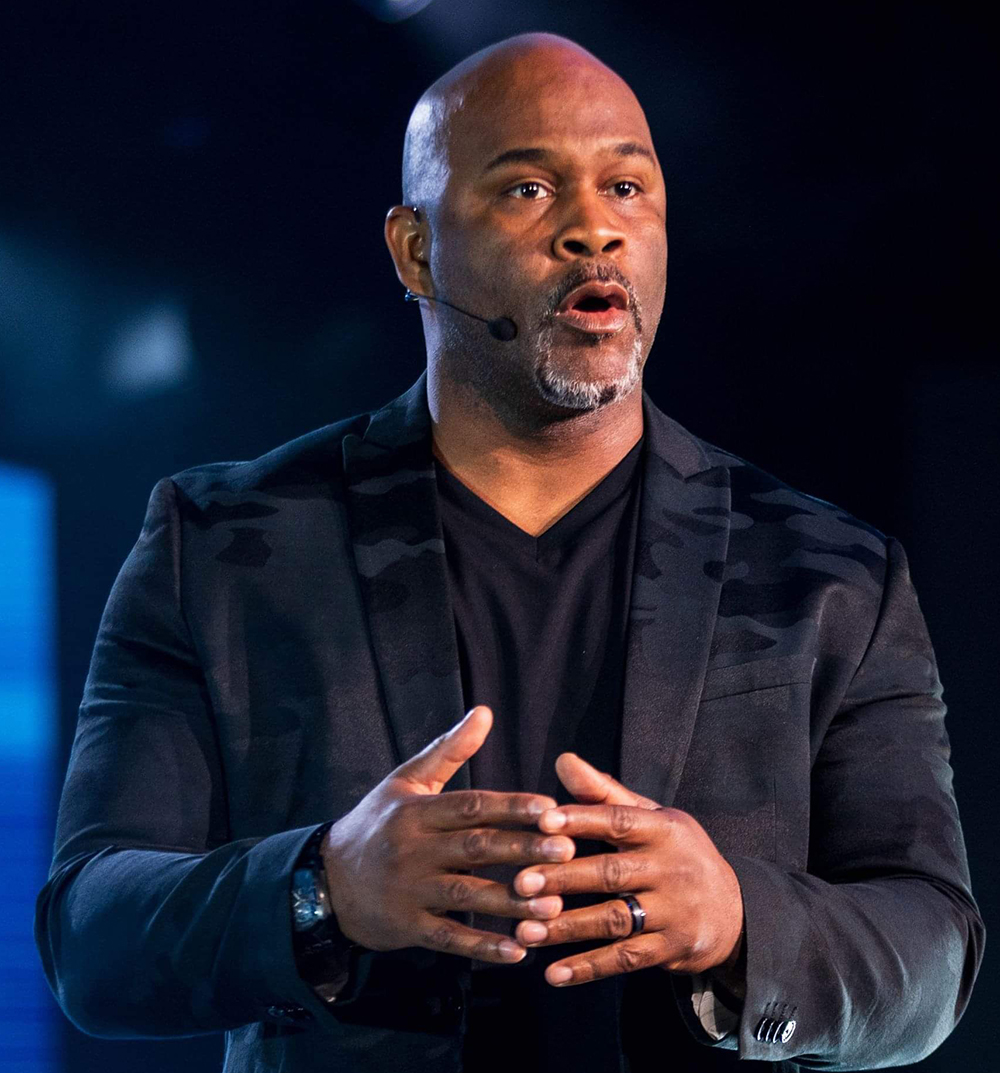
Edmond W. Davis
My decision is not about the athletes. It is not about sports. And it is not about the millions of Americans who enjoy mixed martial arts. My concern is about symbolism, priorities and the contradictions embedded within the language of freedom.
If we are going to celebrate 250 years of the United States, we should begin with historical honesty. The nation was founded in 1776, proclaiming liberty while simultaneously permitting slavery. For generations, millions of African Americans lived under bondage, followed by nearly a century of Jim Crow segregation, voter suppression, racial violence, and legal discrimination.
The modern Voting Rights Act of 1965 means millions of Americans alive today remember a period when equal voting rights were not fully protected in practice for all citizens.
That history matters because freedom is not merely a slogan. It is a promise. As debates surrounding voting rights, representation, redistricting and gerrymandering continue across portions of the South and the nation as a whole, I find it difficult to embrace a celebration of “Freedom 250” centered around a combat sports spectacle on the White House lawn.
“I find it difficult to embrace a celebration of ‘Freedom 250’ centered around a combat sports spectacle on the White House lawn.”
If this is Donald Trump’s birthday gift to himself, why not Mar-a-Lago or any of his Trump properties? Who advised this? More importantly, who advised against this?
Freedom should mean more than entertainment, as that’s all African Americans were given — freedom to entertain, fight and work — while voting, education, housing and the basic American necessities, like casting a ballot, have been a realty for only 60-plus years. Freedom should mean access to quality education.
Freedom should mean meaningful representation. Freedom should mean economic opportunity and equity. Freedom should mean affordable health care. Freedom should mean that citizenship carries greater value than spectatorship.
According to Forbes, and several other reports, premium VIP packages connected to the event have been marketed at about $1.5 million per package. These appear aimed at wealthy donors, sponsors, executives and special guests rather than ordinary fans. This is just an expensive kegger for the elite demographic of wealthy Americans who pay less taxes than most Americans.
And yes, at the root of this is somewhat racist, but what isn’t in the U.S.? Racism is so American, when you protest it, people think you are protesting America.
As a social historian who happens to be African American and a follower of Jesus Christ, I cannot ignore the complicated relationship between race, entertainment and power in American history. One example occurred during the 1904 St. Louis World’s Fair and Olympic Games, where organizers staged the infamous “Anthropology Days.” Indigenous, African, Asian and other non-European peoples were placed into competitions rooted in racial assumptions disguised as science. Historians today widely regard those exhibitions as examples of pseudoscience and racial hierarchy rather than legitimate athletic competition. America’s racial entertainment culture did not end there.

Undated photo from Jim Crow Museum showing Black young men blindfolded for racist “Battle Royal.”
Historical accounts, according to a 2010 Business Insider story written by Julian Kossoff and Bethany Dawson, about Jim Crow-era “Negro Battle Royals” describe Black men and boys — sometimes blindfolded — being forced to fight before cheering audiences. Those were the real-life American chronologies of the Hunger Games for Black males in the U.S.
Likewise, the Virginia Museum of History and Culture says the story of Tom Molineaux, born into slavery before becoming one of the most celebrated prizefighters of the 19th century, reminds us that Black athletic excellence often generated wealth and entertainment long before Black Americans enjoyed equal citizenship.
There also is a racial element to this White House spectacle of fighting on the South Lawn. No, this isn’t what the U.S. president and former Harvard Boxing Club member Teddy Roosevelt did during enclosed boxing sessions at the White House.
This history does not make modern combat sports equivalent to slavery or Jim Crow. Modern UFC athletes are professional competitors exercising free choice. That distinction is important.
Nevertheless, history teaches us to think critically about symbolism. When combat becomes a centerpiece of a national birthday celebration, Americans should ask what message is being communicated about who we are and what we value.
Supporters of the event correctly note that sports can unite Americans. They can bring together people from different races, religions, classes and political beliefs. In a polarized society, that is no small achievement.
Yet important questions remain.
“Why should a combat-sports spectacle become one of the defining images of America’s 250th birthday?”
Why should a combat-sports spectacle become one of the defining images of America’s 250th birthday? Why not celebrate teachers? Why not honor veterans? Why not elevate scientists, nurses, first responders, students, community leaders, and public servants?
Why not place democracy itself at center stage? The White House Lawn is not the Roman Colosseum. America is not ancient Rome. Yet historians have long observed that societies sometimes turn toward spectacle when they struggle to address deeper structural problems. The Roman concept of “bread and circuses” reminds us entertainment can unify a population while simultaneously distracting attention from unresolved issues.
America today faces serious challenges involving housing affordability, educational inequality, health care access, mental health, political polarization, public trust and economic mobility. Those issues deserve at least as much national attention as a pay-per-view fight card.
Every ticket purchased is a choice. Every pay-per-view order is a choice. Every dollar spent is a choice.
My choice is simple: I would rather invest my attention in strengthening democratic institutions than in another nationally televised spectacle wrapped in the language of freedom.
As America enters its 250th year, perhaps the most patriotic question we can ask is not how loudly we celebrate freedom, but how faithfully we practice it.
Edmond W. Davis is an American social historian, international speaker and Amazon No. 1 bestselling author. He is a global authority on the Tuskegee Airmen and serves as the founder of the National HBCU Black Wall Street Career Fest. A native of Philadelphia and current resident of Little Rock, Davis is committed to cultural empowerment and educational equity through storytelling and civic engagement.