

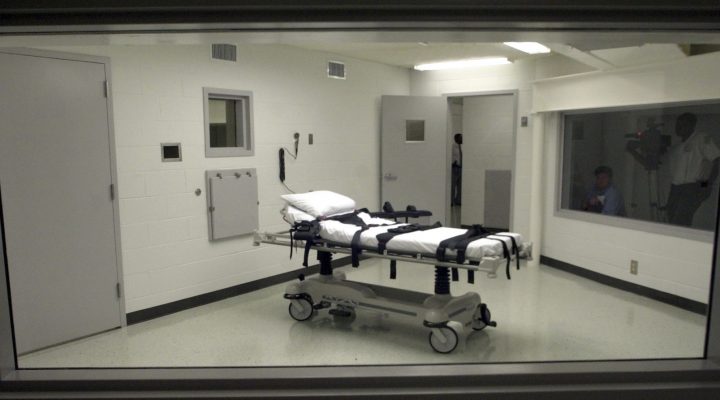
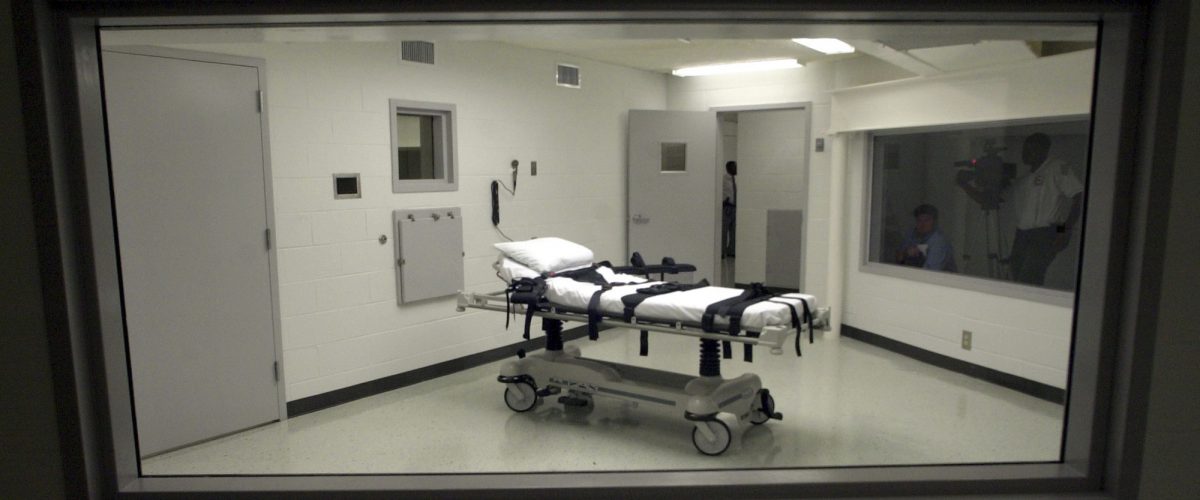
A federal judge permanently blocked Alabama from putting inmate Jeffrey Lee to death with nitrogen gas two days before his June 11 execution date.
District Judge Emily Marks in Montgomery ruled June 9 that nitrogen hypoxia executions violate the constitutional ban on cruel and unusual punishment.

Emily Marks
Her decision came a day after a three-judge panel of the 11th Circuit U.S. Court of Appeals found the gas, which is a relatively new execution method, presented a “substantial risk of serious harm over and above death itself” to Lee. The judges ordered a new hearing in the case.
Marks’ subsequent ruling also supported Lee’s stated preference for death by firing squad, the Alabama Reflector reported.
“The state has failed to articulate a legitimate penological reason for refusing to adopt Lee’s proposed alternative. Therefore, Lee has shown by a preponderance of the evidence that the protocol constitutes cruel and unusual punishment in violation of the Eighth Amendment,” the ruling explained.
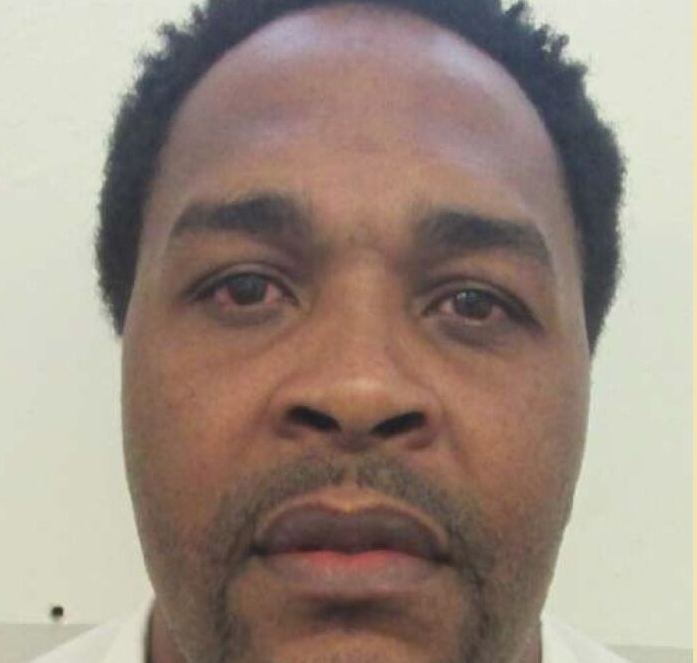
Jeffrey Lee
Lee’s case has drawn national attention because his death sentence is for a 1998 double homicide and attempted homicide but the judge ignored the jury’s recommendation of life in prison, according to CNN.
“The judge overturned the jury’s vote under a since-abolished procedure called judicial override, where a judge could override a jury’s sentencing recommendation,” the report explained. “Alabama repealed the practice in 2017 for all future cases.”
After exhausting all available appeals, the inmate’s legal team asked Gov. Kay Ivey to grant Lee clemency and to recognize the original jury recommendation in the case.
Lee’s attorney, MiAngel Cody, said the team urged Ivey “to finish the work she started” in retroactively dismantling judicial override. Also, Alabama legislators are considering legislation that would resentence defendants in capital cases previously sentenced through judicial override.

MiAngel Cody
“I think any person would be alarmed to know that their state can execute someone even if the jury never voted that they receive the death penalty,” she said. However, Ivey has vowed to proceed with Lee’s execution.
AL.com reported that Lee’s execution is on hold after Marks handed down her ruling, and that the state is likely to appeal. “While the judge didn’t explicitly stay Thursday’s execution, she said the state couldn’t use gas to do it. The state has two other methods they could use — the electric chair and lethal injection — but it was questionable whether the state could use either at this late date.”
The report also explained that Alabama cannot immediately add a firing squad or any other new protocol because legislative action is required to do so. What’s more, the state’s death chamber at Holman Prison in Almore is not suitable for firing squads.
Marks’ order added that the use of nitrogen gas is the only issue addressed by her order.
“To be clear, the court’s decision does not disturb the state’s ability to administer capital punishment. Lee successfully challenged only the ADOC’s nitrogen hypoxia protocol, not its electrocution or (this time) its lethal injection protocol,” the order explained. “Lee has shown that his proposed firing squad alternative significantly reduces a substantial risk of severe pain as compared to nitrogen hypoxia. The result is that the state of Alabama cannot execute Lee by nitrogen hypoxia — no more, no less.”
A website advocating clemency for Lee added that the inmate “has lived with mental illness since childhood” yet has taken full responsibility for the crime that landed him on Death Row. “Jeffery has lived for years under the threat of execution, yet he has chosen accountability, growth and service. Who he is today affirms what the jury already decided: Jeffery Lee’s life should be spared.”
Five states have adopted nitrogen gas as a method of execution to date, according to the Death Penalty Information Center. Alabama carried out the first known execution using the protocol in 2024 and has since executed six other inmates using the method. Of the remaining states that have adopted the protocol, Louisiana has used the gas once while Arkansas, Mississippi and Oklahoma have yet to do so.
The Trump administration is now considering nitrogen gas for use in federal executions.
Death penalty abolitionists, human rights groups and the United Nations have condemned the use of the gas to execute people. The process involves strapping down an inmate and placing a mask over the face to administer the gas. Nitrogen hypoxia occurs when the body’s oxygen is replaced by the chemical.
Witnesses at nitrous gas executions have shared horrific descriptions of inmates taking many minutes to die from suffocation. The Associated Press described Alabama’s execution of Kenneth Smith, its first using the protocol, as botched: “Smith shook in thrashing spasms and seizure-like movements for several minutes at the start of the execution. The force of his movements caused the gurney to visibly move at least once.”
The demand for the gas has grown as states have found it increasingly difficult to obtain chemicals to carry out lethal injections. In some cases, manufacturers prohibit the use of their products for capital punishment and in others untested agents have caused a rise in botched executions.
But the Trump administration is now considering nitrogen gas for use in federal executions, according to a U.S. Department of Justice report released in April titled “Restoring and Strengthening the Federal Death Penalty.”
The study brushes over humanitarian concerns about the protocol and presents the idea as one welcomed even by condemned prisoners.
Related:
Global condemnation falls on Alabama for experimental capital punishment method
Louisiana Jews form alliance to oppose gassing as means of execution