

There is a particular kind of grief that settles over a community when a young person kills another young person. It is not only the grief of a life lost, but the grief of a life ruined.
It is the grief of adults who suddenly realize the guardrails they assumed were in place were, in fact, ornamental. And it is the grief of institutions — schools, athletic programs, governing bodies — that must confront the uncomfortable truth that they were present in name but absent in practice.
The stabbing at a track meet in Frisco, Texas, last year was not simply a failure of one teenager’s judgment. It was a failure of the adult world that surrounded him.

Joe Marlow
Track meets are supposed to be noisy, chaotic and supervised. Coaches pace the infield. Officials monitor the events. Parents hover with water bottles and umbrellas. Administrators circulate, ensuring order. At least, that is the ideal.
But on the day of this stabbing, the adults were present only in the abstract. The confrontation unfolded inside a team tent during a downpour — a predictable moment of crowding, discomfort and frayed tempers. Yet no coach, no meet official, no administrator appears to have been close enough to see the tension rising. No adult stepped in to say, “Let’s cool off,” or “You, out of the tent,” or “Everyone, take a breath.”
The absence is striking.
“On the day of this stabbing, the adults were present only in the abstract.”
Not because adults can prevent every conflict, but because their presence often is enough to prevent the worst ones. A coach standing 10 feet away changes the moral atmosphere. A meet official walking the rows of tents changes the tone. A parent who says, “Hey, knock it off,” interrupts the escalation.
Instead, the tent became a closed world of adolescent emotion — territoriality, embarrassment, bravado — without a single adult voice to puncture the bubble.
Institutions often imagine supervision as a policy. But supervision is a posture. It is the willingness to be physically present, morally alert and relationally engaged. On that day, the posture was missing.
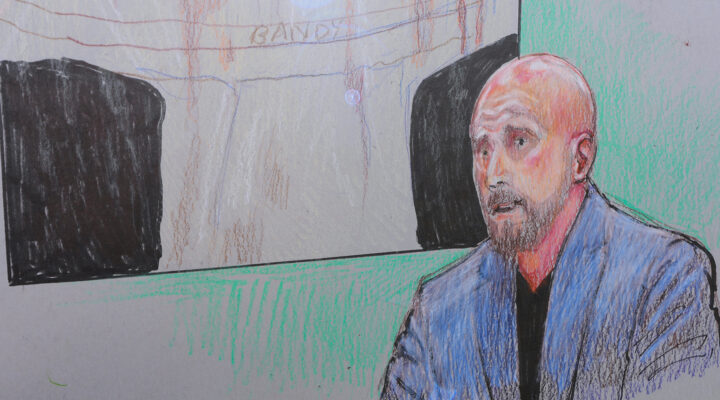
The second failure is more subtle, and it belongs to all of us who work with young people. We cling to the category of the “good kid” as if it were a moral guarantee. Karmelo Anthony was, by all accounts, a good kid — athlete, worker, teammate, son. He had no record of violence. He was not a discipline problem. He was, in the shorthand of school life, “one of the ones we don’t worry about.”
But “good kid” is not a character assessment. It is a comfort blanket for adults.
“A teenager can be responsible in the classroom and reckless in a moment of humiliation.”
A teenager can be responsible in the classroom and reckless in a moment of humiliation. He can be respectful to teachers and impulsive when he feels disrespected by peers. He can be hardworking at his job and catastrophically unwise when he has a weapon in his bag and a surge of adrenaline in his bloodstream.
The tragedy is not that a “bad kid” finally did something bad. The tragedy is that a normal adolescent, with the normal adolescent cocktail of insecurity, pride and impulsivity, made a decision that cannot be undone.
We forget that adolescence is a volatile season. The frontal lobe is still under construction. Social perception is heightened. Threat detection is exaggerated. A slight can feel existential. A challenge can feel like an attack. And a weapon — carried for reasons we may never fully understand — can turn a moment of foolishness into a moment of irreversible harm.
The moral ecology around Karmelo Anthony did not prepare him for that moment. It did not teach him how to step away, how to de-escalate, how to absorb disrespect without responding with force. It did not teach him that courage sometimes looks like retreat.
Institutional failure is rarely dramatic. It is not a coach shouting, “Let them fight.” It is not an administrator ignoring a direct warning. It is quieter than that.
It is the failure to establish norms of adult presence.
It is the failure to train teenagers in conflict navigation.
It is the failure to imagine that even “good kids” need moral formation.
It is the failure to see that supervision is not a luxury but a duty.
Both schools, and the meet itself, operated on the assumption the environment would police itself. That athletes would behave. That tents would be safe. That teenagers would be reasonable. But institutions cannot outsource their responsibilities to adolescent self-regulation.
The result was a vacuum. And in that vacuum, a young man made a terrible decision.
“The lesson is that no teenager is safe from the possibility of a catastrophic choice.”
The lesson here is not that Karmelo Anthony was secretly dangerous. The lesson is that no teenager is safe from the possibility of a catastrophic choice when the conditions are right and the adults are absent.
A “good kid” can make a terrible decision when he feels cornered, he feels disrespected, he has a weapon he should not have, and no adult is present to interrupt the spiral.
This is not an excuse. It is an explanation and a warning.
We owe our young people more than praise for being “good kids.” We owe them formation — moral, emotional and communal. We owe them supervision that is not symbolic but embodied. We owe them adults who are close enough to see trouble before it becomes tragedy.
Because when institutions look away, even for a moment, the burden of moral decision-making falls entirely on the shoulders least prepared to carry it.
And sometimes, as we saw that day, the cost is unbearable.
Joe Marlow is a theologian, historian, educator and writer now retired in South Lyon, Mich., with his wife, son, daughter-in-law and their two dogs.