

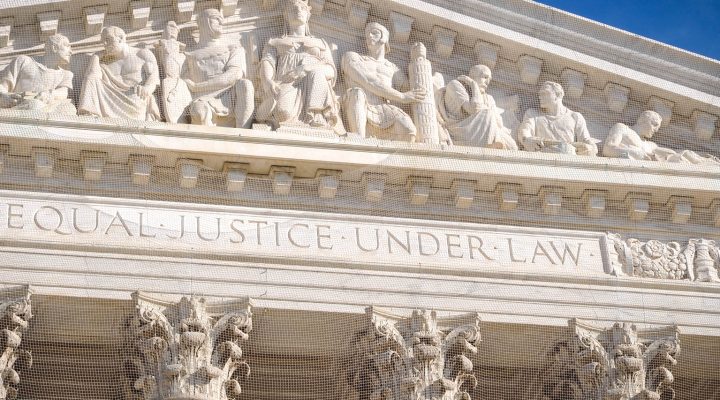
The U.S. Supreme Court declined to overrule two lower courts that prohibited Alabama from executing a prisoner using nitrogen gas.
The state was set to execute Jeffrey Lee June 11 until a federal appeals court and a U.S. district judge ruled that execution by nitrogen hypoxia violates the Constitution’s ban on cruel and unusual punishment.
Neither the 11th Circuit U.S. Court of Appeals nor Judge Emily Marks in Montgomery said the state could not execute Lee, just that nitrogen gas could not be used for the execution.
According to SCOTUSblog, attorneys for Alabama pleaded with the high court for approval to carry out the execution as planned.
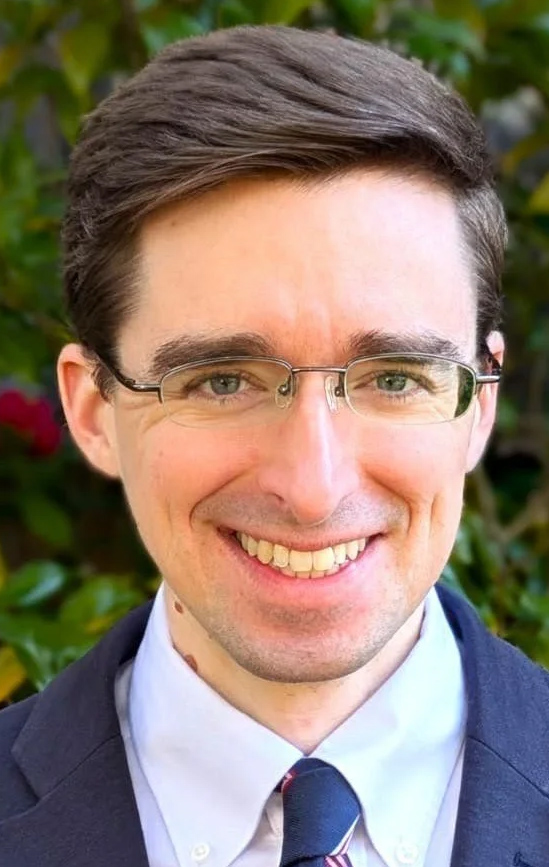
Barrett Bowdre
Letting the lower-court decisions stand “‘would be unprecedented in American history. Not only does it portend the first-ever permanent ban on a legislatively enacted method’ of execution, ‘but it would expand the concept of cruelty well beyond the bounds of the Eighth Amendment’ by relying on the emotional distress that Lee alleges nitrogen hypoxia will cause,” Alabama Solicitor General A. Barrett Bowdre argued before the justices.
In reality, any risks from nitrogen hypoxia “would amount to no more discomfort than that caused by other constitutional methods of execution,” Bowdre added.
In a court filing, Lee’s legal team urged that lower court rulings against the constitutionality of nitrogen gas in executions should be allowed to proceed through the usual appellate process.
“What cannot be corrected — what no subsequent ruling can undo — is an execution by unconstitutional means, carried out before the appellate process concludes. The irreversible nature of death weighs heavily in the equitable calculus,” the motion said.
The U.S. Supreme Court issued a brief, unsigned order denying Alabama’s request to proceed with the execution. It did add that Justices Clarence Thomas, Samuel Alito and Neil Gorsuch — three of the court’s most conservative members — would have granted the state’s request.
The jury that found Lee guilty in a 1998 double homicide and attempted homicide recommended he receive life in prison. But the trial judge in the case overruled the jury and imposed the death penalty. That alone has drawn demands for reconsideration. Then the state’s adoption of nitrogen gas as a means of execution raised additional criticism.
“His jury voted for life,” Lee’s attorneys said in a statement reported by the Alabama Reflector. “Two courts ruled the method unconstitutional. Today, the Constitution prevailed. Now Gov. (Kay) Ivey can finish what the jury started: Restore the jury’s verdict of life without parole.”
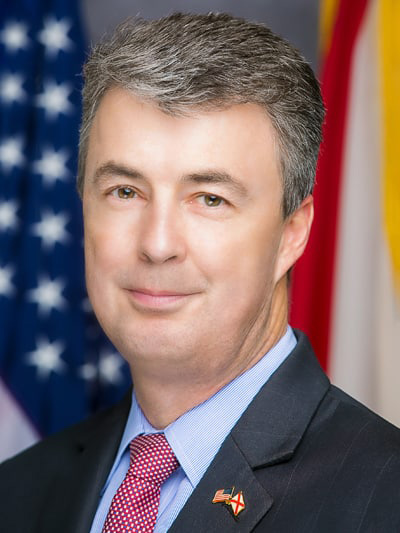
Steve Marshall
Alabama officials saw it much differently, with Attorney General Steve Marshall calling the high-court ruling “a miscarriage of justice” and Ivey expressing disappointment.
“I want their families to know that we will never stop seeking justice for Jimmy and Elaine,” Marshall said. “The state is prepared to do whatever is necessary to see Mr. Lee’s lawful sentence carried out.”
Alabama has executed seven inmates since 2024 using nitrogen gas, a widely condemned method that requires covering the entire face with a mask to administer the chemical. Nitrogen hypoxia occurs when the body’s oxygen is replaced by the gas, which can take several agonizing minutes to occur.
Louisiana executed a prisoner with nitrogen gas in 2024, while the remaining states to approve the method — Arkansas, Mississippi and Oklahoma — have yet to use the protocol.
Related:
Judge bans Alabama’s use of nitrogen gas for executions
Global condemnation falls on Alabama for experimental capital punishment method
Louisiana Jews form alliance to oppose gassing as means of execution