

When I was growing up in Eastern Kentucky, I spent most of my time inside the doors of our Southern Baptist church. Sunday mornings, Sunday nights, Wednesday evenings — I was there.
We were one of those small “church plants” that came onto the scene when contemporary Christian worship was still a rarity in Southern Baptist life. As far as our methods for ministry, we found ourselves witnessing in a way that hadn’t been done before, but we still held deeply to the evangelical faith informed by our Southern Baptist identity.

Jackson Campbell-Walker
In this church, I learned to love Scripture, to take faith seriously and to believe following Jesus mattered more than anything else. For that, I remain deeply grateful and seek to continue in the faith I live out today. Evangelicalism, while not perfect, helped me fall in love with Scripture and formed my commitment to discipleship, missions and the significance of one’s personal relationship with Jesus.
Yet for many people of my generation, the version of evangelicalism we inherited became increasingly intertwined with political identities, cultural battles and rigid boundaries around who could fully belong.
So many of us grew up watching our sisters begrudgingly carry the secret of God’s call on their lives because the church certainly wouldn’t affirm what God was doing in them.
So many LGBTQ Christians — myself included — were forced into an impossible choice between being authentic to the identity God gave us and being loyal to the community that raised us in the faith.
And like many others, we grew weary of faith being measured by partisan loyalty. This created an environment in which many evangelicals lacked the imagination to envision another faithful way of being Christian in the world.
Unfortunately, for many evangelicals and fundamentalists, the assumption — or perhaps the product of direct teaching — is that there are only two options: remaining within a rigid form of evangelicalism or abandoning it altogether for a version of Protestantism that feels disconnected from the biblical seriousness that shaped them. Many younger evangelicals find that Mainline Protestantism is unfamiliar territory, perceiving it as less rooted in Scripture, less focused on growth or evangelism and foreign to the way evangelicals have worshiped.
I can’t argue that all those characterizations are fair — mainly because I don’t believe them to be true — but nevertheless, they are real and honest characterizations from our evangelical siblings.
“CBF is a bridge — a bridge from certainty to humility, from fear to generosity.”
This is why I believe so deeply in the witness of the Cooperative Baptist Fellowship — a network of Baptists that seeks to bear witness to another way of being Christian that is neither rigid evangelicalism nor an off-ramp to Mainline Protestantism. In the Cooperative Baptist Fellowship, you can affirm the priesthood of all believers and freedom of conscience. You can send missionaries and proclaim the gospel. You can recognize women called by God to every level of ministry. You can create space for LGBTQ Christians to seek Christ and participate fully in the life of the church without abandoning Scripture or orthodoxy. You can refuse to reduce Christian discipleship to a spiritual version of the Republican or Democratic party platforms. All this flows from Baptist convictions that root us in freedom and responsibility before God.
CBF is a bridge — a bridge from certainty to humility, from fear to generosity, from inherited answers to deeper discipleship, from culture-war Christianity to the way of Jesus. Our beautiful expression of the Baptist tradition allows people to carry forward the treasures of their evangelical upbringing while letting go of what has distorted the gospel.
At a moment when many assume Christianity must either become more rigid or more untethered from its roots, the CBF witness matters more than ever. There are people sitting in pews across the country who still love Jesus, still cherish Scripture and still long to serve the church, but who cannot reconcile that calling with the narrow choices they have been offered. They need to know another faithful Baptist way exists. They need communities shaped by conviction and compassion, orthodoxy and humility, conscience and cooperation, without compromising the faith they have always held dear.
The Cooperative Baptist Fellowship may not be the largest or oldest Baptist movement in America, but for many searching for a home, it may be one of the most important witnesses the church has to offer.
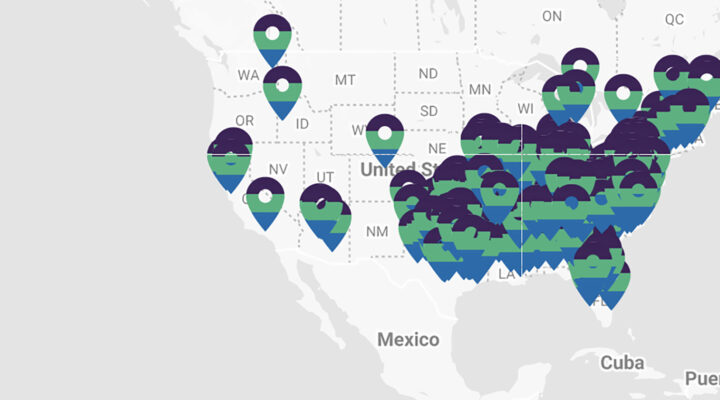
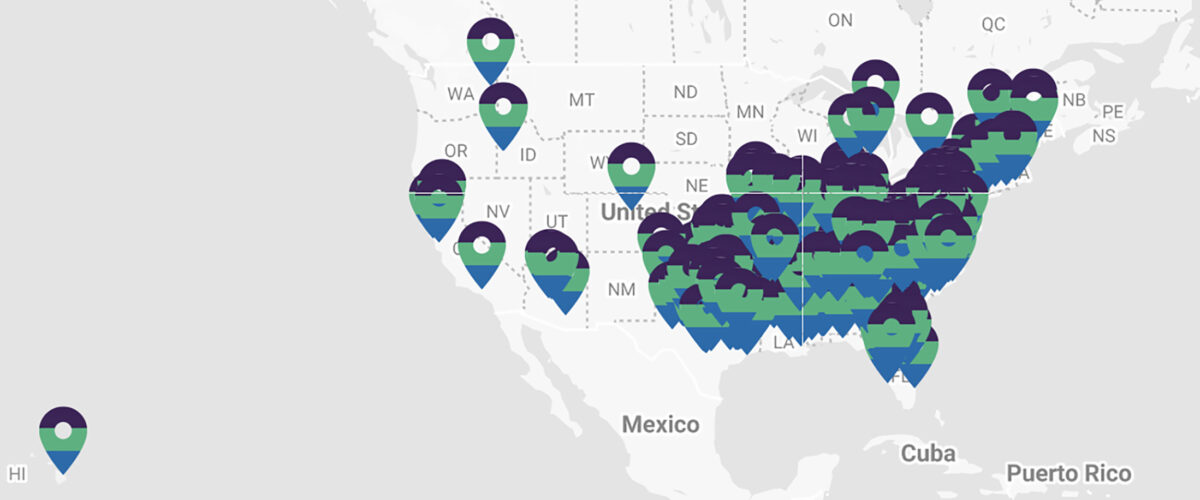
Will you join us? Find a CBF church near you: https://cbf.net/church-locator/
Jackson Campbell-Walker serves as associate pastor at First Baptist Church of Morehead, Ky.