

Religious freedom is a radical invention that allows all Americans to believe or not believe as they choose, but on the condition that others are not harmed, said Rachel Laser, president of Americans United for Separation of Church and State.
“That’s what religious freedom is. Here’s what it’s not — it’s not a sword to harm others. It’s not a license to discriminate. It’s not a permission slip for the government to favor one set of religious views or to impose those views on all its workers. It’s not a trump card to play when someone else’s views are politically inconvenient.”
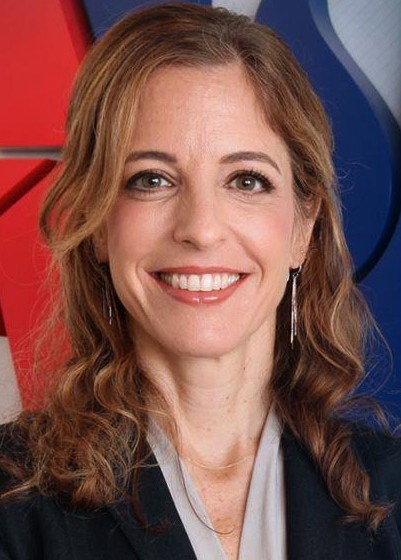
Rachel Laser
In other words, religious liberty is the opposite of what the Trump administration and other Christian nationalists claim it is, Laser said during a June 16 discussion hosted by Center for American Progress, Americans United for Separation of Church and State, Interfaith Alliance and American Humanist Association.
The Washington, D.C. event served as the launch of “Religious Liberty for All: Celebrating This Founding Freedom at America 250,” a new report by the four organizations featuring 20 prominent elected officials, faith leaders, historians, legal experts and theologians making the case for religious freedom and diversity rooted in the U.S. Constitution.
“We are correcting the record here with Christians, Muslims, Jews, Hindus, Sikhs, agnostics, humanists and many lawmakers,” Laser explained. “We are correcting the record about what the true foundational values of this country are, and we’re proudly reminding America that religious freedom means we are all free to live as ourselves and believe as we choose.”
The release of “Religious Liberty for All” was timed to pre-empt the anticipated publication of a report by the Religious Liberty Commission, which President Donald Trump formed in 2025 to promote a Christian nationalist view of religious freedom, Interfaith Alliance President Paul Raushenbush said.
“We have every reason to believe it will offer a perspective of religious freedom that privileges one narrow experience. However, the report we are launching today intentionally features a range of experiences of religious freedom from voices that include diverse religious traditions as well as non-religious traditions. Religious freedom for all recognizes how religious freedom benefits all the people when it is applied equally and fairly.”
Money and power
But the administration’s aim is precisely the opposite, namely to sow fear of religious diversity and to weaponize the concept to divide Americans and dismantle civil rights, said Fish Stark, executive director of American Humanist Association.
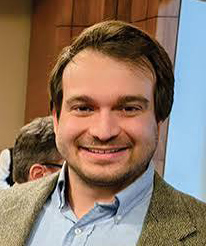
Fish Stark
“Most Americans reject white Christian nationalism, this vision of supremacy deceptively wrapped up in the idea of freedom, because they recognize that Christian nationalists don’t want freedom, they want money and power,” Stark said. “Christian nationalists and their billionaire backers want to privatize our public schools, our public housing, public media and anything else they can get their hands on and replace it with a system that serves them first and best while lining their pockets.”
While the perspectives presented in “Religious Liberty for All” support the separation of church and state, they are not in uniform agreement in all other respects, said Neera Tanden, president of Center for American Progress.
“Indeed, that is the point — they share a belief in pluralism and human dignity, and in the constitutional framework that lets very different communities live side by side as equals,” Tanden said. “Our commitment to religious liberty has been one of the reasons we have been able to live together across many differences over the last 250 years, and when we weaken religious liberty and when we choose one religion over another, that tends to fray the social fabric itself.”
Can’t take it for granted
But like all other fundamental freedoms, religious liberty cannot be taken for granted, said report contributor Holly Hollman, chief legal officer at Baptist Joint Committee for Religious Liberty.
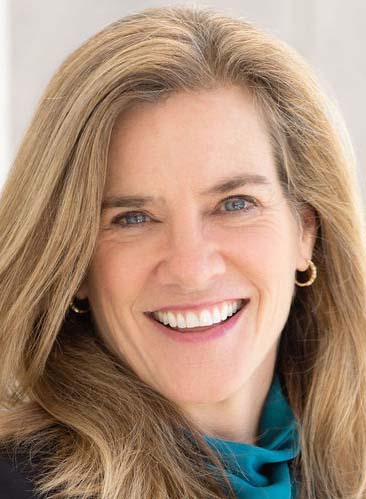
Holly Hollman
“On the 250th anniversary of the Declaration of Independence, history is being distorted in the courts and the public square in ways that threaten to undermine our unique American experiment,” she said. “While it is not surprising that deep religious differences have sometimes led to political conflicts, we have come too far to give up on ideals that have endured across centuries.”
The historic Baptist commitment to separation of church and state has helped protect religious freedom throughout the nation’s history, Hollman added.
“We proudly claim the words of one of our forebears in faith — John Smyth, the first English Baptist — who warned, ‘The magistrate is not by virtue of his office to meddle with religion, or matters of conscience, to force or compel men to this or that form of religion or doctrine.’ Such sentiments have inspired preachers and patriots outside of our particular religious community, including leaders in the founding generation.”
Founders wanted neutrality
Government neutrality in religion is designed to prevent the ascendance of any one faith over others, said U.S. Rep. Jared Huffman, D-Calif. in his contribution to the report.
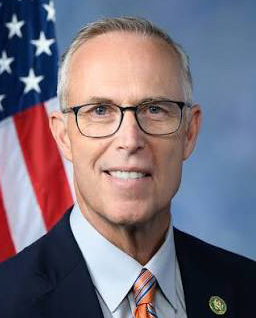
Jared Huffman
“It is exactly what the Founders intended. Thomas Jefferson and James Madison understood that genuine religious liberty requires both freedom of religion and freedom from religion,” Huffman said. “Unfortunately, the Trump administration’s sham Religious Liberty Commission and its politicized America 250 campaign seek to replace it with a fake Christian nationalist narrative that turns religious liberty from a shield that protects all of us into a sword that declares America a ‘Christian nation’ and privileges one religious group over all others.”
Jacqui Lewis, senior minister at Middle Collegiate Church in New York City, tied the constitutional value of religious freedom to the ancient African ethical concept of interconnectedness and compassion, or ubuntu.
“Before religion was weaponized against our siblings, we were becoming human, becoming neighbors. Interconnected in our shared humanity,” she said. “Perhaps understanding ubuntu and loving our neighbor as ourselves is the path to religious freedom.”
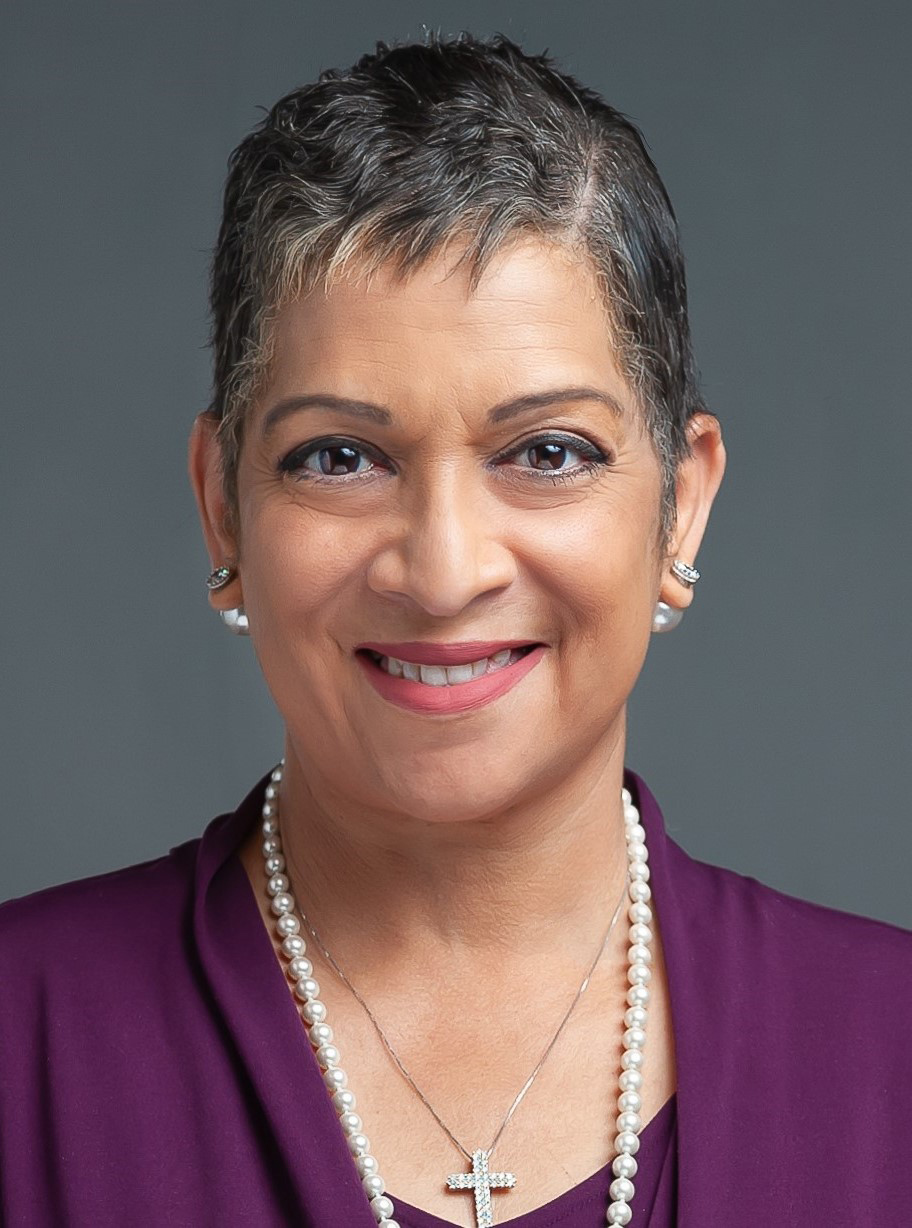
Terri Hord Owens
The idea that some religious beliefs and traditions are labeled as un-American by Christian nationalists violates the essence of the free exercise of religion, said Terri Hord Owens, general minister and president of the Christian Church (Disciples of Christ).
“We cannot truly exercise our faith if a central entity or governmental authority is allowed to tell us what is faithful, what is orthodox; we cannot be ordered to believe or act according to a particular official’s religious beliefs or suffer the threat of dissolution or exclusion from a community or society because we disagree.”
Freedom for all
Democracy Forward President Skye Perryman said achieving democracy hinges on freedom of religious for all: “People must have the soul freedom to believe and worship or to choose not to worship without state interference. Those freedoms are also essential to religious pluralism — living in a society where people of differing faiths and no faith co-exist all together.”
Skye Perryman
But those freedoms have come under direct attack by the Trump administration in the past year, she added. “The president has used social media accounts and AI-generated images to depict himself as a religious figure — Jesus Christ. This episode was offensive to those who practice the Christian tradition as well as those who do not. It is in a theocracy where the government leader is viewed as a god or god-like figure,” she added.
Democracy Forward and Americans United represent Interfaith Alliance, Muslims for Progressive Values, the Sikh American Legal Defense and Education Fund, and Hindus for Human Rights in a lawsuit filed to challenging the creation of the president’s Religious Freedom Commission.
“The commission’s membership unlawfully consists exclusively of Christians and one Orthodox Jewish rabbi, all of whom collectively represent the narrow perspective that America was founded as a ‘Judeo-Christian’ nation and must be guided by biblical principles,” Perryman explained. “No members of the commission represent other religions such as Islam, Hinduism, Buddhism or Sikhism; nonreligious Americans; or Christians and Jewish people who do not ascribe to the narrow ideology of the commission’s members.”
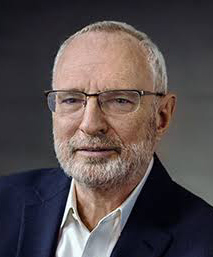
David Saperstein
Jews, Muslims and other religious minorities are feeling the heat from the Trump administration’s assault on freedom of religion and speech, said Rabbi David Saperstein, senior advisor for policy and strategy at the Union for Reform Judaism and former U.S. ambassador-at-large for international religious freedom.
“All of this is being abetted by a Supreme Court that has abandoned its long-held precedents of robust Establishment Clause protections and a constructive balance between the Free Exercise and Establishment clauses. Instead, the court has seemingly bought into the Christian right’s argument that the Establishment Clause and the wall separating church and state is somehow anti-God or anti-religion.”

Corey D.B. Walker
Nothing less than the future of democracy is at stake in the current moment, said Corey D. B. Walker, dean of Wake Forest University School of Divinity.
“When the language of religious freedom is deployed to justify exclusion, to deny the dignity of others, or to fuse national identity with a singular religious vision, it ceases to function as religious freedom at all,” he said. “It becomes, instead, a vehicle of domination.”
Related:
Coalition wants to block Religious Liberty Commission report
Religious groups sue to block Trump’s Religious Liberty Commission
Trump creates Religious Liberty Commission
Trump’s Religious Liberty Commission repeats evangelical grievances
Experts say anti-Christian bias task force report is full of bias
Trump task force blames Biden for widespread anti-Christian bias