


The headline itself tells a uniquely American story.
From the South Side of Chicago came a young community organizer searching for purpose. He eventually made his way to the South Lawn of the White House as the 44th president of the United States. On June 18, 2026, Barack Obama’s journey came full circle as he returned to Chicago’s South Side for the opening of the Obama Presidential Center, a project years in the making and one that may ultimately become one of his most enduring legacies.
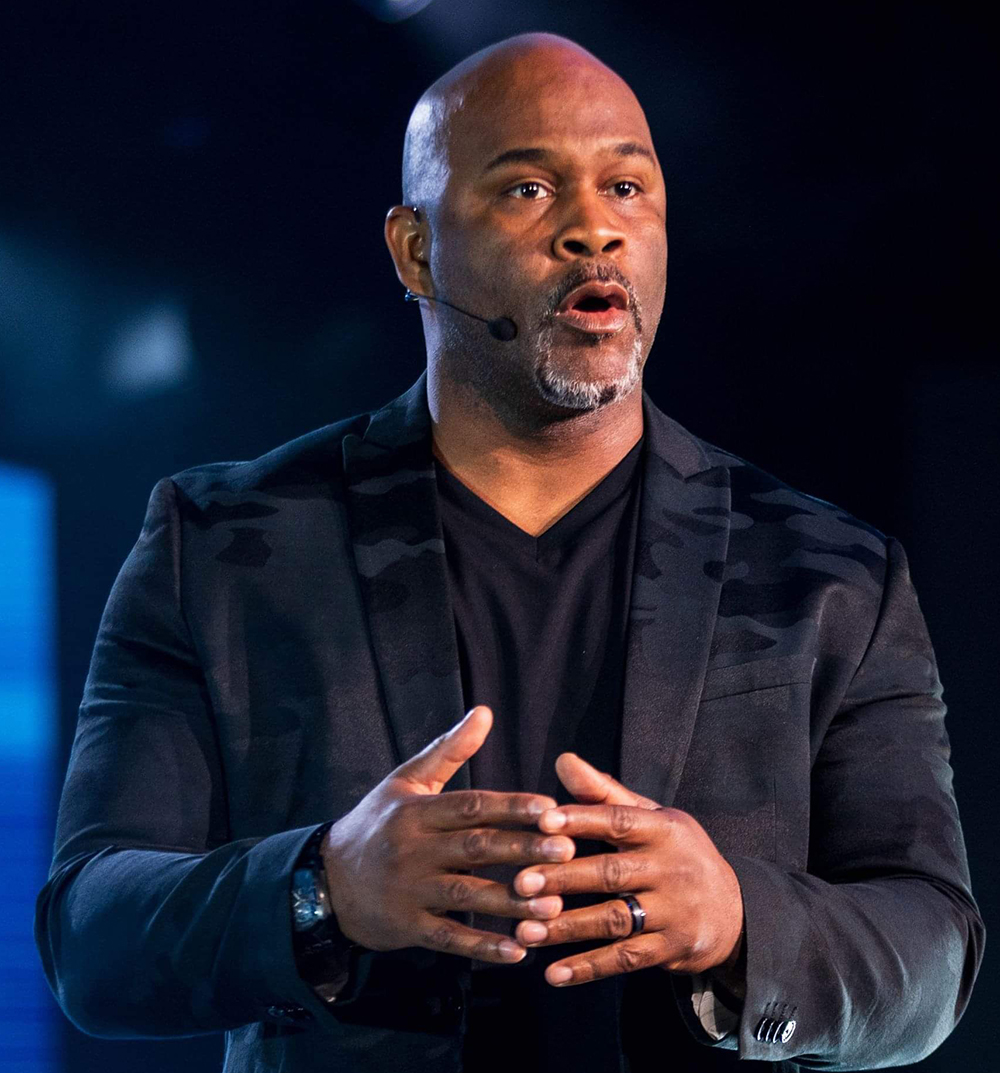
Edmond W. Davis
As I watched the opening ceremony, I could not help but reflect on my own journey. More than two decades ago, during my second year as a professor at the University of Arkansas at Little Rock in 2003-2004, I witnessed the opening of a presidential library in Arkansas. Today, as a social historian, journalist and educator, I have the privilege of reflecting on another historic presidential milestone — one that feels less like a museum opening and more like the dedication of a civic campus devoted to democracy itself.
The ceremony was remarkable not simply because of who attended, but because of what it represented.
Standing together on stage were four living presidents: Barack Obama, George W. Bush, Bill Clinton and Joe Biden. Former First Ladies Laura Bush, Hillary Clinton and Jill Biden joined them. In an era often defined by political division, the image offered something increasingly rare: Unity.
Chicago’s South Side became the center of the political, cultural and civic world for a day.
Artists including Common, John Legend, Jennifer Hudson, Christina Aguilera, Bruce Springsteen, Marc Anthony and others performed throughout the celebration. Common and John Legend’s message of hope, perseverance and justice reflected the larger purpose of the center itself.
The opening also highlighted something Barack and Michelle Obama have emphasized from the beginning: This center is not merely about a presidency. It is about people.
Michelle Obama delivered what may have been the most powerful remarks of the day. She thanked engineers, landscapers, architects, construction workers, cooks, community leaders and countless others who helped bring the vision to life.
In a society that often celebrates individuals while overlooking communities, she reminded America that great achievements always are collective achievements.
“The dreamers are us, and we are them. They are America,” she declared.

Former President Joe Biden, from left, former President Barack Obama, former President George W. Bush, and former President Bill Clinton pose for a photo ahead of the dedication ceremony at the Obama Presidential Center, Thursday, June 18, 2026, in Chicago. (AP Photo/Pablo Martinez Monsivais)
Her words captured the essence of the Obama story.
Neither Barack nor Michelle Obama emerged from privilege. Their story reflects millions of Americans who believe education matters, service matters, community matters and character matters.
Michelle also offered a challenge to visitors: “Come here and put away your phones and talk and laugh and cry and make new friends. Have a romantic picnic on the front lawn. Get your hands dirty in my garden.”
That statement addresses one of the greatest challenges facing America today: Isolation. Too many Americans know how to post but have forgotten how to connect. We know how to debate but have forgotten how to listen.
“The overwhelming majority of Americans aren’t looking for perpetual anger.”
President Obama addressed that concern directly. He warned that technological advances and algorithms often fuel distrust, division and fear. He acknowledged that democracy can be frustrating, slow and imperfect. Yet he remained optimistic about America’s future.
“The overwhelming majority of Americans aren’t looking for perpetual anger,” Obama said. “They are looking for fairness, common sense and mutual respect.”
Those words deserve attention.
Today, outrage often is more profitable than understanding. Division generates more clicks than cooperation. Yet the Obama Presidential Center stands as a physical reminder that democracy requires citizens to move toward one another rather than away from one another.
Obama also reflected on the unfinished nature of the American experiment.
As the nation approaches its 250th anniversary, he reminded us that democracy never has been perfect. The Founders established a framework for self-government, but each generation has been responsible for expanding liberty, opportunity and participation through petitions, protests, marches, conversations and civic engagement.
America’s story always has been one of improvement rather than perfection.
That is why one of Obama’s most important observations centered on character: “Honesty, integrity, compassion, duty and honor should be non-negotiable.”
Those are not Democratic values. Those are not Republican values. Those are American values.
Perhaps the most moving moment came when Michelle Obama reminded the audience that the center is not ultimately about her husband or herself.
“This is not about Barack and me,” she said. “It’s going to be here long after we’re gone, just like our democracy.”
That statement may define the significance of the Obama Presidential Center. Buildings eventually age. Political careers eventually end. Public offices change hands. Yet institutions dedicated to educating, inspiring, mentoring and serving future generations endure.
The center’s location on Chicago’s South Side matters because it sends a powerful message to young people everywhere: Greatness can emerge from any neighborhood.
History is not simply something we study. History is something we build.
The Obama Presidential Center is more than a monument to a presidency. It is an invitation to citizenship. It is a call to community. It is a challenge to future generations to believe that democracy is still worth the effort.
From the South Side to the South Lawn and back again, the journey has come full circle.
The work, however, continues.
Edmond W. Davis is an American social historian, international speaker and Amazon No. 1 bestselling author. He is a global authority on the Tuskegee Airmen and serves as the founder of the National HBCU Black Wall Street Career Fest. A native of Philadelphia and current resident of Little Rock, Davis is committed to cultural empowerment and educational equity through storytelling and civic engagement.