



Christians who vilify the poor, LGBTQ people and women practice a version of the faith that is heavy on the Bible but light on words of Jesus, said Howard-John Wesley, senior pastor of the historic Alfred Street Baptist Church in Alexandria, Va.
“One of the very first signs of a rotten religion is that it quotes a whole lot of Scripture, but very little of it is in red. It knows the law, but it can’t quote grace. It’s heavy on Moses and Paul, but it is light in Matthew Mark, Luke and John.”
“One of the very first signs of a rotten religion is that it quotes a whole lot of Scripture, but very little of it is in red.”
Wesley delivered the keynote address during the June 18 Dr. Emmanuel McCall Racial Justice Trailblazer Luncheon at the Cooperative Baptist Fellowship General Assembly in Jacksonville, Fla.
“I just came by to give you a word of warning: Be careful of Scripture that’s heavy in law but light on grace,” he said. “Our foremothers and forefathers were skeptical of ‘slaves obey your masters’ because there was no Jesus in it. Be careful of folk that use words like ‘reprobate’ and ‘abomination’ but don’t have any Jesus attached to it.”
The reference stemmed from the judgment-laden and often out-of-context biblical passages MAGA Christians level against democratic values and marginalized communities. Christian nationalists typically poach verses from the Old Testament to justify support for the theocratic authoritarianism championed by President Donald Trump.
“Watch out for folks who say women don’t have no authority over men in the church when they’ve got no Jesus attached to it. Be careful of folks who tell you every elected official is God ordained and you have to obey them without question when there’s no Jesus attached to it.”
Another sign of “rotten” Christianity is its emphasis on a “works-based salvation” that is earned and implies its adherents control who is and isn’t eligible for salvation, Wesley said. “I need a relationship with God that is not dependent upon how holy or unholy, or how righteous or unrighteous I am. I’m connected to God not because of what I do, but because of the grace God has upon me.”
The danger of works-based faith is its practitioners believe they control who is eligible for membership, he added.
“I came all the way to Jacksonville to remind you that you can’t control grace. Just ask Jonah.”
“It wants to be the distributor of God’s grace; it wants to determine who’s going to heaven and who’s going to hell. I came all the way to Jacksonville to remind you that you can’t control grace. Just ask Jonah — he didn’t want the Ninevites to experience it, but God says, ‘I’m going to save them anyway because you can’t control grace.’”
Likewise for Peter who opposed uncircumcised people being included as authentic followers of Jesus. “Just ask the Romans — they did not want that thief on the cross to go anywhere but to hell, and Jesus declared, ‘This day, he will be with me in paradise’ because you can’t control grace.”
Wesley illustrated the point with the Parable of the Good Samaritan, in which a Jewish scribe attempts to challenge Jesus on the question of “who is my neighbor?”
“His question is not to find out who he has to love; his question is who does he have permission to hate? Who do I have permission to exclude? Who does the Bible give me the right to not put in the same circle with me? Who does the Bible allow me to exclude from my own religion? Who does the Bible allow me to look down on? Who does the Bible allow me to condemn? Who does the Bible allow me to send to hell? It’s not ‘who is my neighbor?’ It’s ‘who ain’t my neighbor.”
The question is one the privileged always have asked to determine who can be their neighbor or live in their neighborhood and, in the current context, who can be called an American and who can vote, he said.
Trump “is now using Scripture to endorse his hatred. He has weaponized the Bible, and this is the one sign of rotten religion in America when Scripture has been weaponized to hurt and not to help, to deport and not to deliver.”
But when Jesus presses the scribe to answer who had done the right thing, the scribe says, “the one who had mercy” on the wounded and abandoned Samaritan, Wesley noted. “He can’t even say the word ‘Samaritan.’ He is so locked up in his historical hatred for a group of people that he cannot even acknowledge the Samaritan by name.”
The irony, Wesley said, is that there is no such thing as a “good Samaritan” for the scribe.
“Maybe, just maybe. Jesus introduces this good Samaritan to ask this brother a question: Can I show you someone who is meant to break every stereotype, every ideology, every characteristic, every statistic? Can I bring someone into your world who challenges how you see a group of people?”
Perhaps a good Samaritan today is a single mother on welfare who is not lazy, or a same-gender couple trying to raise their children to love God, he proposed. “Can I show you a woman anointed to preach and pastor? Can I show you a white Republican who is not a bigoted racist? Can I show you a Black woman doing her best to raise her family, or are you stuck?”
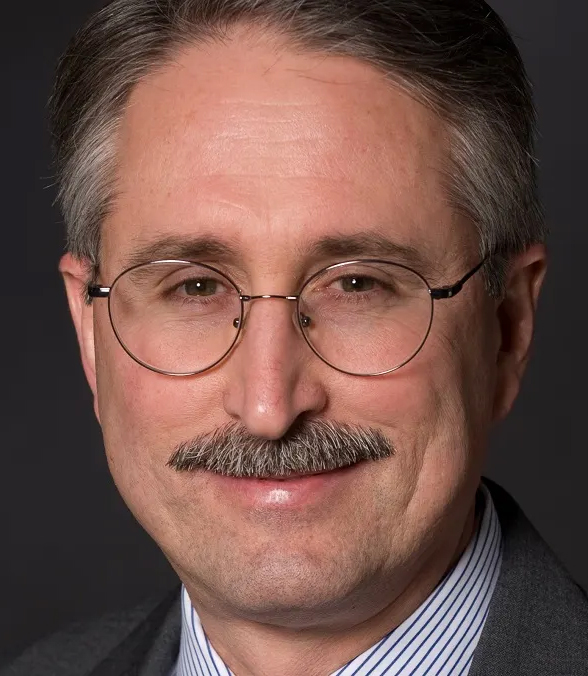
Robert Parham

Danielle Ayers
Prior to Wesley’s address, Danielle Ayers and the late Robert Parham were honored with the 2026 Dr. Emmanuel McCall Racial Justice Trailblazer Award.
Ayers serves as pastor of justice at Friendship-West Baptist Church in Dallas, where she oversees advocacy, civic engagement and public witness efforts. She has organized campaigns against predatory payday lending and advocated for maternal health equity, voting rights and racial justice.
Parham, who died in 2017, was a Baptist ethicist and founder of Baptist Center for Ethics and EthicsDaily.com. His documentary, Beneath the Skin: Baptists and Racism, was developed in cooperation with McCall and leaders in the New Baptist Covenant alongside President Jimmy Carter.