

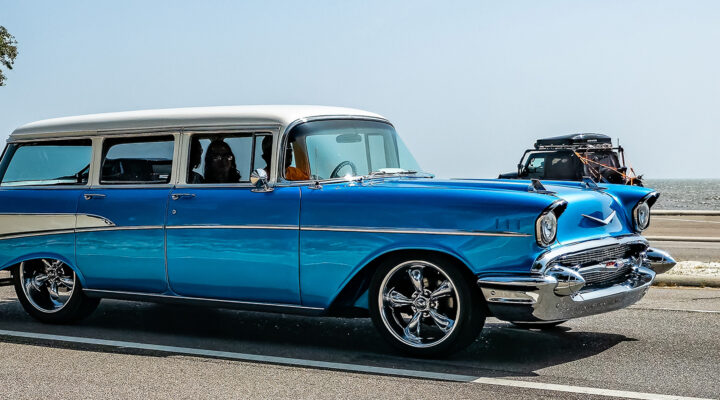
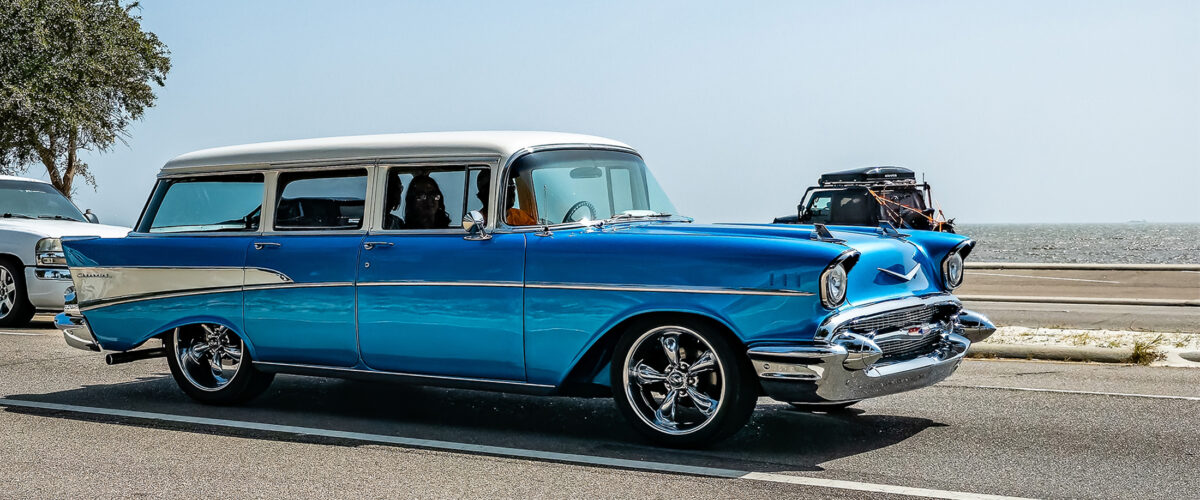
On a recent Saturday, a classic car show was held just down the road. There are several routes to the event, and since one passes right by my house, I spent the afternoon watching the vintage fleet parade to and from the show.
Some of these cars predated me — which is saying something. I caught sight of a beautifully restored 1957 Chevy wagon that brought back a flood of memories. I first learned to drive at 14 in a 1956 Chevy Bel Air with a standard transmission.

Michael Chancellor
At church the next Sunday, I spoke about growing up in a service station. I recalled manually changing the price signs during the “price wars” triggered by Gulf’s introduction of Gulftane — a budget-friendly, lower-octane fuel. That move sparked a fierce competition between the local brands: Humble, Texaco and Gulf. I remember the price dropping as low as $0.199 per gallon. After church, I filled up our Toyota at $3.78 a gallon.
I haven’t forgotten those days, but I have no desire to return to them. For me, the “good old days” weren’t that good. While I have no complaints about my upbringing, I prefer living in the present. Like yesteryear, we still have a long way to go regarding justice, equality and inclusion.
I have no personal quarrel with inclusion. While there are certain circles I choose not to join, there are many others I value deeply. The desire to belong is an ancient human quality; while a few may prefer isolation, most of us are eager for connection. We gravitate toward one another because, ultimately, we do not want to travel through this life alone.
Many of us also seek a connection to the “Great Other” who exists beyond us. I recognize some are comfortable believing there is nothing beyond the self, and while I am not among them, I am happy to grant others the freedom to disbelieve, just as I claim the freedom to seek God. I know the God of Scripture is neither male nor female (or, as James Talarico expresses it, “nonbinary”). He is right, of course, unless you are among the reactionary voices who get upset over semantics while neglecting more profound truths. I believe Jesus had a few things to say about that kind of misplaced focus.
“Even the most courageous have limits to their vision.”
If those who are so easily offended would instead direct their passion toward justice, food security and opportunity for all, I might join them. But I already have spent a lifetime working toward those goals — without the hysterics. If people choose to be upset by the wrong things, that is their prerogative; I only ask that they don’t stand in my way as I put hands and feet to the work of making things better.
I am a firm believer in equal rights, viewing them as the unfulfilled legacy of our Founders. They possessed unusual courage in forging this nation, yet even the most courageous have limits to their vision. We are still navigating those limits today. Perhaps it is wise to view our forefathers as men of great vision who simply lacked the capacity to make that vision complete.
In a broken world, there always will be more to do. We never will reach a point where we no longer need physicians, visionaries to point toward the unexplored or teachers to expand the boundaries of our knowledge. My world is still broken, although in some ways it has improved. It remains imperfect and will stay so until the curse is lifted.
It is OK to pause, look up and pray, “Come, Lord Jesus.” But then, we must get back to work.
Michael Chancellor served 33 years as pastor of four Baptist churches in Texas, six years as a mental health manager in a maximum-security Texas prison before becoming a therapist in private practice in Round Rock, Texas. He now lives in Taylor, Texas.