


This is the sixth in a BNG series of articles on Christianity and democracy that will lead toward the July 4 celebration of America’s 250th birthday. The series has been curated by Carol McEntyre, senior minister at First Baptist Church of Greenville, S.C.
Recently I was doing research for a sermon on Ephesians 3. The church in Ephesus was begun by Priscilla and Aquila, alongside Paul. These tentmakers and missionaries embodied faithful service. They cared for their community, living into the prophetic calling to be repairers of the breach and restorers of the path. Because of their witness, the ecclesia became a powerful voice not just for itself, but for everyone in the community: Jew and Gentile, enslaved and free, all siblings in Christ.
Ephesians is written to remind the ancient congregation of the important work of care; to remind us of what was built in the past and what we are called to continue building into the future.
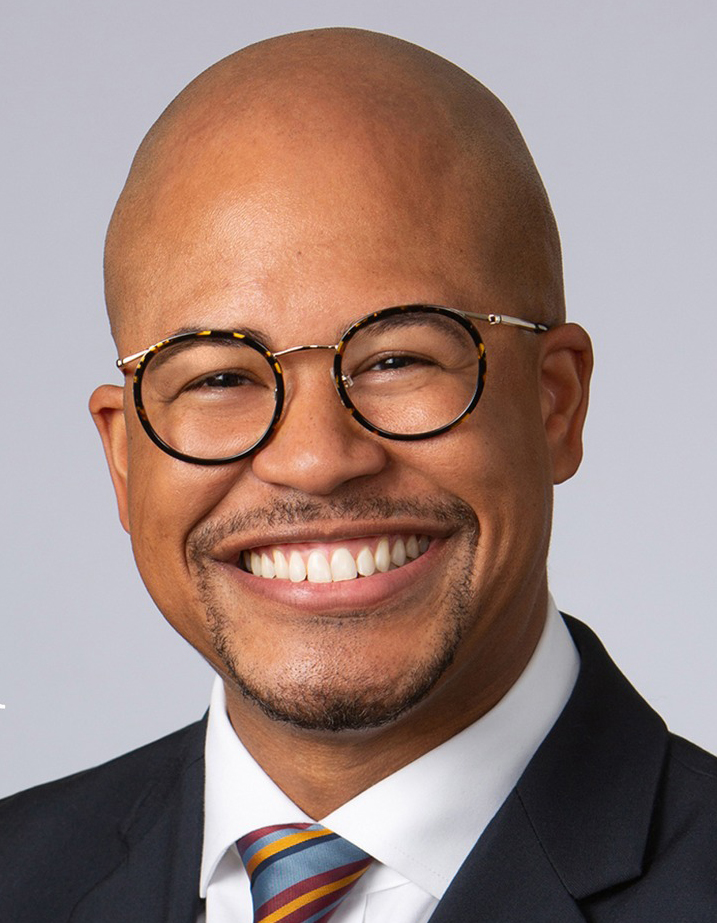
Timothy Peoples
Today, the ecclesia might be questionable, at best, to many. Is the church really being who it said it will be? Is it really living out the call to care for all with no exceptions?
Ecclesia doesn’t simply mean “church” the way we’ve reduced it. Many scholars note ecclesia refers to a democratic assembly — a gathering of full citizens who come together to decide matters of rights, justice and communal well-being. If this is true, then church is not only about worshiping God, but also about the well-being and dignity of our neighbors.
That means we have work to do. When we neglect justice, mercy and humility, we have not just missed the mark, we’ve abandoned the covenant itself.
“When we neglect justice, mercy and humility, we have not just missed the mark, we’ve abandoned the covenant itself.”
So how do the ideas of ecclesia and democratic life intersect? The work of the church as a called assembly is grounded in beliefs that call us to uphold the full dignity and rights of all people. To love our neighbor fully means we move beyond self-centeredness and take on the identity of Christ, an identity rooted in service rather than self-interest.
Too often, we fall into the mindset if something does not affect us personally, we have no responsibility for it. But the life of Christ challenges that assumption at its core.
It was Abraham Joshua Heschel who wrote, “Any god who is mine but not yours, any god concerned with me but not with you, is an idol.” In America, we have seen churches and individuals carve out and whittle away at a god who keeps in mind one group, one culture, one identity. This golden idol, after all, is shiny enough to reflect the image of the politically powerful.
It should be no surprise, then, that this god, this idol, bears the reflection of racial, religious, gender and ethnic supremacy — a homogenous god, draped in the American flag. But worshiping this idol is not worshiping God.
When we lean into these immoral acts and try to preserve the notion that Jesus died and rose for only some and not all, we have found our way into a sinful state of being. Paul Tillich explained sins should not simply be understood as immoral actions. Instead, sin describes a universal condition of being. To help clarify this idea, Tillich used the word “estrangement” or “separation.” To be estranged means to be cut off from where one truly belongs at the deepest level.
In Tillich’s view, estrangement is like living in exile, disconnected, displaced and far from home. Tillich describes this condition as having three dimensions: Separation from ourselves, separation from other people, and separation from God.
If the church is truly to function as a kind of democratic assembly, we must resist that estrangement. We must turn again toward connection with God and with one another. This is not a time for disconnection or indifference, which would abandon the very purpose of the church. Rather, now is the time for care and concern.
Democracy is built on a set of closely connected principles: Popular sovereignty, political equality, and majority rule/minority rights.
Popular sovereignty is the idea that political power is legitimate only when it comes from the consent of the governed. Political equality guarantees every individual has an equal right to take part in the democratic process, regardless of background or social standing. Majority rule balances with minority rights to ensure while decisions reflect the will of the majority, the rights and voices of those in the minority still are protected.
The protection of all rights and voices is essential to the life of faith. Even when someone is in the “minority,” their dignity does not diminish because they bear the fulness of being human. In the language of the church, they bear the Imago Dei, the image of God, and are worthy of love, justice and respect.
Yet in today’s heightened political climate, hatred too often drowns out that truth.
Not long ago, a pastor publicly prayed for the death of a political leader. In a striking response, the leader replied, “You may pray for my death, pastor, but I still love you.” In that moment, grace appeared where we might least expect it.
It raises a difficult question: How has the church — the ecclesia — become so misguided that the church is often known more for hate than for love? Scripture confronts us plainly: How can we claim to love a God we do not see if we hate our sibling whom we see every day?
If the church is to be the ecclesia, a true assembly of God’s people, then it must become a place where love is not optional but essential; where justice is not secondary but central; and where every person is treated as a reflection of the living God, whose beauty is diverse and expansive.
Timothy Peoples serves as senior pastor of Wilshire Baptist Church in Dallas. He is a member of BNG’s board of directors.
Previously in this series:
What is democracy? | Caroline Smith
The church as school for democracy | Emily Hull McGee
Democracy as the practice of loving our neighbors | Mary Alice Birdwhistell
Democracy and religious freedom | Carol McEntyre
Democracy as a moral practice, not just a system — Jason Edwards