


This is the 10th in a BNG series of articles on Christianity and democracy that will lead toward the July 4 celebration of America’s 250th birthday. The series has been curated by Carol McEntyre, senior minister at First Baptist Church of Greenville, S.C.
Recently, as I was flipping through the channels of my television late at night, I stumbled across a boxing match, nearly over. Both boxers were exhausted. They weren’t even throwing punches at this point in the fight. They were simply leaning on each other.
I realized they were leaning on each other for a couple of reasons. First, they were simply tired and depleted of all energy. But second, and more importantly, they were leaning on each other as a means of protection. Given that close proximity, neither could actually throw a punch at the other.
Landing a punch in boxing demands just the right distance from the other. If the opponent is too far away, the punch has no hope of reaching its mark. But if the two boxers are too close together, even leaning on each other, then neither has the extension of the arm to deliver a punch with any force at all. A good punch demands engagement without entanglement.
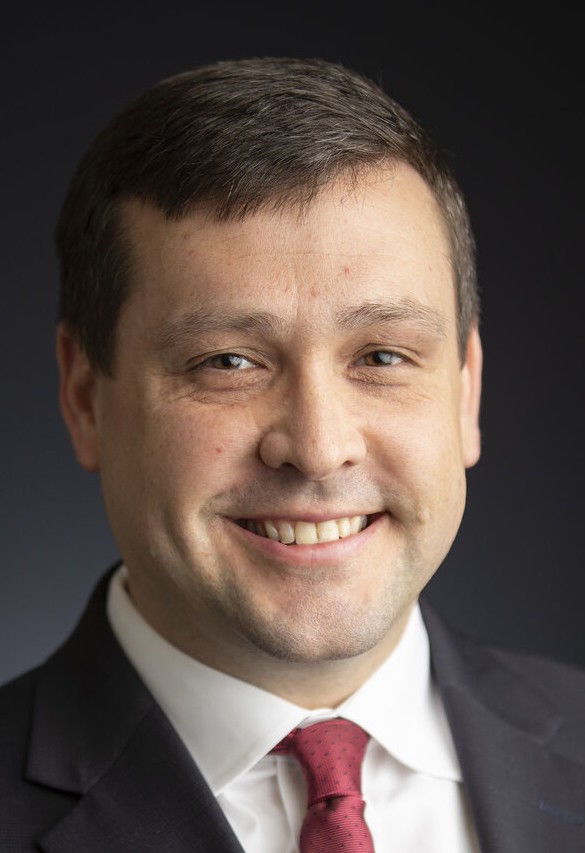
Preston Clegg
One of the great gifts American democracy has given the world is the notion of religious liberty for all people, made possible by a strong separation of church and state. American religious historian Randall Balmer calls the First Amendment “America’s best idea,” permitting religion enough space from political entanglement to flourish.
The religious freedoms provided by and enshrined in the Constitution helped dawn a new day of world history in terms of the relationship between religion and political power. No longer did religious rights depend on which king sat on the throne or which majority religion controlled Parliament. Now, religious freedom was guaranteed by constitutional provision and protected by the “wall of separation” between church and state. Religion, including vast amounts of religious diversity, has flourished in this country accordingly.
The expansive religious environment in U.S. history also has made room for prophetic religion. Pastors, imams, rabbis and other faith leaders have had the freedom to critique the injustices of political leaders, the wrongheadedness of political policies and the brokenness of political systems while also praising and encouraging just policies, generous politics and leaders who fostered the common good.
“Prophetic ministry flourishes best when it has the most oxygen to breathe.”
The necessary distance between political power and prophetic truth enables and fosters this witness. It is difficult to tell the truth when a guillotine is at your neck. It is perhaps even more difficult to tell the truth when the state is embracing you with wealth and privilege. Prophetic ministry flourishes best when it has the most oxygen to breathe.
Of course, one of the great challenges of prophetic religion in a representative democracy is that we are always talking about ourselves. We live in the same rooms we preach in. In a democracy, we tend to get the leaders we deserve. Our leaders are something of a mirror of our own virtues and vices, projections of the fears and hopes of the people. In a democracy, every political critique carries with it a simultaneous confession, every political lance carries with it a lament. Thus, what we critique or praise in the political domain we are critiquing or praising in the body politic that enabled that form of politics. In a participatory democracy, prophetic critique involves as many mirrors as windows. It demands not merely finger pointing at our leaders but character formation in our people.
Clearly, the trick for the church moving forward is to be engaged with the affairs of the state while avoiding being entangled with them, shaping people of character in the process.
Consider the prophet Jeremiah, one of the great prophets of Israel’s history, who prophesied as the mighty Babylonians destroyed Jerusalem and exiled the Jewish people in Babylon. Jeremiah continued to warn the king and the royal court that the Babylonians would, in fact, do what they did and royal infidelity to Yahweh was the primary reason why.
As Jeremiah prophesied this message, other prophets contested and confronted his message. After all, this was an utterly inconvenient message for the king and the court to hear. In turn, Jeremiah called these opposing prophets “court prophets” who were so beholden to royal power they no longer could hear, much less proclaim, the divine will. These prophets were the forerunners of Pilate’s question before Jesus, which is political power’s eternal question before faithful prophets, “What is truth?”
“As we celebrate the nation’s 250th birthday this summer, we must realize we are in a treacherous and tender moment as a country.”
As we celebrate the nation’s 250th birthday this summer, we must realize we are in a treacherous and tender moment as a country. Authoritarianism, structural racism, blatant corruption in high places and economic injustice all are on the rise. This leaves the Christian witness in this country at an inflection point.
- Will we be so entangled by the power of the royal court that we sacrifice gospel truth on the altar of political expediency?
- Will we confuse the reality that the gospel transcends partisan spectrums with some humdrum acquiescence to the status quo that refuses to stand with good and oppose evil, lest we be charged with the crime of partisan loyalties? Can we denounce the sins of one corrupt court, not because of our allegiance to another fallible one, but because we are subject to a higher one altogether? How do we call people not to middle ground, but to higher ground?
- Will we have the wisdom to see that corrupt leaders are more a symptom of a corrupt system than the cause of it (although there is definitely a synergy here)? Can we call out the sins of the body politic as much as we do the sins of our leaders?
- Will we recognize while democracy makes room for private interests, it also makes room for the common good? And can we use the tools in the toolbox of our faith to help make the common good more common, even when it collides with private interests?
- Will we do the slow, priestly and pastoral work of character formation of the body politic or merely point fingers at politicians who are most worthy of it? Can we birth a revolution of values at the roots of our society, so that eventually there is transformed fruit at the top of it?
These are the questions we will live into as the calendar turns toward our 250th year. One thing I know amidst all these questions: The prophetic witness that will impact our democracy will remain at just the right distance to land a punch. Close enough to be engaged, but not so close as to become entangled.
Jeremiah shows us the way, as does Martin Luther King Jr., Walter Rauschenbusch, Fanny Lou Hamer, Dorothy Day, William Barber, Maryann Budde and Jesus of Nazareth. They know the way of engagement without entanglement. They know the power of truth, which power knows not of. They know how to land a prophetic punch.
I give thanks for a democratic republic that has made room for prophetic witness for 250 years. I pray that, in our 250th year, we begin to actually listen to it. May the prophets find their voices, and when they do, may those with ears to hear listen.
Preston Clegg serves as senior pastor of Second Baptist Church in Little Rock, Ark.
Discussion questions:
- How is prophetic ministry in a representative democracy different than prophetic ministry in a country where power is more centralized and hierarchical?
- How do we know when the church is too close to the state for authentic prophetic witness? Too far away?
- Why is prophetic ministry necessary in a democracy?
- How does a prophet speak truth in this political context while avoiding partisan entrapments on the one hand and compromised middle ground on the other?
Previously in this series:
What is democracy? | Caroline Smith
The church as school for democracy | Emily Hull McGee
Democracy as the practice of loving our neighbors | Mary Alice Birdwhistell
Democracy and religious freedom | Carol McEntyre
Democracy as a moral practice, not just a system | Jason Edwards
Love of neighbor is a democratic ideal | Timothy Peoples
Democracy offers a way for Christian’s to express God’s will | Kyle Reese
Democracy: A political response to human sinfulness | Austin Carty
Why coercive religious politics undermine Christianity and democracy | Juan Garcia