

These days, you’d think we wouldn’t be shocked by a new weekly, daily or hourly religio-political-cultural-rightward-revisionism in the land of the free and the home of Project 2025. But “adjusting” to such practices seems abidingly stressful and/or depressing to many of us, given the impact of such ideological incursions and events on the nature and function of what was once referred to as “the American Republic.”
It continues, this time at the Pentagon in a May 20 memo released by the office of the Secretary of Defense/War and made public in a June 4 article in the Military.com journal. In this action, the military chaplaincy’s list of “recognized religious faiths and belief systems” was reduced from 216 to 31, of which 21 were specifically identified as “Christian” groups.
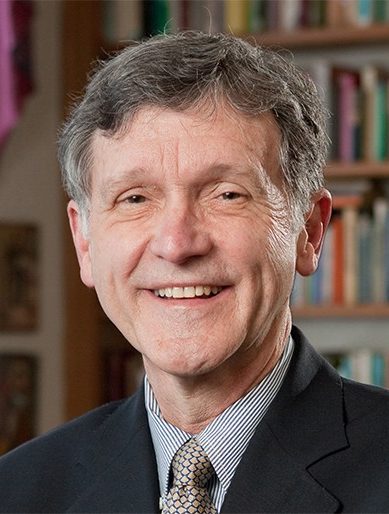
Bill Leonard
The new list, centered in Christian identity, read: Agnostic, Baha’i faith, Buddhism, Christian – Assemblies of God, Christian – Baptist, Christian – Brethren, Christian – Catholic, Christian – Church of Christ, Christian – Church of God, Christian – Church of the Nazarene, Christian – Episcopal/Anglican, Christian – Evangelical, Christian – Jehovah’s Witnesses, Christian – Lutheran, Christian – Methodist, Christian – Nondenominational, Christian – Orthodox, Christian – Other, Christian – Pentecostal, Christian – Presbyterian, Christian – Quaker, Christian – Reformed, Christian – Scientist, Christian – Seventh Day Adventist, Church of Jesus Christ of Latter Day Saints, Hindu, Islam (Muslim), Judaism (Jewish), No Religion, Other Religions, Sikh.
The 216 religious classifications in the 2017 chaplain-requested directory of faiths referenced 170 Christian organizations, 40 non-Christian religions and a variety of nontraditional groups.
In March 2026, Defense/War Secretary Pete Hegseth set the stage for the revisions when he declared: “In previous administrations, our chaplain corps was infected by political correctness and secular humanism. The core functions of the chaplain corps were changed and watered down until they were viewed by many as nothing more than therapists. Faith and virtue were traded for self-help and self-care.”
Responding to the current changes, Pentagon spokesman Sean Parnell insisted the action was “not designed to make any claims on the legitimacy of any faith or religious belief, nor is it intended to provide a list of ‘officially approved’ religions. Rather, it is designed to allow chaplains to quickly look at the religious composition of their units and determine how they structure resources to best provide for war-fighters of all faith groups.”
“It turned out that the ‘legitimacy’ of one specific faith tradition on the new list was indeed called into question.”
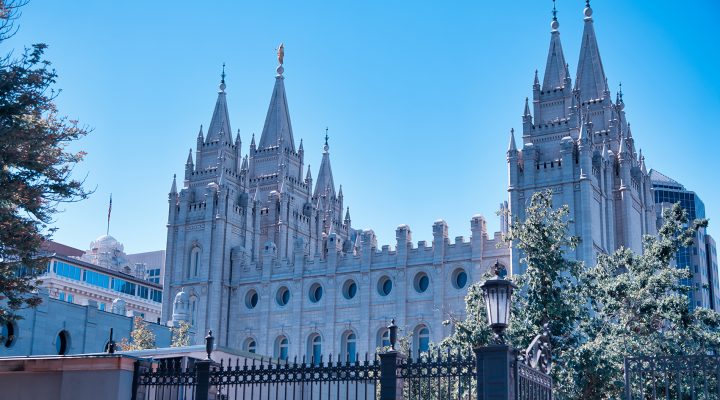
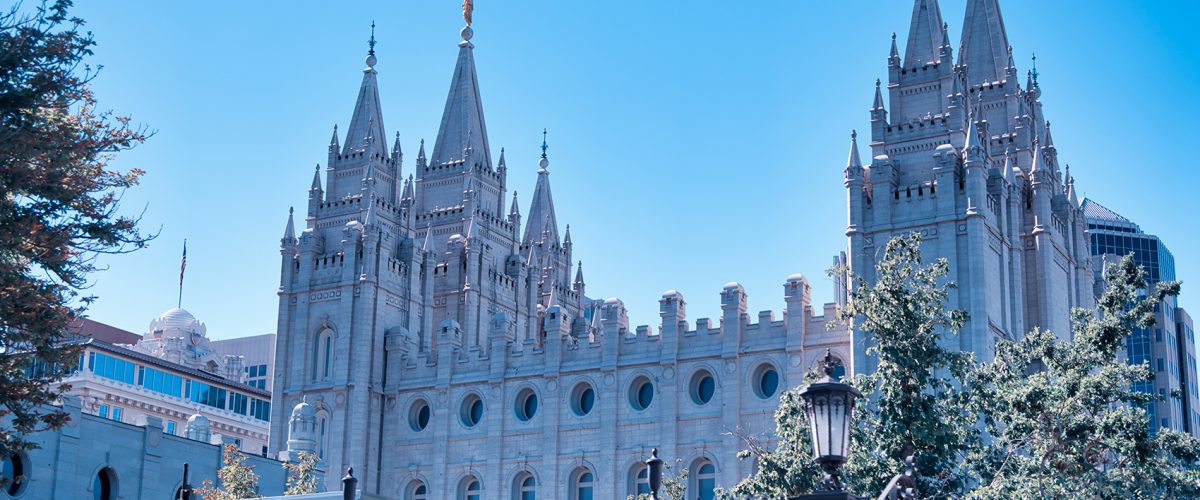
It turned out that the “legitimacy” of one specific faith tradition on the new list was indeed called into question. The Church of Jesus Christ of Latter-Day Saints was included in the revised list but not designated as “Christian.” Fortunately for the Mormons, the state of Utah has two Republican senators who are Latter-Day Saints.
Sen. Mike Lee responded: “I find this offensive, not just because that happens to be my faith, not just because it happens to be the faith of tens of thousands of U.S. military personnel, but it’s also just repugnant to any sense of decency, any sense of our common heritage and our common belief that the government needs to not weigh in on doctrinal disputes between various religious denominations.”
Utah’s other senator, John Curtis, also a Mormon, attacked the directive: “Latter-day Saints are among the most patriotic, service-oriented individuals in our country. They are also unequivocally Christian — just look at who is in the name of the church. It is unacceptable for a government entity to characterize a faith in a manner that contradicts the religion’s own foundational tenets. I am working now to ensure a correction is made.”
Both senators, longtime MAGA supporters, contacted President Donald Trump and before you could say “Salt Lake City,” the Defense/War Department released an amended list, dropping the “Christian” designation of any denominations, and reporting: “Last week, a proposed list of simplified faith codes was released to the media. The Pentagon list included redundant and unnecessary labeling, and the mistake has been fixed. The goal of this effort is to simplify a previously out-of-control ‘belief’ coding system that had ballooned to over 200 codes.”
Others, however, remained exasperated. Michael Weinstein of the Military Religious Freedom Foundation contended: “This is not the business of our state. This is not what our government is supposed to do.” Weinstein, who is Jewish, labeled the revised list “another example from our perspective of fundamentalist Christian hubris, arrogance, self-aggrandizement” and said “Hegseth’s version of Christianity is just Christian nationalism, which wants to create a Christian state based on extreme Christian principles.”
Weinstein warned: “Unless you’re on the (new) list, you’re a religious other; you get nothing.”
Americans United for Separation of Church and State cautioned: “We’ve been worried about the infiltration of Christian nationalism into our military for years — worries that intensified after the nomination of crusader and Fox News Host Pete Hegseth. AU warned Congress he would reshape the U.S. military according to his Christian nationalist ideology if he were nominated, and he has been doing precisely that.”
“We would consider the Mormons to be a non-Christian faith with Christian terminology.”
Secretary Hegseth’s influence on the new directory led some to speculate the failure to designate the Mormon Church as Christian intimated the influence of Iowa pastor Doug Wilson, cofounder of the Communion of Reformed Evangelical Churches. Hegseth is a member of one of those churches and recently invited Wilson to preach at the Pentagon’s monthly Christian worship service.
In an email to Mother Jones, Wilson asserted: “We would consider the Mormons to be a non-Christian faith with Christian terminology.” He added that the CREC considers LDS followers to be “polytheists,” not one God in three persons, but three separate deities, Father, Son and Spirit.
Whatever the reasons, the Pentagon’s original decision not to count the Church of Jesus Christ of Latter-Day Saints among the Christian communions clearly reflects an intentional governmental effort to redefine the theological identity of a specific religious group in the public square, the First Amendment be damned (speaking theologically, of course). Had that action prevailed, then a particular fundamentalist form of Christian nationalism might well have set a new political precedent.
However cumbersome, the 2017 list was a grand illustration of the pluralism of American religious traditions and the breadth of the First Amendment, welcoming recruits old and new to the care of military chaplains. When soldiers related to “Fundamental Bible Churches, Seax Wi (Seax Wicca), Conservative Congregational Christian Conference, National Association of Freewill Baptists, Asatru, Cooperative Baptist Fellowship, Pagan, Humanist, Full Gospel Fellowship Church/Ministries International” and other groups realized that their specific religious identity was acknowledged by the military, perhaps they’d give the chaplains at least half a chance. And isn’t that the point?
And if the Mormons hadn’t fought to keep the U.S. government from defining their religious movement, who’s faith tradition might have been next? Only God (and possibly Project 2025) knows.
Bill Leonard is founding dean and the James and Marilyn Dunn professor of Baptist studies and church history emeritus at Wake Forest University School of Divinity in Winston-Salem, N.C. He is the author or editor of 25 books. A native Texan, he lives in Winston-Salem with his wife, Candyce.
Related: