

My mother was a medical student in Kabul when the realists came.
They came first as Soviet advisers, then as mujahideen commanders, then as American strategists playing the long game against Moscow. Each faction arrived certain it understood the situation clearly. Each believed the others were operating from sentiment, ideology or fanaticism.
The realists shelled civilian neighborhoods. The realists targeted ethnic communities. The realists carved Kabul into contested zones until there was no Kabul left to contest. My mother fled north in 1992 with her family. She spent years in United Nations-operated refugee camps before eventually resettling in the United States.

David M. Hatami
Her medical career — the one she had been building since before an internal civil war crumbled society — ended not because she lacked ability, but because the leaders who were playing chess had forgotten the board was made of people.
I have been thinking about her a great deal since Feb. 28.
On that morning, the United States and Israel launched airstrikes on Iran, killing Supreme Leader Ali Khamenei, targeting military and government sites. All this happened while negotiations continued between Washington and Tehran over Iran’s nuclear program.
The strikes were, by every account, the product of sophisticated strategic calculation. They also were, by every measure now visible, a catastrophe in the making that serious analysts had been warning about for years. The warnings, time and time again, had been dismissed as unstrategic and failing to reckon with the hard realities that realists alone are equipped to see.
Here is what the realists produced: More than 3.2 million Iranians internally displaced, fleeing major cities. More than 2,700 people killed across the Middle East in the first month. Countless homes, hospitals and schools damaged or destroyed. In nearly every neighborhood of Tehran, buildings collapsed with surrounding damage. The apparent U.S. strike on a school in Minab, Iran, killed an estimated 175 people, mostly children, likely the largest number of child casualties in a single American military strike since the 1968 My Lai massacre in Vietnam.
“This war presents the United States with no favorable exit.”
The standard critique of this war focuses on American hegemony — on what it costs the United States to be seen starting a conflict it cannot quickly finish. That critique is correct, and it matters. Military analysts have argued this war presents the United States with no favorable exit.
- Both plausible outcomes carry consequences profoundly damaging to American interests, credibility and influence.
- The closure of the Strait of Hormuz has created the largest energy supply disruption in modern history, with cascading humanitarian impacts far beyond the Middle East.
- Russia is now positioned to benefit monetarily from the closure due to lifted western-backed sanctions.
- China watches the strait with patient interest.
- Every nonaligned capital on earth has filed away what it learned about American reliability this spring.
But the hegemony argument, as important as it is, lets the deeper logic off the hook. Because the question worth pressing isn’t whether this was strategically costly. It’s why it happened at all — and why the people most invested in it were so certain they were the adults in the room.
The pattern is not new. In Afghanistan and Iraq and at every step of the policy escalations that preceded them, the people who drove the decisions believed they were operating from clarity while their critics were operating from feeling. The realist, in this self-image, does not flinch or sentimentalize. The realist weighs hard calculus.
What this self-image systematically excludes is the possibility that the calculus itself is wrong — the variables it treats as known are not known, the population it treats as a backdrop is in fact the entire point, and the history of “realistic” interventions is largely a history of people wreaking military havoc for largely unattainable and abstract political goals.
The attacks occurred when the Iranian regime was arguably at its weakest point in years, with widespread protests and a weakened economy, suggesting an optimism about Iranian fragility the subsequent weeks have not validated.
Military analysts have described Iran as more resilient to U.S.-Israeli attacks than anticipated. Iran closed the strait. Iran’s missiles kept flying. On March 24, Donald Trump claimed the United States and Israel had “won” the war, even as Iran continued its strikes. The gap between that declaration and reality is not a communication failure; it is the signature of obvious strategic overreach. It was a moment when the confident projection of American power had outrun its actual distribution.
“Every week the war extends, the architecture of American influence lazily disassembles.”
The specific cost of continued escalation is this: Every week the war extends, the architecture of American influence lazily disassembles. Not through a single dramatic reversal, but through the accumulation of evidence — evidence the United States will start wars it cannot finish, it will do so over the objections of allies, its security guarantees cannot be trusted because they are calibrated to the impulses of whoever holds power in Washington rather than to any stable strategic logic.
Nearly six in 10 Americans believe the United States should play little to no role as a global policeman that engages in world affairs through force. The public grasps something the decision-makers apparently did not: Power projection and power are not the same thing, and spending the former does not replenish the latter.
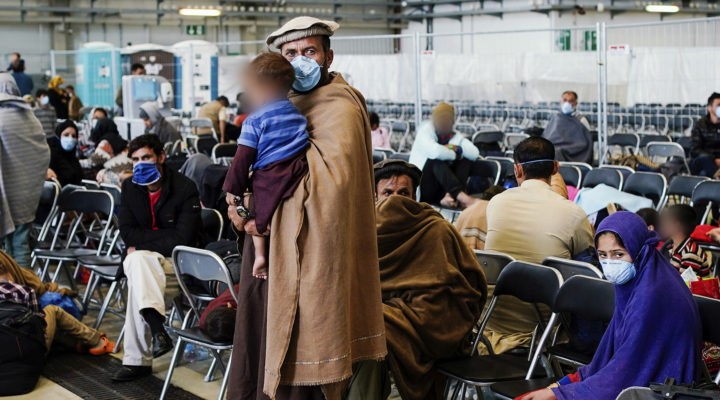
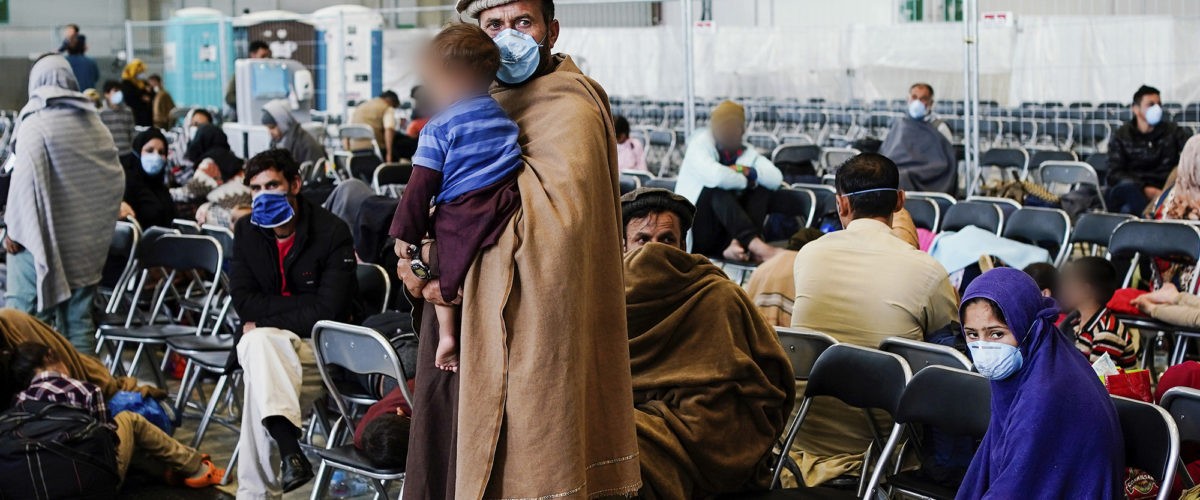
More than 35,000 Afghans have made the journey back to Afghanistan from Iran since the war began, and more than 1 million Afghans in Iran remain at risk of deportation to a country in no position to receive them. My mother’s people, the ones she fled alongside in 1992, are now fleeing again — this time out of Iran, which had itself become a place of refuge, into an Afghanistan that remains broken. This displacement compounds as each war creates the conditions for the next one, and the realists who designed the current one will not be the ones who live inside its consequences.
The argument for de-escalation — for a serious ceasefire, for diplomacy that does not use negotiation as political cover for predetermined military action — is not sentimental. It is the only position that takes seriously the purpose of power. American strength, at its most durable, was never just military. It was the credibility of a certain kind of order — one in which the most powerful nation had reasons to behave with restraint, and did. That credibility is not infinite, and it is being spent right now.
My mother became a nurse in the United States. She raised her family here. She built, in the country that eventually received her, something like the life she had been building when the realists arrived in Kabul. I think about what it cost her to do that. What had to be lost and not recovered for her to start over somewhere else. I think about the 3.2 million people currently displaced inside Iran. I think about the families taping their windows in Tehran against the shattered glass.
They did not vote for this war, nor did we. They did not calculate the strategic rationale, nor did our government. The people of Iran and Afghanistan are simply the people who live where the realists placed their pieces.
The board is made of people. It always has been. The argument for stopping now, while a ceasefire still holds any meaning, is not a concession of weakness. It is the clearest demonstration of strategic restraint — and long-term American strength — the moment demands.
David M. Hatami is an offensive security project manager and a public voices fellow on technology in the public interest with The OpEd Project. He previously managed cybersecurity and penetration testing operations at Amazon Web Services and was a fellow with Youth for Privacy.
Related:
The Iran bombing is a religion story for all but one person
War in Iran: A clash of fundamentalisms
The real reason for the Iranian strike? Padding political pocketbooks