



In surveillance video that’s since gone viral, Pastor Tony Spell of Life Tabernacle Church in Baton Rouge, La., is seen outside his church when he reacts suddenly to young man standing across the street. He runs across the multi-lane road, yelling at the man and pointing aggressively at him. The two get into a verbal exchange that soon becomes physical. Spell drives the younger man to the ground and repeatedly punches him in the head and face as the victim, bloodied and screaming, attempts to shield himself. Before walking away, Spell appears to wrench the man’s head sideways by the neck, pull him up by the hair and deliver one final kick.
Within hours, Spell had been arrested and charged with felony second-degree battery. His victim sustained head injuries and required five stitches to the chin. Spell spent a few hours in East Baton Rouge Parish Prison before being released on $25,000 bond and heading immediately to his church’s Tuesday night service.
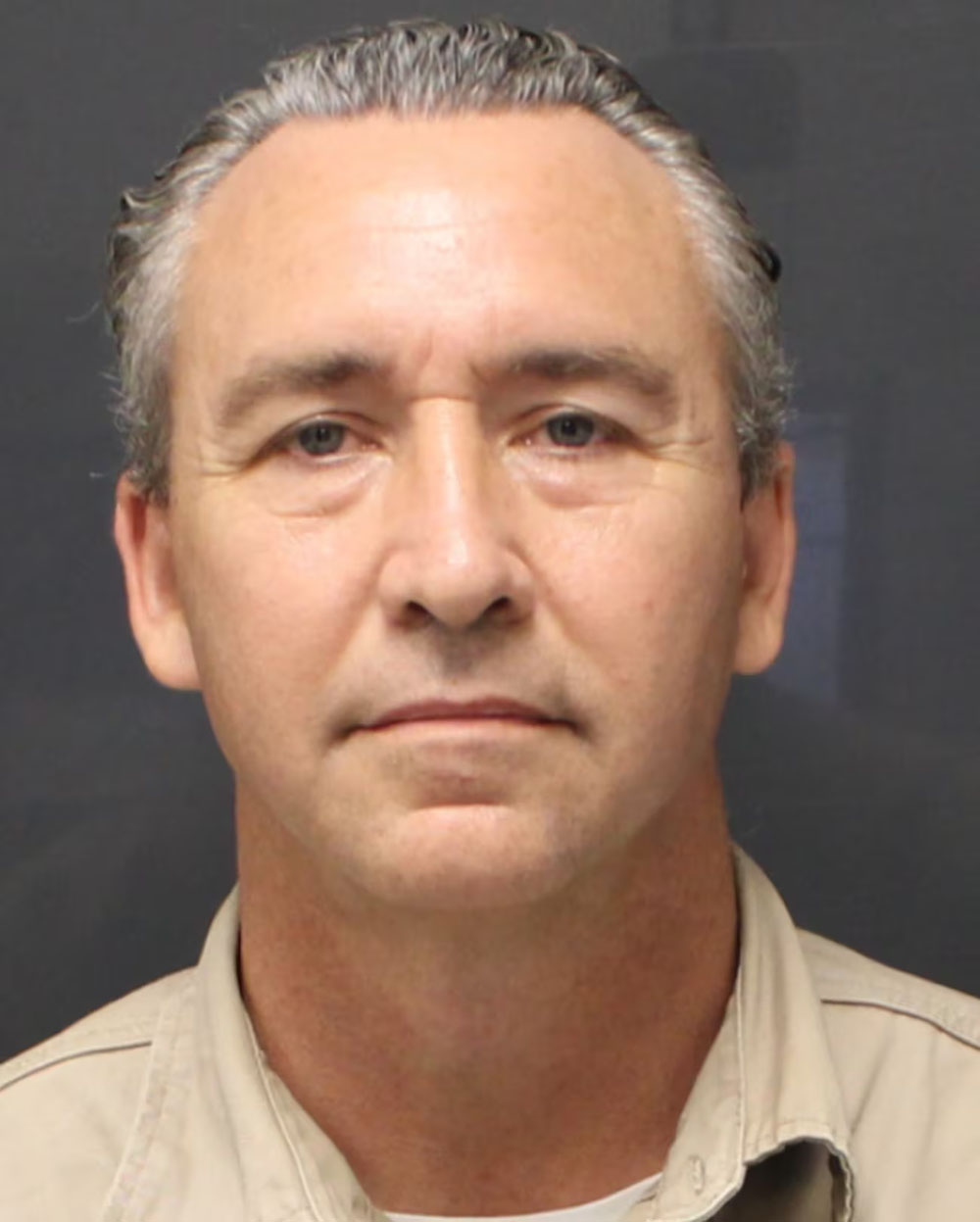
Tony Spell
In that service, Spell stood before his congregation and said: “This day began with the Scripture being fulfilled in the Gospel as according to Saint Mark chapter 16 and verse 18 … In my name they shall lay hands on the sick and they shall recover. So today I fulfilled the Scripture. I laid hands on the sick. I don’t know how much recovery they gonna have, but I laid hands on the sick.”
The congregation responded with cheers and applause. Spell smiled, waited for them to quiet, then joked: “I haven’t seen some of you worship that hard in years. I should’ve did that a long time ago.”
He then asked everyone to stand if they still support his leadership. The vote was unanimous in support.
A faith that justifies violent response
To Spell and his defenders, his violent assault on a 20-year-old man was justified because the man deserved it. According to Spell, the fight is the culmination of several years of alleged harassment that has gone ignored by the police.
One of Spell’s defenders claims there has been more than 1,000 separate incidents of harassment by the family against Spell and church members over the last six years. Police records indicate, however, only one official complaint was recorded.
The victim admits to having shouted “F— you!” toward Spell, but Spell’s version of the altercation is much more explicit: “He said, ‘Tony, I’m going to rape your wife. I’m going to rape all your grandchildren.” It was that specific threat, with the context of six years of continued harassment that Spell says justified his response of physical violence.
“I’m a pastor who shepherds his flock. … It’s the job of the shepherd to protect his sheep.”
“As the natural protector, I have an obligation to protect my wife from would-be rapists. I have an obligation and the duty to protect life, liberty, threats of bodily harm.” He then extended that justification out to include his church, saying: “I’m a pastor who shepherds his flock. … It’s the job of the shepherd to protect his sheep.”
Muscular Christianity and ‘biblical’ manhood
The idea that force is sometimes necessary to protect the innocent is hardly new, nor is Tony Spell’s framing of such protection as a biblical duty entrusted to male leaders. Christianity has wrestled with the ethics of violence since its inception. Many of Jesus’ disciples were expecting his messianic reign to begin with a violent revolution. The Apostle Peter himself stood ready to violently defend Jesus against the guards that had come to arrest him in Gethsemane. Tony Spell’s justification of violence as a biblical obligation to defend his family and church is part of a much bigger story.
For quite some time, the church in America had been primarily comprised of women. In 1899, Cortland Myers wrote a book called Why Do Men Not Go to Church? where he claimed: “Of the membership of the churches, nearly three-fourths are women. Of the attendants in most places of worship nine-tenths are women.”
This led to a concentrated push to bring men to church, leading to what some have called “muscular Christianity.” This movement emphasized the manliness of Christian belief. It was more than a woman’s religion but befitted the rough and tumble nature of a man. Proponents of muscular Christianity sought to make the faith appealing to men by emphasizing athleticism, discipline, courage and patriarchal leadership. Men would lead. Men would protect. Men would be men.
In the mid-1800s, Thomas Hughes popularized the movement in his Tom Brown novels, describing the Christian man’s body as something trained “for the protection of the weak” and “the advancement of all righteous causes.”
The ideal Christian became not simply holy but heroic, prepared to use strength and violence to defend those under his care. This version of Christianity — one that put men in positions of power and emphasized physical subjugation of one’s own body and of others — became especially popular in the United States.
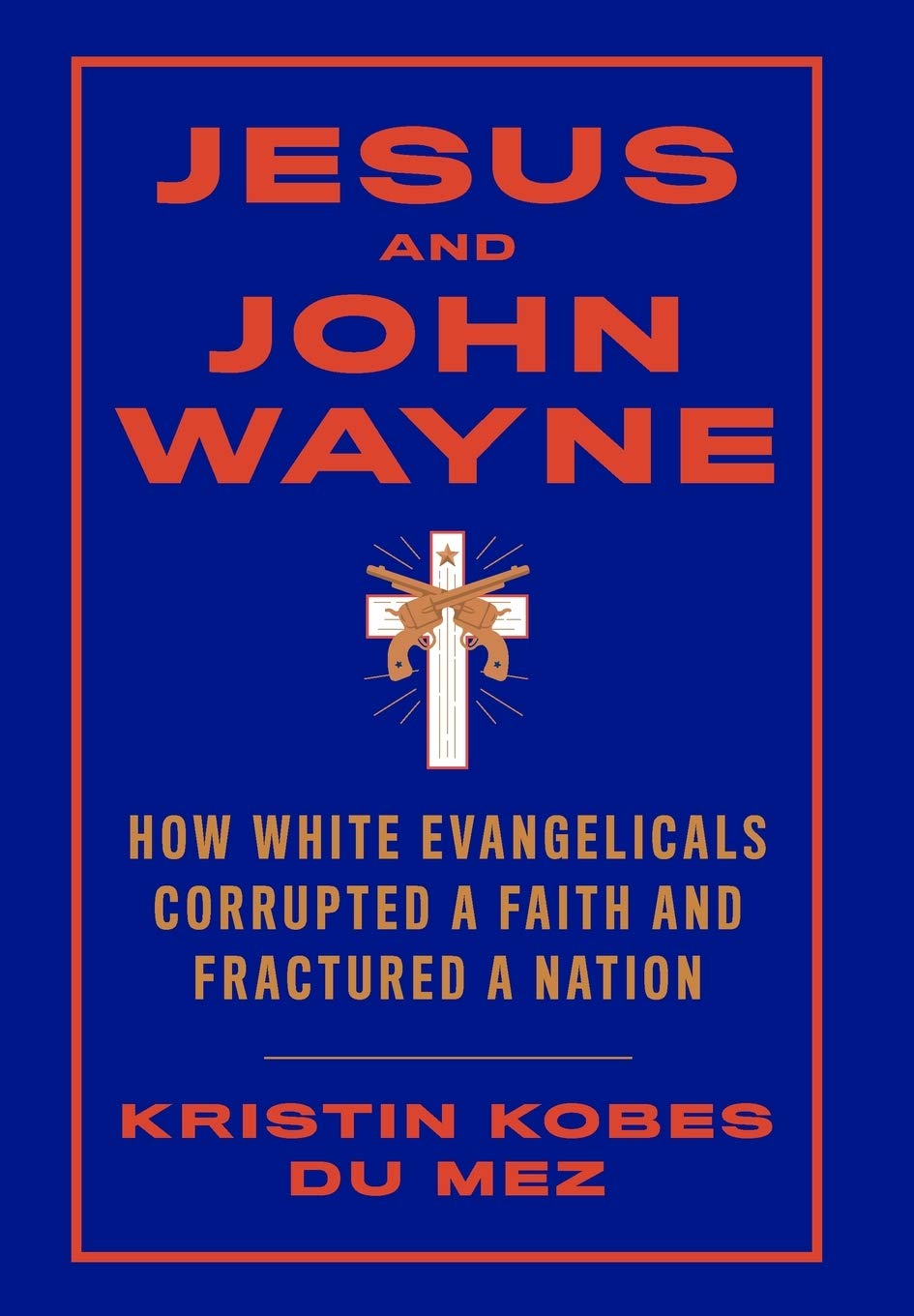 Kristin Kobes Du Mez argues in Jesus and John Wayne that white evangelicalism increasingly replaced the suffering Christ with the masculine protector. Cowboys, soldiers and political strongmen became models of Christian leadership. Evangelical manhood came to prize toughness, dominance and patriarchal authority. Du Mez writes that American evangelicalism embraced “a militant masculinity, an ideology that enshrines patriarchal authority and condones the callous display of power.”
Tony Spell’s assault on his neighbor is an embodiment of that American evangelical theological imagination. When Spell defended himself by claiming he was protecting his family, he was drawing from a story many conservative Christians — especially white conservative Christian men — have been taught from birth. A real man protects his family. A godly man stands his ground. A faithful patriarch does whatever is necessary to defend those under his care.
Whatever the courts ultimately decide about Spell’s criminal liability, the theology behind his actions did not emerge from a single afternoon’s anger or even six years of alleged harassment. It was forged in the fires of American evangelicalism, which in an attempt to make church appealing to men emphasized violent male authority and power.
The problem, however, is that this is not the story the Gospels tell.
A different kind of man
After the Last Supper, Jesus goes to the Garden of Gethsemane knowing it is there he will be arrested. John 18 records the arrest, then notes that “Simon Peter, who had a sword, drew it and struck the high priest’s servant, cutting off his right ear.” Peter responds exactly as many expected the Messiah’s followers to respond — with violence. If Jesus was about to establish his kingdom, this was the moment to fight. He would be the one remembered for striking the first blow.
Jesus’ words to Peter then must have been shocking: “Put your sword away! Shall I not drink the cup the Father has given me?” Jesus does not command his disciples to charge the ranks. His revolution is something altogether different. This nonviolence is something the theology of Tony Spell and those like him cannot accept.
When Spell was released from jail on bond, he went straight to his church where a guest speaker, Tim Merritt, was giving the main message. That sermon was titled “What it Means to be a Man.”
While the majority of the message was a hagiography of Spell and his church’s fight to remain open during the COVID-19 pandemic, Merritt did give one biblical example of who he perceived to be a real man’s man: The Apostle Peter. He even referenced this exact story, saying when he meets Peter in heaven, he’ll hug his neck and say: “You’re my man! I love you!”
He told the congregation: “Peter was not a pacifist. … They came to put hands on the man of God. … I don’t know how it came out but he had a CCW (concealed carry weapon). … The next thing you heard was ‘shing!’ (laughs). … Now he cut off Malchus’ ear. … Whackety whack whack.”
Merritt continued this glorification of Peter’s violence by downplaying Jesus’ rebuke: “The Lord did say, ‘Peter put your sword away.’ He didn’t tell him to get rid of it. He said put it up. Now’s not the time for that. But there’s coming a time.”
“This is not the way of Jesus.”
Then he ended the story by imagining Malchus going home to his family and relaying the story: “You know I was where I wasn’t supposed to be, doing what I was not supposed to do. But somebody was doing their job and he cut off my ear.”
To men like Merritt and Spell, violence against perceived enemies is something that brings them joy.
This is not the way of Jesus. Merritt’s exegesis ignores the point of the passage. He claims Peter’s use of violence was justified but was a bit early. He forgets that just a few verses later, Jesus will tell Pilate: “My kingdom is not of this world. If it were, my servants would fight to prevent my arrest by the Jewish leaders. But now my kingdom is from another place.”
Peter, for the record, from what we know, never picked up the sword again. The entire Gospel of 1 Peter is focused on suffering for and with Christ rather than retaliating against evil.
Rather than respond to force with violence, Jesus chooses a different way.
The Lion and the Lamb
In the Sermon on the Mount, the representative sermon of everything Jesus taught and lived, he tells those gathered on the mountaintop that a violence-for-violence exchange is not the way of God’s kingdom. N.T. Wright translates it this way: “You heard that it was said, ‘An eye for an eye, and a tooth for a tooth.’ But I say to you: Don’t use violence to resist evil!”
Even if Spell’s claims about his neighbor’s antagonism and harassment are correct, they do not and cannot justify a violent response. The message of Jesus is to “love your enemies and pray for those who persecute you, that you may be children of your Father in heaven.”
This is not complicated theology. In the Garden of Gethsemane, Jesus did not reject Peter’s courage or masculinity. He rejected what Peter thought being a man of God meant.
In the kingdom of God, strength is revealed through service, leadership through humility and victory through a cross rather than a sword. Power is found not through violent domination, but in the strength of will not to engage with violence.
Can we imagine Jesus straddled atop his enemies, offering blow after blow? Even in Revelation, where John envisions a conquering Christ returning in power. We are told, “See, the Lion of the tribe of Judah, the Root of David, has triumphed.”
Here’s the triumphant God we understand. He is the Lion of the tribe of Judah — a predator, a conqueror. He is the Root of David — from the line of kings, the King of Kings, a ruler and authority. He alone is worthy. But now hear John describes him: “Then I saw a Lamb, looking as if it had been slain.”
Jesus conquers not by shedding the blood of his enemies but by shedding his own blood. That is the choice before the church today. The way of the sword or the way of the Lamb, the way of violence or the way of peace, the way of loving the enemy or the way of doing them violent harm.
Tony Spell, representative of so much of evangelicalism, chose one way. Jesus chose another.
Josh Olds is a public theologian and pastor for those disillusioned with institutional church. He is the creator of the small-group video series “Year on the Mountaintop” and a featured contributor to Fostering Hope: A Prayerbook for Fostering and Adoptive Parents. Follow his work on Facebook or at JoshOlds.com.
Related:
Rapid spread of Delta variant throws some churches into reverse on their newfound ‘normal’
Have evangelicals become libertarians or have libertarians become evangelicals? | Analysis by Rodney Kennedy