

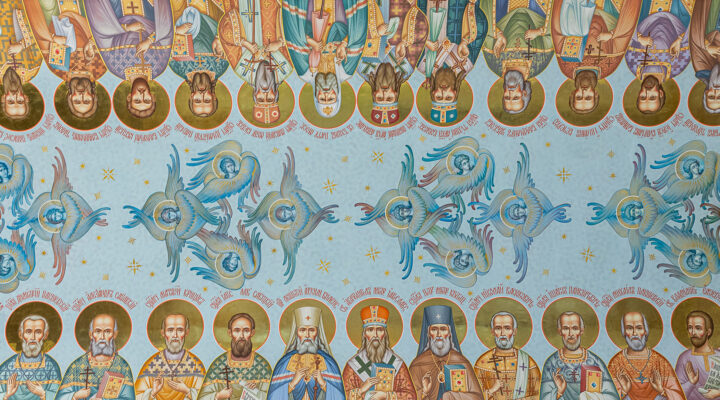
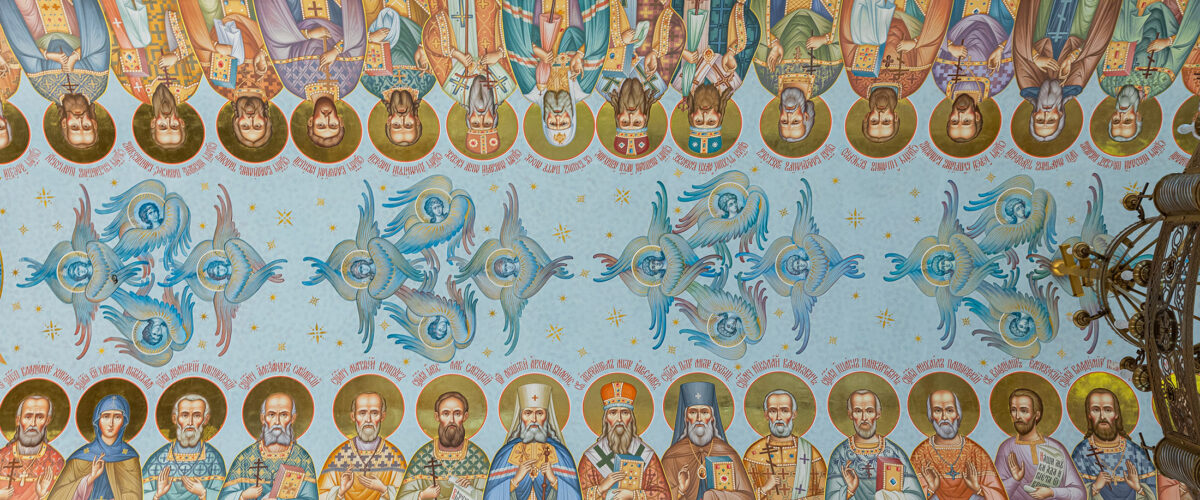
I have known many saints in my life.
My great-aunt Minnie was one. My grandmother “Dood” was too.
The lady I call Momma, Penny, is still a saint of affirmation.
My spouse, Lauren, has a saint’s patience. She should. She has to live in a house with me and two demanding but adorable children.
There’s more.
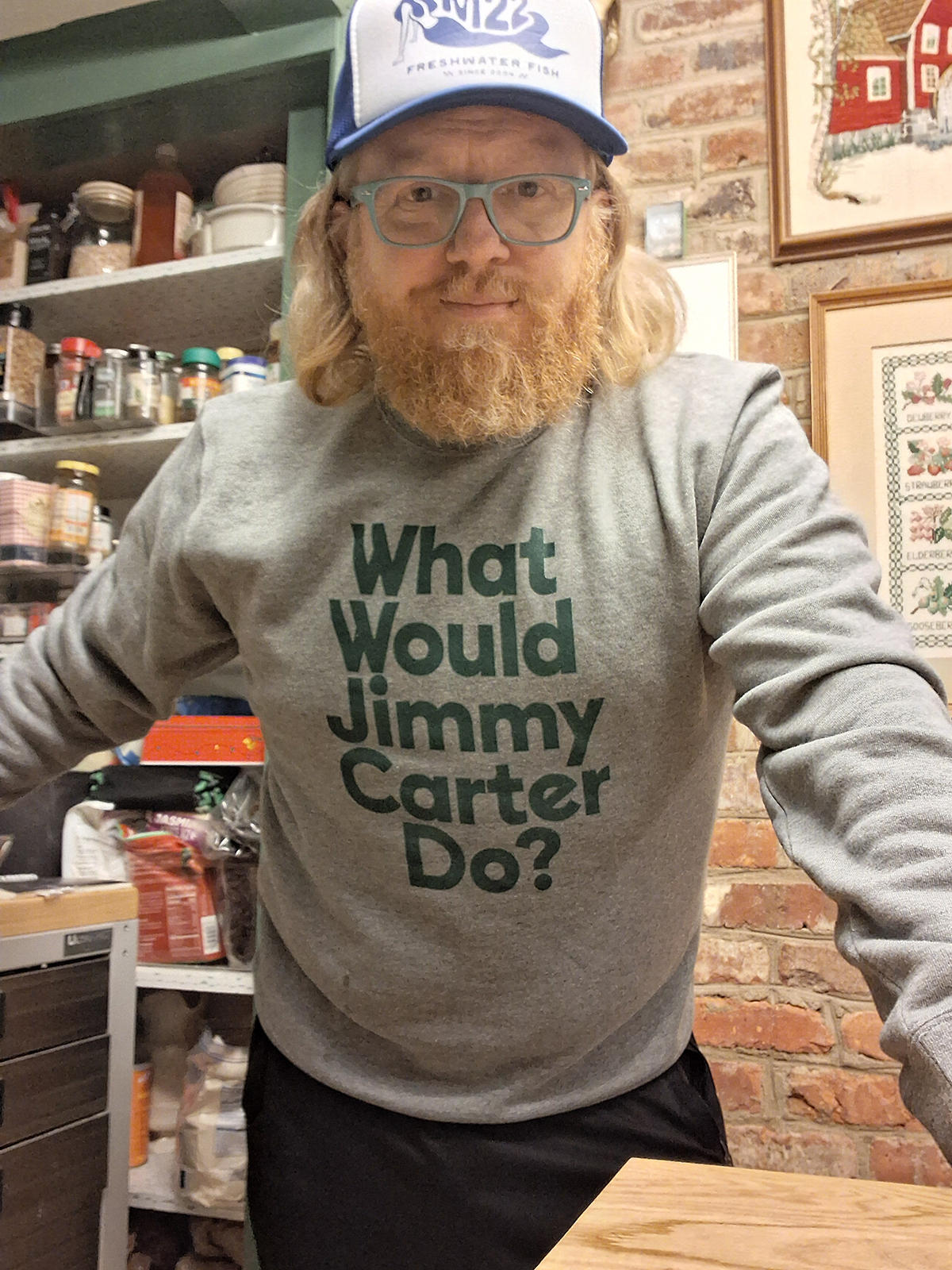
Justin Cox
Saint Bill, keeper of the Baptist flame. He taught a generation of seminarians and then decided to do the same for their children. He’s begotten many a fine dissenter.
Saint Don the Curmudgeon of Waffle House. A man who showed me raisin bread could be Communion bread.
Saint Nelson the Protector of “green” youth ministers. A colleague who gently guided me through the land mines of congregational ministry.
These saints I have touched and hugged.
Still there are others I never have met.
Saint Will the Mississippian Contrarian. He is the reason I tell people I’m a Baptist who is Southern and not a Southern Baptist, and that I’m smart enough to know the difference.
Saint Anthony the World Traveler. I blame and credit him for commissioning me to get up, move and be uncomfortable.
Saint Fannie Lou the Sick and Tired of Being Sick and Tired. That woman is the reason I march, support unions and don’t have any time for bureaucracy.
They are known to me, and yet I’ve never met them.
“We talk more about the priesthood of all believers and the great cloud of witnesses than we do saints.”
I am a Baptist. Born from a reform movement that distrusted hierarchy and preferred plain people to kings and ecclesiastical powers. We always have been a low-church people. We talk more about the priesthood of all believers and the great cloud of witnesses than we do saints.
We sure as hell aren’t known for praying to any, but Lord knows we know them. We talk about them without realizing it.
We name fellowship halls after those people. We dedicate stained-glass windows to them too. We say things like, “Miss Betty taught children’s Sunday School for 27 years.”
We tell stories about them to new members. When my family and I headed north so I could become pastor of a Baptist Church in Vermont, I heard stories about a man named Ron.
Ron was a naturalist. He was a writer. I’m told he was a man who possessed a dry wit. I know a lot about Ron because his daughters were still there. They told me I would have liked him.
But they weren’t the only ones. Everyone in the village had a Ron story, including my predecessor. This man served the faith community faithfully for nearly 40 years.
Pastor Dave arrived in Vermont via upstate New York. He came and did what good reverends do; he met people and loved them where they were.
Because of this, everyone loved him back. Everyone, including Ron.
For years, Ron came to church. He listened to Dave preach, call out hymns and lead people through prayer.
He’d also lightheartedly rib him when walking out the front door after the service.
“You know why I keep coming back?” he’d say. “To see if you’ll ever get it right.”
Dave would laugh.
Ron would laugh.
They’d do the same schtick the following Sunday.
Neither ever defined what “it” actually was.
“By the time I got there, the village had made him a saint. Nobody voted him in or canonized him.”
By the time I got there, the village had made him a saint. Nobody voted him in or canonized him. The people there simply refused to stop talking about him — they kept telling his story. They wouldn’t let him die.
Isn’t that how saints are made?
I think Baptists have more saints than we think we do. We find them in the ordinary, tucked away in the secular and profane. We talk about them differently. We immortalize them by exalting their faithful quirks and qualities.
Ironically, that means everyone is capable of becoming the sort of person whose life points others toward the divine. Which means Baptist sainthood is radically democratic. James M. Dunn, Patron Saint of Religious Liberty for All, would be proud.
We see the nursery worker who never missed a Sunday, and we give thanks.
We point to the deacon who quietly visited every shut-in, and we give thanks.
We call out the names of the two women who kept the church kitchen running for 40 years, and we give thanks.
We never stop talking about those we think are worth remembering. It’s in our DNA.
Maybe that’s why I found myself considering forming a one-man canonization committee last weekend. Profoundly grateful for an individual’s life’s work. An offering of charity so important that I am ready to install a small altar in my home. A shrine of some sort. A tabernacle built out of appreciation for a man named Willis Carrier.
You see, in 1902, Carrier, this child of God, helped create what we now know as air conditioning.
He made disciples too, and a couple of them came by my home during last week’s heatwave. Thanks to them, my family and I now have the chilling centralized air pouring out of our vents again.
That’s worth lighting a candle for at least.
That’s worth lifting a prayer to heaven.
That gets you a Feast Day in my book.
The order of worship would be brief: Gather inside, give thanks, and don’t sweat your ass off.
Justin Cox received his theological education from Campbell University and Wake Forest University School of Divinity and McAfee School of Theology, where he received his doctor of ministry. He is an ordained minister holding standing in the Cooperative Baptist Fellowship and American Baptist Churches USA. When not spending time with his spouse and daughters, he can be found writing and baking late into the night. His thoughts and reflections are his own.