

Those who share in Christ’s resurrection “will reign with him for a thousand years,” says Revelation 20:6, but some believers want Christians to exercise dominion right now.
That’s the heart of author Keri Ladner’s message in American Dominion: The Rise and Radicalization of a New Christendom.
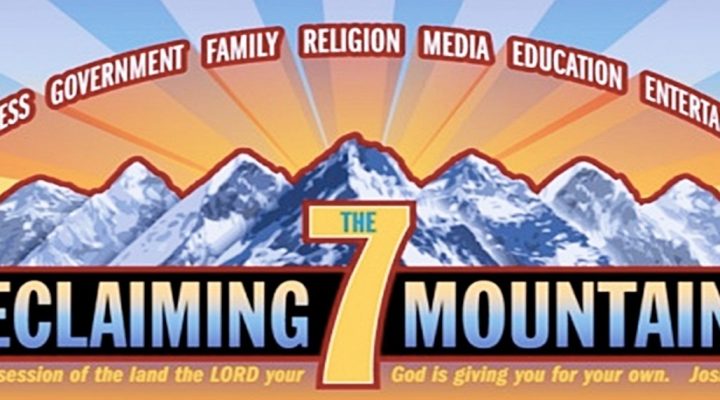
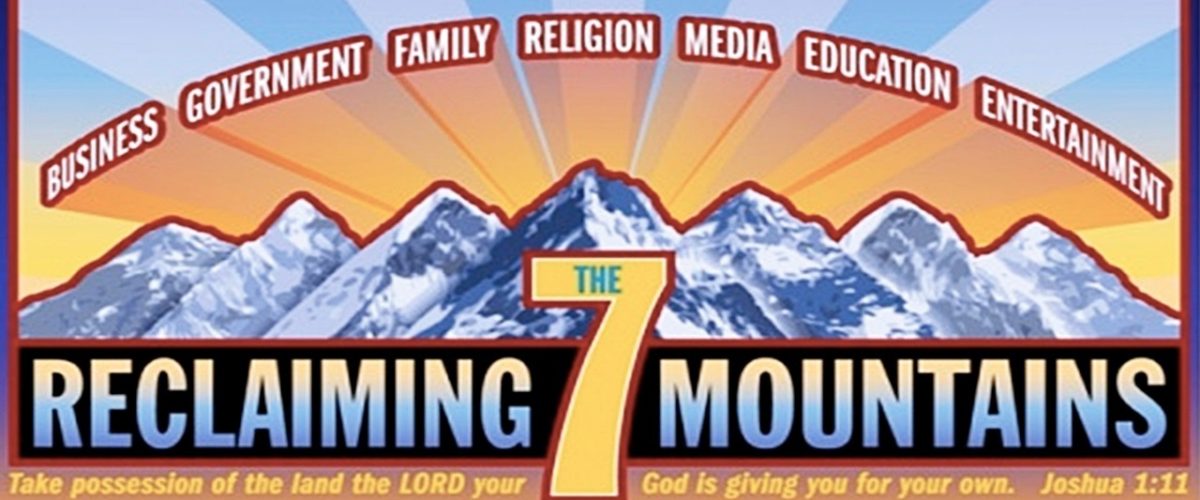
This new Christendom is led by Christian nationalists promoting the Seven Mountain Mandate, which claims the godly should rule over sinners by having dominion over key areas of culture: Family, religion, education, the arts, media and entertainment, business, and government.

Keri Ladner
“At their heart they are about supernatural engagement with the political system to bring about an idealized future in which believers are not at the periphery of political power, but at its very center,” writes Ladner, an evangelical who studies her politically active fundamentalist brethren.
Her previous book, 2024’s End Time Politics: From the Moral Majority to QAnon, featured a deep dive into the Jerry Falwell archives. While Falwell sought to engage democracy, today’s dominionists want to replace democracy with authoritarian rule by King Jesus through governing apostles who are answerable to no one.
That may sound outlandish, but parts of Seven Mountains theology are now the law of the land, thanks to President Donald Trump, his spiritual adviser Paula White-Cain, and an army of devoted dominionists ready to take charge.
Trump “gave them access to political power, and they in turn helped deliver him the White House,” Ladner writes. They tried to keep their anointed one in the White House even after he lost the 2020 election.
“Like the apostles who endorsed him, Trump could govern over the territory that God had given to him without accountability, as he answered to God alone. And because America had been given to Trump by God, no one had the right to take it away.”
Ladner covers some of the same ground explored in The Violent Take It by Force, Matthew Taylor’s study of New Apostolic Reformation. Both agree that:
- Teaching that encouraged Christians to seek influence in spheres of culture evolved into creeds of power and political conquest.
- Once-fringe ideologies are now center stage.
- Democracy is threatened by radical religious movements that claim God prefers the autocratic and cultic methods they see modeled by today’s self-proclaimed apostles, prophets and priest-kings.
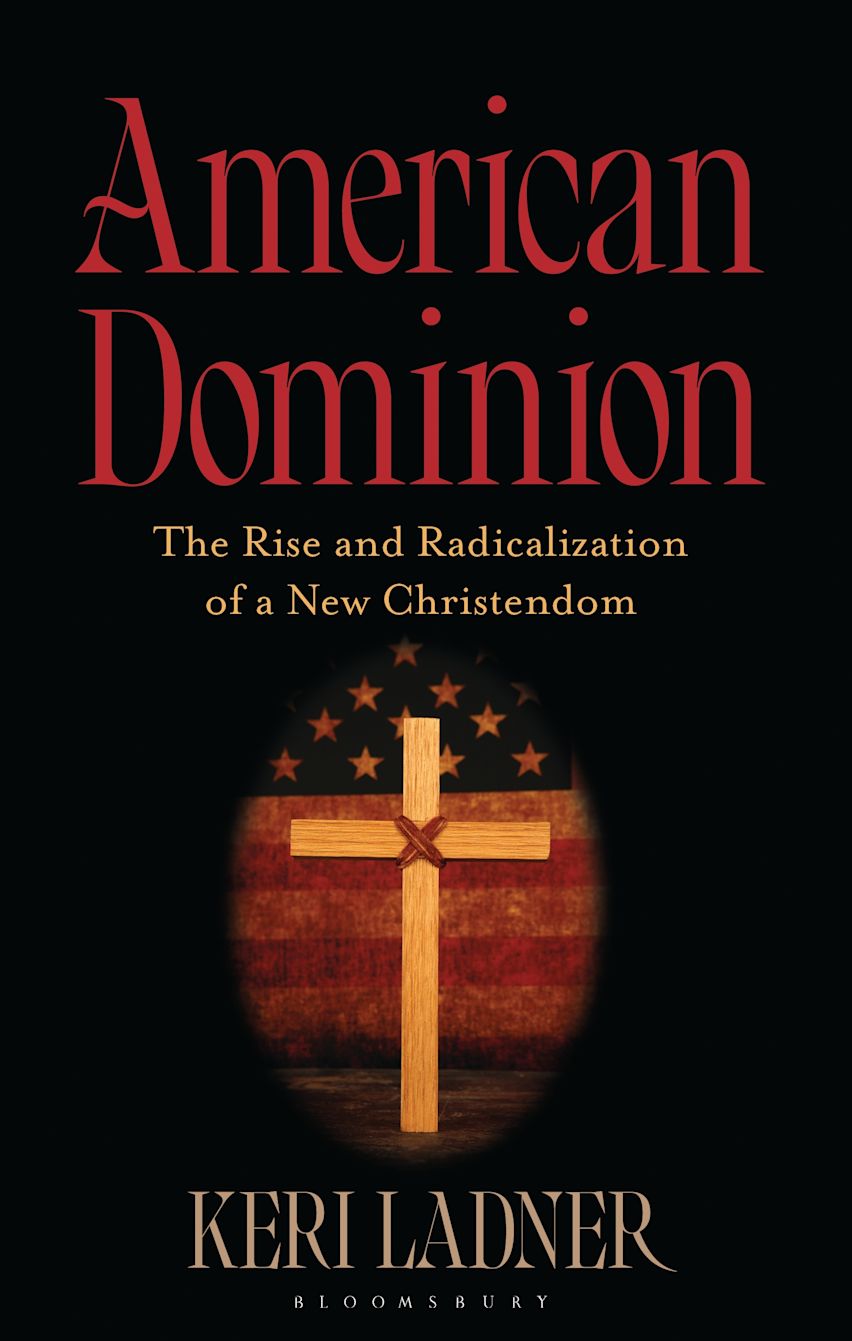 The new book explores dominionism, broadly defined, through a historical tour back more than a century to Frank Sandford’s authoritarian (and deadly) Shiloh community and Charles Fox Parham’s Bethel Healing Home. The two bonded over British Israelism, which claimed America was a new Israel and that only people with Anglo-Saxon blood could be Christians.
Their white supremacy was avidly embraced by the Ku Klux Klan and continues to animate some dominionists today, particularly Doug Wilson and fellow “paleo-Confederates,” Ladner says.
Her tour visits Gordon Lindsay of the Latter Rain Movement, Reconstructionist (and Holocaust revisionist) Rousas John Rushdoony, pseudo-historian David Barton, miracle revivals in Toronto and Florida, Francis Schaeffer, Mike Bickle, James Dobson, Peter Wagner, Dutch Sheets, Cindy Jacobs, Lou Engle, John Hagee, Che Ahn, Bethel Church, Sean Feucht, Doug Wilson, the Heritage Foundation, Sarah Palin, Rick Perry, Ted Cruz, and Mike Johnson.
Dominionist ideology has reshaped evangelicalism.
It is “about power that can be wielded — not influence, not service, not caring for those that society has rejected,” Ladner writes. “The goal was no longer to evangelize people. … Evangelism was a distraction from the real task of taking over the seven spheres.”
The goal of dominionist missions is “not evangelization but rather nation-building,” not discipling individuals within nations but discipling entire nations, the book contends. In Uganda, that means conservative activism and laws mandating the death penalty for homosexuality.
American Dominion doesn’t conclude with hope or a recipe for turning things around, other than a brief plea for renewable energy. Since oil and coal interests provide much of the funding for the climate-skeptical dominionist right, reducing their profits is one way to reduce their influence.
But the book helps readers understand the spiritual and political motivations of their dominionist brethren, particularly as America approaches midterm elections.