

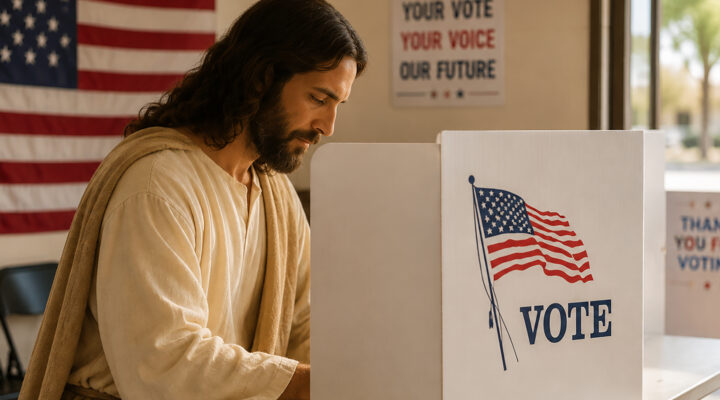

Is Jesus liberal or conservative?
Let’s turn to science to help answer that question, through a study by Jer Clifton and Nick Kerry at the University of Pennsylvania. They have continued surveying the underlying beliefs that separate liberals and conservatives. For 40 years, research has shown conservatives view the world as more dangerous than liberals do. This can explain many of the stances of each political party.
Tommy Nixon
In an article in Scientific American, Clifton and Kerry state: “In politics, researchers usually define ‘conservativism’ as a general tendency to resist change and tolerate social inequality. ‘Liberalism’ means a tendency to embrace change and reject inequality.” However, in their continued research on what they call “primals,” Clifton and his team took on a project to map out the world’s most fundamental beliefs about life.
Through this process, they discovered the previous research on the rift between liberals and conservatives might have an underlying belief: “We find instead that the main difference between the left and the right is whether people believe the world is inherently hierarchical. Conservatives, our work shows, tend to believe more strongly than liberals in a hierarchical world, which is essentially the view that the universe is a place where the lines between categories or concepts matter.”
In my journey and context, I have seen this makes sense regarding how people view the world. Conservatives want things to stay the same because these are age-old lines that shouldn’t be crossed, even if those lines support racist beliefs. There can be an undertone of not wanting to help people in poverty because, to quote Scripture, “The poor you will always have with you” or those in poverty have not chosen to get out of it.
Liberals want an ever-changing progression and evolution of our society, and even if it defies basic logic, you can be whatever you want to be.
One wants the lines to be very clear, and the other wants all the lines to be blurred.
 But Jesus, in his genius, affirms hierarchy by drawing lines while at the same time erasing them. Jesus consistently defies the hierarchy we place in this world yet affirms that one exists. In Luke 19:28-44, in one of his most revolutionary acts, he rides in on a donkey but doesn’t deny he is king. The people expected a revolutionary leader to rise, kill the Romans and reclaim the land. Yet, he rides in on a donkey, a symbol of peace, not a war horse.
He touches sick people and, instead of defiling himself, makes them whole. Leviticus 5:3 is clear about the lines drawn to maintain the Law, and yet Jesus not only steps right over those lines but redraws them in Matthew 15:17-20 by saying it is not what goes into a person that defiles them but what comes out of a person’s mouth from the heart.
He is touched by sinners and eats with them and befriends them — tax collectors, prostitutes, the marginalized and even the soldiers who tortured and killed him. He erases the lines of who can be loved and saved and yet still draws a line. In John 8:11 he tells the woman caught in adultery to go and sin no more. That’s a line, but not the one people in the crowd wanting to stone her drew.
This movement of Christ’s followers continued after Christ and even changed the hierarchy of the Roman household. In Ephesians 5:21-33 and Colossians 3:18-21, the idea of mutual submission is given to Christians living in a Roman world where the man of the house had absolute power. Yet Paul also still states that there is a hierarchy, and Christ is at the top.
This is what makes following Christ so difficult. He just doesn’t fit into our paradigms of right and left, conservative and liberal. He is above all. He embodies the tension of the middle.
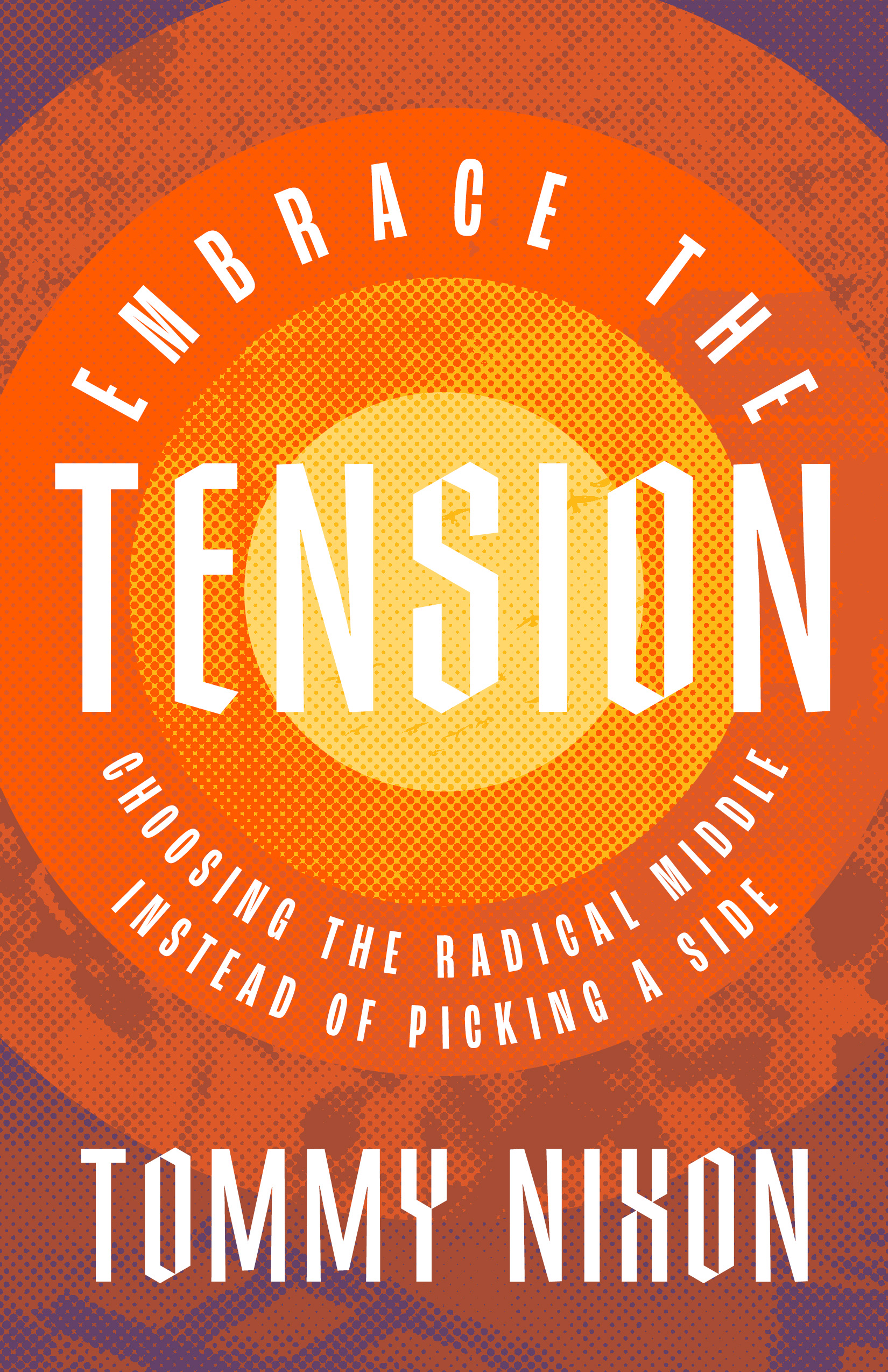
Tommy Nixon is CEO of Urban Youth Workers Institute, empowering leaders to transform the next generation through the gospel. He is the host of “The Radical Middle” and “The Future Is Here” podcasts. He cofounded the nonprofit Solidarity, planted One Life City Church and is a national voice in urban ministry and leadership. Tommy lives in Southern California with Rachael and their five kids. He is the author of Embrace the Tension: Choosing the Radical Middle Instead of Picking a Side, from which this excerpt is drawn. ©2026 by Thomas Joel Nixon. Used by permission of InterVarsity Press. www.ivpress.com.