


Over the course of his half-century career, Bill Bangham emerged as possibly the most prolific storyteller of missionaries who sacrificed to leave family and friends to share their faith far from their comfort zones.
The veteran Baptist journalist died Nov. 14 in Memphis at age 82.
Bangham’s work as a photographer and writer took a realistic path focusing on the everyday struggles of cross-cultural relationships. He made missionaries more approachable and less like heroes on pedestals.
Whether it was living among low-income sheepherders in Gallup, N.M., or dodging bullets in Sniper Alley in the siege of Sarajevo in the Bosnian War, the story was similar: God will provide in God’s way and on God’s timetable.
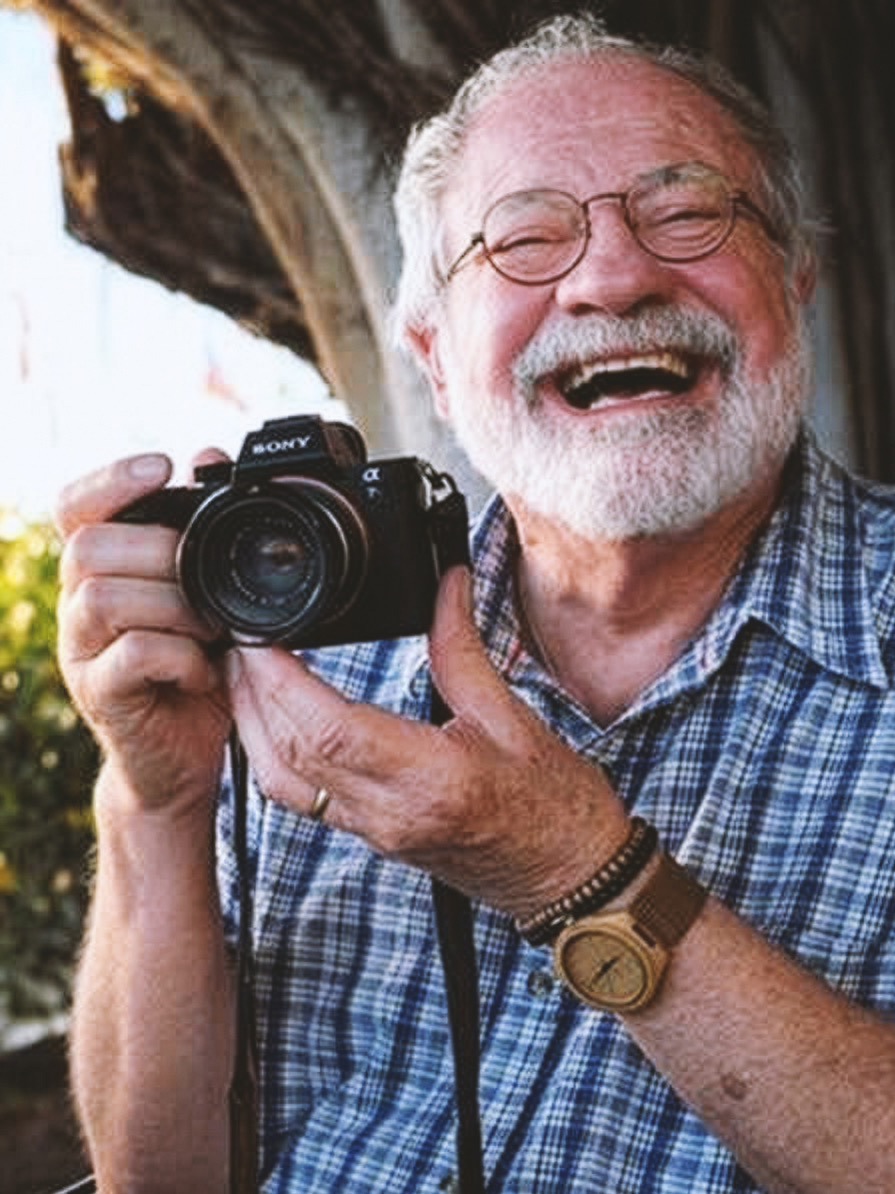
Bill Bangham
As a humanitarian, Bangham went below the surface to explain the context in which missionaries worked. For example, his coverage of the Bosnian War focused on the tensions between the opposing sides — Muslims vs. Christians — and the roots of the religious conflict in which the two faiths struggled to survive, even to death.
Former SBC International Mission Board global correspondent Erich Bridges explained his and Bill’s coverage of the Arab Spring uprising in 2012 and the young people who largely brought it to pass.
“We traveled through Tunisa, Egypt and Jordan, talking to young people — Muslim and Christian — who were hoping against hope for new freedom from tyranny and opportunity for a better life,” Bridges explained. “We profiled refugees fleeing the vicious civil war in Syria, urban professionals seeking promising careers, spiritually hungry people risking everything to seek new life in Christ.”
It was that kind of contextual reporting from the gritty side of life that gave readers a fresh perspective on the missionaries’ roles and the conditions under which they served.
Chris Turner, director of communications at the Tennessee Baptist Mission Board, said many laity may not realize how Bangham’s reporting, along with that of his peers and those he mentored, were instrumental in fueling the last half-century growth of missions sending agencies: “There is a generation of us who were drawn to missions because of The Commission magazine during his tenure.”
“I grew up, believing the only people God called in the ministry were preachers, youth ministers and worship leaders. I did not know God called people into journalism positions,” Turner said. “God does call people to be writers who write stories and report what he’s doing in the world. And that’s why, when I go speak at churches, I always use Luke 11 because we were all just like Luke writing about Jesus in the early church.”
Because of Southern Baptists’ strong media network based around storytelling, Turner eventually followed his calling and served on the Richmond staff of the former Foreign Mission Board and later as a Panama-based correspondent traveling Midland South America.
To demonstrate the influence of the agency’s communications department, the mission board’s survey of field personnel revealed the two greatest influences that brought them to the mission field were involvement in volunteer missions and The Commission magazine.

Bill Bangham and Stanley Leary at the University of Nations campus located in Kona on the Big Island of Hawaii
That’s how Bangham, and peers such as legendary photographer Don Rutledge, packaged the story of missions and brought more individuals onto the mission fields.
Throughout most of the 20th century, The Commission magazine and MissionsUSA magazine offered the Baptist missions equivalent of National Geographic-style coverage.
That’s how I met Bill Bagham and a host of other colleagues who became household names for Southern Baptists everywhere: Greg Warner, Marv Knox, David Wilkinson, Erich Bridges, Craig Martin and Mark Wingfield are five examples with direct BNG ties.
We were privileged to be part of the Golden Age of Southern Baptist journalism, and Bill Bangham is essential to that story.
Although he had an early interest in biological sciences and marine biology — he was director of the Biological Laboratories at George Washington University in the nation’s capital — he slowly ventured into freelance writing and photography.
Prior to moving into the Southern Baptist media world, he and his wife, Dianne, were actively involved in the denomination’s emerging lay renewal movement as members of Heritage Baptist Church in Annapolis, Md. His first book, The Journey into Small Groups; The Journey into Lifestyle Evangelism and Ministry, became a popular text among laity and was used by churches and national instructors Doyle Pennington and Reid Hardin.
The book caught the attention of the Memphis-based SBC Brotherhood Commission which led to an offer in 1983 for him to become editor of the commission’s flagship publication, World Missions Journal.
Bangham’s work at the Brotherhood Commission refined his holistic belief that lay renewal could motivate individuals to understand missions service is not just for others. He was able to show how responding to a divine call was entirely possible, and his later work gave examples of how to work out that calling.
A 1989 move to Atlanta saw him refine his skills as a staff member of the SBC Home Mission Board’s MissionsUSA magazine for domestic missions. Then in 1995, he moved to the SBC Foreign Mission Board where he began a 19-year career, beginning as director of presentations and later editor of The Commission.
Over the next two decades, he held every leadership position in the agency’s communications office and oversaw the agency’s worldwide storytelling operations. He retired in 2016 after 19 years of service there.
While Bangham excelled in writing, photography, videography and multimedia, he will perhaps be best remembered for tutoring and mentoring those of all ages in how to refine their storytelling skills. In 2016 he received the Lifetime Membership Award from Baptist Communicators Association.
He became a workshop lecturer for groups like University of the Nations in Hawaii and Storytellers Abroad in Santiago, Chile. In that capacity he further extended his mentoring of young people into the fast-expanding world of emerging media.
Bangham was skilled in working with faith-based organizations and, in 1991 co-founded ABRO, the American Belarussian Relief Organization. The nonprofit, largely working through churches of various faiths, helped children from Belarus living in the radioactive shadow of the 1986 Chernobyl nuclear disaster travel to the United States for free medical care to addresses health concerns.
His heartwarming stories and photography in his “Children of Belarus” series motivated families nationwide to provide assistance for more than 5,000 children in the former Soviet satellite.
Bill and Dianne eventually returned to Memphis after retirement to be closer to their two daughters. They were active members of Calvary Episcopal Church in downtown Memphis, where he mentored youth in their faith walk and was concluding a term on the church vestry.
Survivors include his wife, Dianne Bangham; daughters Sherianne Bangham and Shannon Bangham Dixon; grandson Max Dixon; and son-in-law Brian Dixon. A memorial service will be held at 10 a.m. Dec. 2, at Calvary Episcopal Church in Memphis.
For a gallery of his work visit here to see some of his most popular stories and photography from India, Chernobyl, the Arab Spring, Brazil and Cuba.