



Besides preaching and visiting the sick, too many ministers also are skilled at denying themselves vacation days, putting in extreme time at the office and scaling back on family time.
“We are well known for overworking,” said Merianna Neely Harrelson, the pastor of Emmanuel Baptist Fellowship in Lexington, S.C.
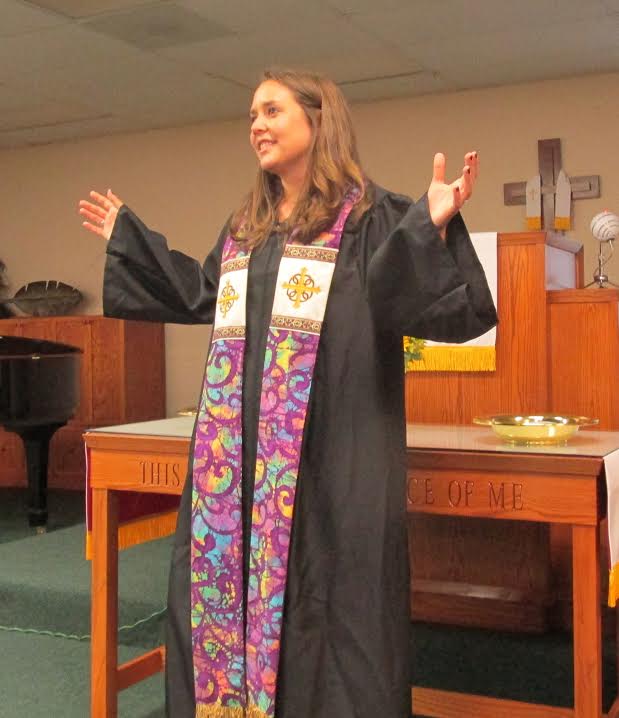
Merianna Neely Harrelson
And far too often, she added, the pastoral penchant for working to exhaustion stems from another trap ministers can fall into: codependency.
Harrelson told Baptist News Global that the temptation to please a congregation – or some of its more influential members – can be so strong that it detracts from a minister’s ability to function in the Christ-focused way he or she is called to do. In turn, lay people come to rely on ministers for inspiration and motivation, thus denying themselves authentic participation in the “priesthood of all believers.”
“Codependency is a psychological state in which one party is dependent upon another party’s approval for his or her own self-worth,” Harrelson wrote in a March 15 blog post. A commenter to her Facebook page praised Harrelson for the topic, adding that it “deserves a broader audience.”
Seeking interdependence
The subject is getting that wider audience, said George Mason, the senior pastor at Wilshire Baptist Church in Dallas, Texas.
“It’s being talked about quite a bit,” he said.
And that includes Wilshire through its well-known pastoral residency program, which prepares young ministers to meet the challenges that come with their callings.
During their time at the church, Mason said, residents read and discuss Generation to Generation: Family Process in Church and Synagogue.
The text lays out different ways codependency can plague ministers and churches. One is when a congregation becomes dependent on a detached-but-charismatic pastor. In this scenario, instruction flows downhill from clergy.

George Mason
“The congregation is always in the receiving role,” Mason said.
In the reverse scenario, instruction follows the will of church members, he said.
“The pastor becomes codependent and cannot think or act without figuring out what the congregation would want,” Mason said.
What Wilshire seeks to impart to its pastoral residents is leadership that feels confident to speak what he or she believes without feeling anxious. In turn, church members may feel empowered to speak lead – interdependently — as lay people, Mason said.
Serving Christ, not people
But that can be easier said than done — and often comes about from hard experience, said Starlette McNeill, the associate pastor at Village Baptist Church in Bowie, Md.
“As the newbie, of course you want to appeal to everyone,” she said.
McNeill said she knows because that’s how she was as a new minister a decade ago.
“I like to say I’m a recovering people pleaser,” she said.
At the beginning of her pastoral career, her first target to please was the personnel committee that selected her. Then she felt compelled to impress the founders and those with money in the church.
“Any pastor is faced with that,” she said.
McNeill said she kept her job description in front of her for a year in order to meticulously follow and meet every detail.
For a time she was also very formal with her pastor, Bruce Salmon.
“I kept calling him ‘Pastor Bruce,’” she said. “He kept saying, ‘don’t call me that.’”
McNeill said she gradually emerged from that phase as she became more confident in her abilities.
“My desire to please has really waned because I have to be myself, I have to be authentic,” she said.
And there was this realization, too: that pleasing people and pleasing God are not the same thing.

Starlette McNeill
“You need to serve Christ and in serving Christ you serve people – not the other way around,” McNeill said.
That lesson hit home as McNeill raised her young son in the church. She recalled feeling pressure to keep him well behaved whenever he was at church – despite the fact he was only 3.
“When you parent and pastor and you want to protect your child, it’s a fine line,” said McNeill, author of a recent BNG column on parenting and pastoring. “It’s a dangerous thing because you can end up pleasing all those people and losing your family.”
The self-serving church
Family tension is just one symptom of codependency between ministers and congregations, Harrelson said.
Another is burnout, depression and even suicide. Other signs can include programs and ministries designed mostly or exclusively to meet the needs of the congregation, not those in need around the church, Harrelson said.
Codependency as a topic in ministerial circles is increasing because codependency is increasing, Harrelson said. And that’s that happening because churches are downsizing budgets and staff as attendance and giving decline.
That trend, well documented by Pew and other organizations, increases the pressure on pastors as they become increasingly fearful of losing their jobs, she said.
And the real losers in those situations are the people the church was founded to serve.
“When you get into a relationship of pleasing you are losing that part of ministry that is guiding and challenging,” Harrelson said. “So the church becomes self-serving instead of serving the world.”