

 Born in 1805, William Lloyd Garrison is one of my favorite figures from the 19th century. He is probably best remembered for being an abolitionist who advocated for the immediate emancipation of slaves beginning in the 1830s, but his affinity for radical 19th-century causes went far deeper. Garrison was also a pacifist and a supporter of women’s rights. He even went beyond many of his abolitionist colleagues to argue against racial inequality.
When he was 26 years old (my age), Garrison founded an abolitionist newspaper known as The Liberator. From this platform, he and his friends would voice their opinions and make known their demand for human equality.
The paper did not go unnoticed when it was published in 1831. A few months after its initial publication, Nat Turner’s rebellion took place in southern Virginia. Many Southerners contended that some of the blame ought to be placed on Garrison and the militant rhetoric they found in his publication. Garrison leaned into and embraced the criticism by claiming that such violence was as he had predicted in earlier issues of the newspaper. Some Southerners sought to have his paper barred from publication.
In September 1835, outside the Garrison residence in Boston, a group of his opponents erected a gallows nearly nine feet high with two nooses intended for him and his British abolitionist friend George Thompson. A month later a mob chased him through the streets of Boston. When he was captured, they tied a rope around his waist and dragged him through the city.
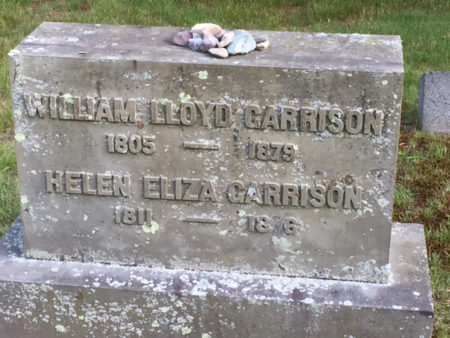 William Lloyd Garrison is an inspiring figure for his unceasing commitment to human equality, but he was not perfect.
Garrison was a good friend of Fredrick Douglass for many years. The two figures had a falling out, however, when Douglass disagreed with Garrison’s constitutional interpretation. Garrison believed the United States’ Constitution was inherently a pro-slavery document and contradicted the Declaration of Independence’s statement that “all men are created equal.” Douglass contended in his anti-slavery paper, The North Star, that the Constitution was antislavery.
More was at play in this conflict than mere constitutional interpretation. Garrison felt the problem of their disagreement resided more in Douglass’ attitude and ego than his interpretation. Douglass responded to the disagreement. The former slave explained that white abolitionists like Garrison were solely interested in his story and not his ideas or thoughts. He explained, “My speeches were almost exclusively made up of narrations of my own personal experience as a slave. … ‘Tell your story, Fredrick,’ would whisper my then revered friend, William Lloyd Garrison, as I stepped upon the platform. I could not always obey, for I was now reading and thinking.” Although good intentioned, Garrison was merely using Douglass for his story and experience — a story and experience Garrison would never, nor could ever, have.
We people of a lighter hue continue to struggle with what Garrison struggled with, especially men. We struggle to listen. We contend that we have all the answers, but we cannot have all the answers because our stories and experiences are not representative of the whole human experience. Perhaps our commitment to justice and equality has opened our minds to a conception of the Kingdom of God — a conception of church — in which all are welcome to come and participate in God’s narrative of salvation. But if we are only interested in collecting the stories and experiences within our pews with no intention of allowing persons to affect change in our minds and in our communities, we continue to commit the sin of oppression.
Yes, William Lloyd Garrison is a hero of mine, but he is a hero with whom I wrestle and struggle. The tragedy of his unwillingness to remain friends and in conversation with Fredrick Douglass results from an arrogance that has been seen time and time again. While I often fail, I continue to listen to the disagreement between Garrison and Douglass and I try to do better.