

By Bob Allen
One hundred sixty-seven years after forming over the right to appoint slaveholders as missionaries and 17 years after apologizing for the denomination’s racist past, the Southern Baptist Convention elected its first African-American president June 19.
Messengers to the June 19-20 SBC annual meeting elected New Orleans pastor Fred Luter by acclamation to lead the nation’s second-largest faith group behind Roman Catholics. Luter, pastor of Franklin Avenue Baptist Church in New Orleans, was nominated to the office by David Crosby, pastor of First Baptist Church in New Orleans.
“He is qualified in every way to hold this office,” Crosby said. “We have an opportunity to make history, to show the watching world the truth about our savior and ourselves and to affirm again the mission that undergirds everything we do.”
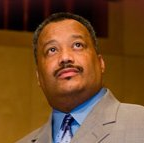 Wiping away tears, Luter came to the platform to thank messengers for his election. “To God be the glory for the things that he has done,” Luter said. “God bless you. I love you.”
Luter’s election comes at a time when Southern Baptists are seeking to turn around a numerical decline and to elect leadership more representative of the ethnic diversity that exists in the convention’s 40,000 churches.
Ed Stetzer of LifeWay Research says the percent of non-Anglo churches has moved from one in 20 to one in five just during the last two decades.
It also adds credibility to efforts by the denomination to shed its past image as defenders of Jim Crow in the South during the Civil Rights Movement championed by black Baptists like Martin Luther King.
“The beginnings of the SBC were deeply shaped by the national divisions over slavery, and it has continued to live out that history,” said Curtis Freeman, research professor of theology at Duke University Divinity School.
Freeman, director of Duke’s Baptist House of Studies, termed Luter’s election “a powerful symbol that provides an opportunity for the convention to move beyond the racialized divisions of the past and into a future where white and black Baptists might begin to see themselves as one people.”
Emmanuel McCall, longtime director of black church relations for the Southern Baptist Home Mission Board, dates real progress toward racial reconciliation in the SBC to 1957, when the HMB (since reorganized into the North American Mission Board) hired Victor Glass as liaison with the National Baptist Convention.
McCall, an adjunct faculty member at Southern Baptist Theological Seminary from 1970 until 1996 and past moderator of the Cooperative Baptist Fellowship, said in his 2007 memoir of race and Baptists, When All God’s Children Come Together, that the founders of the Southern Baptist Convention found theological justification for white supremacy in the Curse of Ham theory, which came into use in defense against abolitionists between 1800 and 1865.
McCall said the myth that black people were made dark by a curse that God put upon one of the sons of Noah was largely regarded as the “inspired” word of God until scholarship of the 1960s refuted it. McCall said questions around the theme were raised regularly at race relations conferences until the 1970s, and that the notion still exists on the fringes.
McCall said denominational leaders’ views on race evolved with the rest of white America. After President Truman desegregated the armed forces, Southern Baptists in 1947 passed a resolution opposing racial prejudice and pledging to “cooperate with Negro Baptists in building up of their churches, the education of their ministers, and the promotion of their missions and evangelistic programs.”
In 1954 the Christian Life Commission supported Brown v. Board of Education by encouraging the SBC to affirm civil authority. As SBC president in 1958-1959 and as a member of the CLC’s board of trustees, Arkansas Congressman Brooks Hays pushed progressive racial views in the denomination that wound up costing him his political career.
In 1960 Foy Valentine, a protégé of Southwestern Baptist Theological Seminary professor T.B. Maston, took over as director of the Christian Life Commission lobbying for ethical issues including race. After a seminar in Washington where President Johnson invited participants to the White House and solicited their help in passing the Civil Rights Act of 1964, a member of the SBC Executive Committee suggested the agency be abolished.
In 1968 the commission worked with SBC President Franklin Paschall for adoption of A Statement Concerning the Crisis in Our Nation that confessed Southern Baptists’ shortcomings in advocating racial justice. About one fourth of voting messengers opposed the statement described by newspaper editors as the denomination’s strongest statement ever on race.
Another catalyst for racial reconciliation was the Home Mission Board under leadership of Arthur B. Rutledge from 1965 until 1976. Rutledge gave Home Mission Magazine editor Walker Knight and staff freedom to write about churches and missionaries on the cutting edge of community action and change.
Rutledge also expanded work with National Baptists to department status, in 1968 hiring McCall as the first African-American to serve on the national staff of an SBC agency. Headlines read, “Southern Baptists elect a Negro executive.”
Sailing wasn’t always smooth for progressives in the SBC. In 1971 the Sunday School Board recalled 140,000 copies of a publication that featured a front-cover photo of a black male student talking to two white female students on a college campus. McCall says public backlash to the incident was a major embarrassment that nudged the denomination toward a healthier attitude about race.
In the early 1990s, a number of Baptist state conventions passed resolutions apologizing for past racism to clear the air in anticipation of the SBC’s 150th anniversary in 1995. One in the Georgia Baptist Convention was sponsored by current SBC president Bryant Wright, who had encountered animosity from black religious leaders while trying to coordinate an area-wide evangelistic crusade in preparation for the 1996 Summer Olympics in Atlanta.
For the first time, historians began discussing frankly the role that slavery played in the SBC’s founding. In 1995 the Christian Life Commission, under direction of Richard Land, held a Racial Reconciliation Consultation of 16 Baptist leaders, equally divided between black and white, who drafted what became the SBC resolution apologizing for the denomination’s historic support for slavery and acceptance of past racial injustice including segregation.
The statement went on to “genuinely repent of racism of which we have been guilty, whether consciously or unconsciously” and “ask forgiveness from our African-American brothers and sisters, acknowledging that our own healing is at stake.”
Land’s work for racial reconciliation was tarnished recently when his trustees reprimanded him for comments about racial profiling deemed harmful to black-white relations.