

By Bob Allen
An expert in church-state issues says recent remarks by vice presidential nominee Paul Ryan show that even after 50 years, many Americans misunderstand a landmark Supreme Court ruling that banned the mandatory recitation of prayers in public schools.
Asked at a campaign stop in Utah if states should have the right to allow a “prayer or pledge” in schools, the Wisconsin congressman said “that’s a constitutional issue of the states.” He added, however, that in Utah such a measure “would have a pretty good chance” of passage.
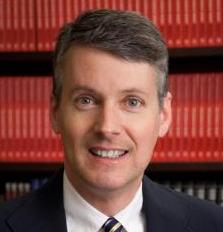 Rob Boston, senior policy analyst at Americans United for Separation of Church and State, responded in a blog Sept. 6 that Ryan is just plain wrong.
“State legislators can, of course, pass school prayer laws if they want, but it’s a waste of time,” Boston wrote. “If a law mandates or compels young people to take part in prayer or religious worship, the courts will strike it down.”
Boston wrote a feature article in the June 2012 issue of Church and State magazine marking the 50th anniversary of Engel v. Vitale, the June 25, 1962, Supreme Court decision that declared recitation of state-written prayers in public schools a violation of the First Amendment’s ban on establishment of religion.
Two cases the following year resulted in similar rulings against Bible reading and reciting the Lord’s Prayer in schools, setting up a cultural divide that resonates in current-day controversies such as whether high-school graduation ceremonies can be held in churches or government bodies can open public meetings with ceremonial prayer.
Roots of the debate go back to the earliest days of America’s founding.
The Puritans were the first to point out the need for some system of public education, establishing schools to teach not only how to read and write but also to pass on the fundamentals of their faith.
After disestablishment of the Anglican Church during the Revolutionary War, Thomas Jefferson suggested the new nation needed an educational system and that tax dollars should pay for it.
The idea didn’t take root until the 1840s. Horace Mann, a pioneer in public education and a Unitarian, thought Bible reading useful for moral instruction and promoted its use in public schools as long as it was done without comment.
Bible reading and devotions were prevalent in communities that viewed Protestant Christianity as the norm and had little contact with outsiders. Religion became a bigger political issue following World War II, when heightened fears over communist influence in American institutions prompted laws like adding “under God” to the Pledge of Allegiance to differentiate between loyal Americans and a godless enemy.
In 1951, New York’s state board of education approved a 22-word “nondenominational prayer” to be said aloud at the beginning of each school day: “Almighty God, we acknowledge our dependence upon Thee, and we beg Thy blessings upon us, our parents, our teachers and our Country.”
The parents of 10 pupils in New Hyde Park, N.Y., filed a lawsuit claiming use of the prayer was contrary to their own religious beliefs and practices. The local court found the prayer constitutional as long as the students whose parents objected were not forced to participate. The decision was upheld by the New York Court of Appeals.
The U.S. Supreme Court disagreed in a 6-1 ruling (two justices had no part in the decision) finding the practice “wholly inconsistent with the Establishment Clause.”
“There can, of course, be no doubt that New York’s program of daily classroom invocation of God’s blessings as prescribed in the Regents’ prayer is a religious activity,” Associate Justice Hugo Black wrote in the majority opinion. “It is a solemn avowal of divine faith and supplication for the blessings of the Almighty.”
The decision was controversial, but Baptists, historically supportive of the separation of church and state, supported it by and large. Herschel Hobbs, president of the Southern Baptist Convention at the time, pronounced it “one of the most powerful blows in our lifetime, maybe since the Constitution was adopted, for the freedom of religion in our nation.”
The ensuing years witnessed a series of efforts by lawmakers to amend the Constitution to re-establish the practice of school prayer. The Southern Baptist Convention passed a resolution in 1971 supporting only “prayer experiences that are voluntary and uncoerced by governmental or ecclesiastical authorities.”
The SBC reversed course in 1982 with a resolution supporting a constitutional amendment proposed by President Ronald Reagan that would have said: “Nothing in this Constitution shall be construed to prohibit individual or group prayer in public schools or other public institutions. No person shall be required by the United States or by any state to participate in prayer.”
In 1991, the SBC Christian Life Commission (now called the Ethics and Religious Liberty Commission) filed a brief asking the U.S. Supreme Court to reverse its 1971 decision in Lemon v. Kurtzman that established a three-prong test to determine whether a law passes constitutional muster: It must have some secular, or non-religious legal purpose; neither promote or inhibit the practice of religion and not create “an excessive government entanglement with religion.”
The Supreme Court disagreed, ruling June 24, 1992, in Lee v. Weisman that principals of middle and high schools in Providence, R.I., could not invite members of the clergy to give invocations and benedictions at their schools’ graduation ceremonies.
Boston said many of the parents in the 1962 case argued that the government had no business instructing children about when, whether or how to pray. For that reason, he said, he’s always been puzzled why more conservatives don’t support the ruling.
Boston said he agreed with Ryan about one thing: If put to a vote, school prayer would easily pass in Utah.
“He’s right about that, and most likely the prayer recited would reflect the majority faith of Mormonism,” Boston said. “The faiths and philosophies of everyone else would be relegated to second-class status. Compulsion, not choice, would become the operating principle for religious liberty as a type of religious mob rule carried the day. And all of this would be imposed on children, some of whom would be too young to even figure out what was going on.”
“You can call that a lot of things,” Boston observed. “’Conservative’ isn’t one of them.”