


Charlie Kirk did not invent the method of traveling “stump debates” or campus spectacles; that tradition reaches back centuries. But he did master a modern version of it by bullying underprepared college kids rather than engaging seasoned orators, scholars or those with deep pockets and experience.
The absurdity lies not just in his tactics but in how the media framed them as legitimate debate, when in fact the entire setup was a carefully staged performance.
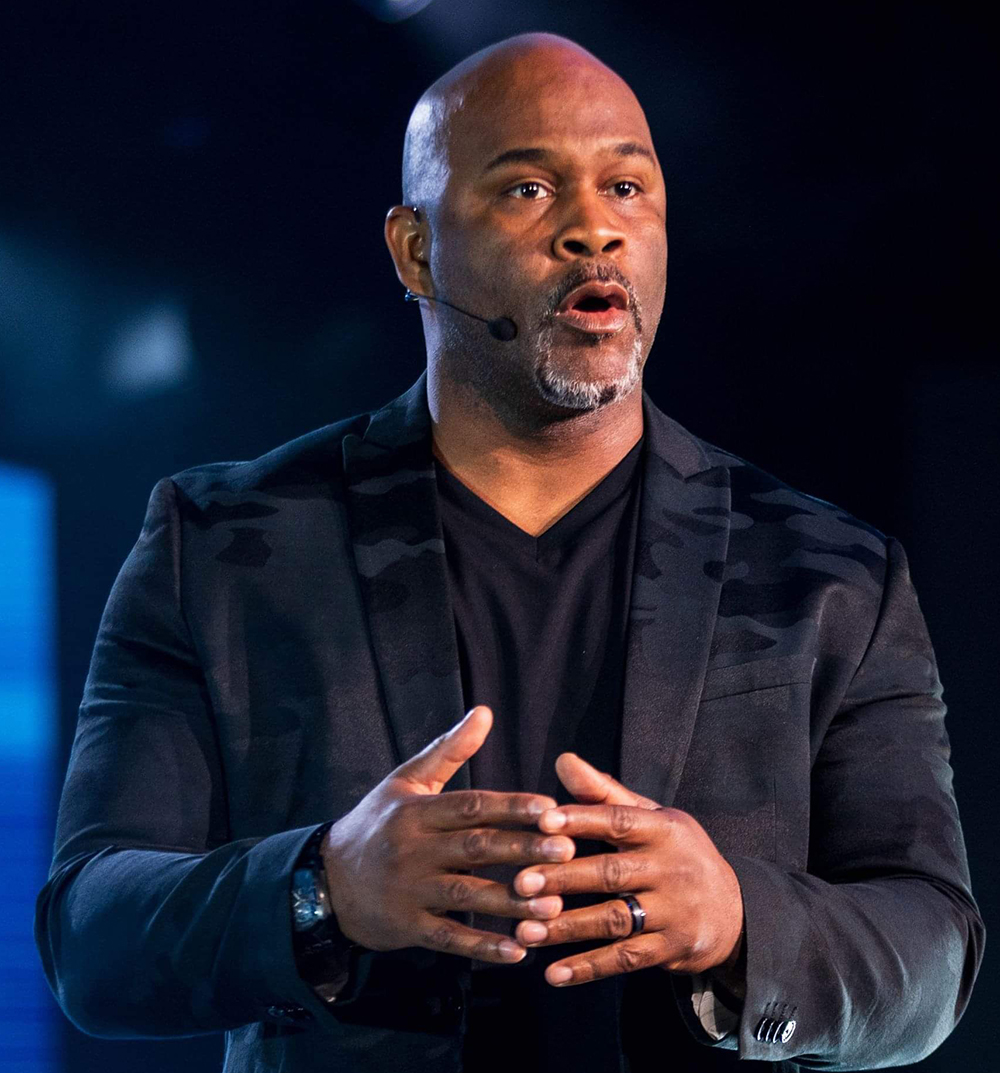
Edmond W. Davis
A critical question remains: Who invited Charlie Kirk and his organization onto these campuses? Were his appearances funded by student groups, outside donors or the colleges themselves? Was a speaker’s fee involved, and if so, what was the amount and who paid it? Transparency about these arrangements is crucial because it reveals how political operatives can utilize taxpayer-supported institutions as platforms for partisan gain.
If public funds or student activity fees helped finance these events, then students deserve to know whether their own money was used to underwrite the humiliation of their peers. These tours were marketed as opportunities for open debate, but in practice, they served as platforms for partisan content creation.
What Kirk staged on campuses looked like a debate but actually was a rigged performance. He was a professional political operative who had spent years honing talking points and memorizing statistics. He knew exactly which topics would come up and had practiced responses ready.
Meanwhile, his “opponents” were typically 19-year-olds wandering over between classes. It was the intellectual equivalent of watching a professional boxer spar against random gym-goers. The outcome was predetermined.
“It was the intellectual equivalent of watching a professional boxer spar against random gym-goers.”
Kirk used a corrupted version of the Socratic method. Instead of genuine questions, he asked leading questions designed to trap students in contradictions. A classic example was his approach to gender identity.
Beginning with a simple definitional query — “What is a woman?” — he would then pivot aggressively, exploiting social, biological or edge-case answers to corner students. The result was not clarity but confusion.
He further employed rapid-fire questioning, interruptions and reframing so students could barely articulate a coherent argument. This gave the illusion the students were uninformed or incompetent, when in reality they were denied the time to respond fully.
The editing process was as powerful as the stagecraft. Kirk’s team filmed hours of footage, then sliced away nuance. Only the “gotcha” moments survived — clips that made him look brilliant and students look unprepared. Students who made strong points often found those moments mysteriously missing from the final uploads.
This wasn’t a debate; it was propaganda repackaged as an intellectual triumph. His “Prove Me Wrong” format was misleading from the start. It suggested he was open to persuasion when, in fact, the entire setup prevented such an outcome.
Real debate requires humility — the possibility that one might be wrong. Kirk’s certainty was performative rather than earned.
Scripture warns us about this kind of empty spectacle:
- Proverbs 18:2 — “A fool takes no pleasure in understanding, but only in expressing his opinion.” Kirk’s tours embodied this spirit: performance without pursuit of truth.
- 2 Timothy 2:16 — “But shun profane and vain babblings: for they will increase unto more ungodliness.” These stump exchanges did not cultivate wisdom; they spread division.
The consequences stretch beyond one man’s performances. By turning debate into a game of humiliation, Kirk corrupted the very purpose of dialogue in higher education. Students were not just losing arguments; they were learning that engagement with opposing views is dangerous and futile.
“His method deepened polarization, casting politics as a zero-sum contest where opponents were not just wrong but ridiculous.”
His method deepened polarization, casting politics as a zero-sum contest where opponents were not just wrong but ridiculous. This performance style has since been copied by countless imitators who deploy the same “can’t lose” formula: stage a confrontation, edit the footage, declare victory.
Charlie Kirk’s “Prove Me Wrong” campus tours never were about truth. They were about manufactured victories. Vulnerable students became props for viral clips. Intellectual violence replaced intellectual humility. And a generation of learners was left with the impression that serious debate is nothing more than entertainment.
The tragedy is that college campuses desperately need more authentic, principled dialogue. Students are forming their worldviews and wrestling with complex issues. They deserve engagement that strengthens their reasoning, not performances designed to make them look foolish.
Now MAGA and perhaps Turning Point want to create reactions from HBCU, HSI, MSI and TC institutions in the U.S., knowing with the formula and proper training by campus faculty, staff and students, it could still be organized chaos. At this time, it shouldn’t be allowed due to the increasing elements of white rage in particular by white men (large crowds, public arenas etc.), and the historically still lingering HBCU threats in 2025.
Kirk may have mastered the modern stump exchange, but the cost was borne by young people who deserved better.
Edmond W. Davis is a social historian, speaker, collegiate professor, international journalist and former director of the Derek Olivier Research Institute. He is an expert on various historical and emotional intelligence topics. He’s globally known for his work as a researcher regarding the history of the Tuskegee Airmen and Airwomen. He’s the founder and executive director of America’s first and only National HBCU Black Wall Street Career Fest.
Related articles:
Here’s the real context for understanding Charlie Kirk | Analysis by Rodney Kennedy
On Charlie Kirk, selective outrage and a church that refuses to tell the truth | Opinion by Justin Bronson Barringer
The Stepford Supporters: MAGA’s scripted response to literally everything | Opinion by J. Basil Bannebohm