


The COVID-19 pandemic has presented American congregations with all manner of unprecedented decisions and dilemmas, including whether to accept government money to meet payrolls.
But faced with decreased revenues, many churches have done just that — even while acknowledging the historic tenet of church-state separation.
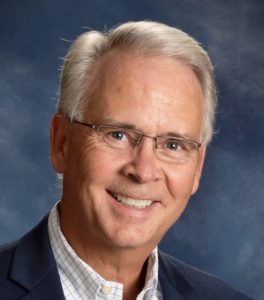
Travis Collins
To some degree, all of that weighed on Travis Collins, pastor at First Baptist Church in Huntsville, Ala., last spring as his staff considered applying to the U.S. Small Business Administration’s Paycheck Protection Program, or PPP.
“During the conversations about taking the loan, I was one of the more hesitant ones,” he said. “But I gave in because I just don’t know what the future holds.”
First Baptist accepted the funds in late April, mostly to cover payroll costs for the 42 employees of its Weekday Early Education ministry. The loan also helped with payroll for an additional 38 church staff members, said Jud Reasons, executive pastor at First Baptist.
“With no kids being there and no revenue coming in, we wanted to keep a paycheck going to every single employee,” Reasons explained.
Jud Reasons (Photo/FBC Huntsville)
Covering payroll is the aim of the loan program created by the Coronavirus Aid, Relief, and Economic Security Act, known as CARES, enacted by Congress in March. PPP was designed to help small businesses retain workers and was expanded to include religious and nonprofit organizations.
According to the SBA, the loans will be fully forgiven if 60% or more is used for payroll. Other acceptable uses include payments for mortgage interest, rent and utilities.
But accepting the 1% interest rate loan still presented a dilemma in Huntsville.
“For our brand of Baptist, that is a big deal and was a big deal for us,” Collins said. “And if we are not living with such uncertainty we would have thought at least twice.”
‘Keep people employed’
Uncertainty is usually the deciding factor in taking the federal money, said Phill Martin, CEO of The Church Network, an interdenominational association focused on church administration.
Phill Martin
“A vast majority of our congregations have gone the PPP route. They have applied, and the vast majority have gotten the money. They saw the funds as a security blanket.”
Some have changed their minds, he added. “A few made the decision to return the money because they were not experiencing the declines in giving they initially anticipated.”
Among those who hung onto the funds, most applied it to salaries of employees, particularly in large congregations with layered staffs between church, day cares and schools.
Martin said he sees both sides of the Constitutional issue. “There is validity in not taking the loan because of separation of church and state.” But PPP is available to all faith groups so that no one religion is being elevated above others. And the economic argument also holds validity, he said.
“Another reason it makes sense for churches to take those resources is the very purpose the bill was enacted, which was to keep people employed and keep them active in the economy.”
‘It has kept ministries moving forward’
The inclusion of faith-based groups in the SBA program took many by surprise — including faith groups, said Michael Martin, president of the Evangelical Council for Financial Accountability.
But it shouldn’t if you consider how many people churches employ, he added. “People often don’t think of churches and nonprofits as employers or of the significant role they play in the economy.”
Michael Roberts (Photo/ECFA)
The federal government estimates faith-based groups, including churches, represent approximately 10% to 12% of private-sector employment, he explained. That suggests a strong public interest in religious and nonprofit organizations retaining employees.
“The PPP program was a bit of an experiment, and it’s too soon to gauge, overall, how effective it has been,” Martin said. “But it has kept many businesses going and it has kept many ministries moving forward.”
A June survey by ECFA found that approximately 80% of nonprofit respondents and 60% of church respondents have participated in PPP. And the organization’s online resources dedicated to the program have been in high demand.
“We had three webinars since the CARES Act that 13,000 people attended. That’s historic for us.”
Some thought also should be given to the importance of churches retaining staff during the pandemic, said Bill Wilson, founder of the Center for Healthy Churches.
The consequences can be immense for laid-off ministers because their calling and skillset is often far too narrow for the general job market.
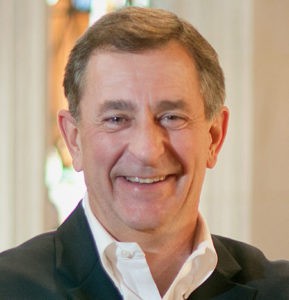
Bill Wilson
“If clergy are out of work, it’s not like a restaurant employee who can find a job at another restaurant,” he said. “If a minister goes on unemployment, it’s hard thing for them to get back to work.”
And there are ministry considerations. Wilson said churches have maintained food pantries, child-care centers and other critical service ministries by using PPP loans. “I have seen churches do remarkable things alleviating the suffering the pandemic causes.”
That, in turn, has a much wider spiritual impact during the COVID-19 pandemic. “Ministry is part of what helps the nation get through crisis,” he said.
‘We don’t have a crystal ball’
Yet there have been a “distinct minority” of congregations that have intentionally passed on PPP, Wilson said.
For a few it was on the grounds of church-state separation. “They said it felt like it violated a foundational concept for them.” Others reported possessing reserves, endowments and other resources that made the loans unnecessary.

Tyler Tankersley (Photo/Ardmore Baptist Church)
A little bit of all of that describes Ardmore Baptist Church in Winston-Salem, N.C.
“We had a lot of conversation about it but decided it wasn’t something we needed to pursue,” Senior Pastor Tyler Tankersley said.
Wanting to adhere to the principle of church-state separation was one part of the decision. But steady contributions and good reserves also made the decision easier.
“We are in a historic neighborhood, our campus is debt free, and we have a history of sound stewardship and wise finance committees,” he said.
Given that situation, Tankersley explained, the church did not want to take needed funds from struggling congregations.
But that doesn’t mean Ardmore Baptist is free from the chaos of the pandemic. During a recent planning meeting, church leaders mapped out the next three months instead of the next 12, and in-person worship remains suspended.
“If you had told me on March 10 what March 15 looked like, I wouldn’t have believed you,” he said.
That same uncertainty led First Baptist in Huntsville to apply for and accept the loan — and to be glad it did, Collins said.
“We don’t have a crystal ball, so we don’t know how long this is going to last. But this (loan) has given us security.”