

“Build houses and live in them, plant gardens and eat what they produce. Take wives and have sons and daughters; take wives for your sons and give your daughters in marriage that they may bear sons and daughters; multiply there and do not decrease. But seek the welfare of the city where I have sent you into exile, and pray to the Lord on its behalf, for in its welfare you will find your own welfare.”
The prophet Jeremiah wrote these words to Jewish exiles in Babylon early in their time in captivity. Many false prophets were telling the Jewish people that they would not be in exile long, that the crisis would soon pass, that God would act dramatically and decisively to bring things back to normal. But Jeremiah knew differently.
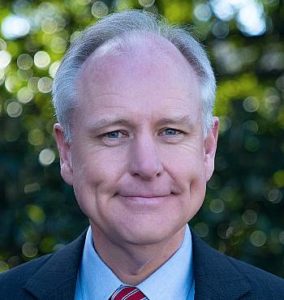
Paul Baxley
Jeremiah knew the exile would be long-lasting, that it would profoundly challenge the Jewish people, that it would cause them to think differently about their faith and even their purpose. Rather than hunkering down and expecting a rapid ending, they are to make a life and find new ways of faithfulness. They were to settle in for the long haul, put down roots and work actively for the well-being of Babylon. Although I cannot be sure, I do not think this is a message the Jewish exiles wanted to read or hear.
I believe Jeremiah’s message to the Babylonian exiles is also a timely word for congregations and their leaders as the United States moves into the fifth month of the coronavirus pandemic. Earlier on, many of us thought (or perhaps hoped) this season of struggle and change would not be long lasting. But now a different truth is apparent.
This moment requires new ways of practice, new kinds of resolve and the courage to let some questions go so that we might pray some others. At our core, we need to let go of the question: When will it be normal again? We need to dare to pray the question: How can we be faithful now?
Although we are months into this, there are still at least as many months ahead before a vaccine may be available or reliable treatments might be identified. It will be even longer before these treatments are available widely. We will be confronting the reality of the coronavirus pandemic for a much longer season. Its physical, social and economic impacts will intensify before they subside. While I hope and pray we do not face these realities for 70 years (Jeremiah’s projected length of the Babylonian exile), I do believe it is our reality for now.
“How do we invite people to faith in Jesus Christ and to the life of discipleship in a time when what used to be normal is no longer possible?”
It is time for a new prayerful conversation among the leaders of congregations and communities. As we reflect on the charge from Jeremiah, what houses must we build? Where will we plant seeds of faith?
Instead of getting stuck on “When can we go back to the kind of worship we shared in February?” we should ask different questions. What does it mean for us to work for the well-being of our communities that are being profoundly redefined by the coronavirus pandemic? What does it mean to nurture real Christian community in the face of persistent physical distance? How do we invite people to faith in Jesus Christ and to the life of discipleship in a time when what used to be normal is no longer possible?
The Jewish exiles in Babylon faced similarly world-altering questions. There was no temple in Babylon. The centerpiece of their worship practice did not exist. When they arrived in Babylon, there were no community synagogues to which they could travel for study and prayer. In one of the Psalms, a worshiper wondered aloud: “How can we sing the Lord’s song in a strange land?” That land was strange, the normal gathering places didn’t exist, the basic forms were being challenged. The persisting season of exile called for a re-imagination of worship, faith formation and life.
As the pandemic persists, we are called to ask ourselves this question: What does it mean to be faithful now? How can we encourage the cultivation of real (and not just virtual) community? Are there times in this pandemic exile when large worship gatherings are not possible when we can still gather believers in much smaller groups, with health precautions, to actually give one another the gift of genuine community? Might that happen in homes or in church buildings? (The church of Jesus, after all, first came to life in home gatherings.)
How are we being called to work for the well-being of the communities in which we are located? As those of us who have large buildings are not using them much at all these days, are there new ways they could be used for the well-being of our communities?
“In these days, the church doesn’t need a new gospel, mission or message. In fact, the mission of Jesus is more urgent than ever.”
In these days, the church doesn’t need a new gospel, mission or message. In fact, the mission of Jesus is more urgent than ever. Our pandemic-ravaged communities need congregations absolutely committed to Christ’s mission of grace, healing, justice and reconciliation more than ever.
I do not believe the original mission and ministry of the Cooperative Baptist Fellowship has changed. It is intensely important now to draw congregations and their leaders into faithful community with one another for the sake of Christ’s mission in this hurting world and for the support of one another. And in a time that challenges us to think differently, certain things are not in question. The foundational good news that has been intact since the death and resurrection of Jesus, and which has persisted and renewed the church through plagues and pandemics, is teaming with life and power. The same Spirit that raised Jesus from the dead is available to us, and it’s available right now, exactly where we are.
Held secure and unshakeable by that hope, we build, we plant and we work for well-being in all the communities to which Jesus has sent us.
Paul Baxley serves as executive coordinator for the Cooperative Baptist Fellowship.