


Last week, BNG reported that James Talarico will speak at Baylor University.
On Sept. 16, the Democratic nominee for the U.S. Senate will hold a campaign event at the Baptist university. The event will be limited to Baylor students, faculty and staff, and it comes after the university extended invitations to both Talarico and Republican nominee Ken Paxton.
For those of us who write at the intersection of religion and politics, there is plenty to see here.
Talarico is a Presbyterian and a seminary student whose unapologetically Christian vocabulary has helped make him one of the most interesting Democrats in the country. Baylor is Baptist, historically conservative and sitting in the middle of Texas. Put those ingredients together and there is a story.
While I am shocked that Baylor is allowing Talarico to speak there, I am increasingly convinced that isn’t the story.
Because while much of the country has been watching the white Christian Democrat who quotes Scripture and continues to challenge folks to love their neighbor, I have been watching where James Talarico goes when he leaves predominantly white Christian spaces.
“I have been watching where James Talarico goes when he leaves predominantly white Christian spaces.”
I’ve been watching him go to the Black church. And if Talarico becomes the first Democrat elected to the U.S. Senate from Texas in decades, we may look back and realize Talarico understood something many in the Democratic Party haven’t. And that is that the Black vote matters and you don’t get the Black vote without going through the Black Church.
He won the primary. He didn’t win Black voters.

Jasmine Crockett
Talarico defeated U.S. Rep. Jasmine Crockett in a bruising Democratic primary, but Black voters overwhelmingly preferred Crockett. Since then, Crockett has endorsed Talarico and the Democratic ticket, but she has conspicuously chosen not to become his surrogate. She has said her energy this fall will be directed toward down-ballot races in Texas rather than campaigning alongside the man who defeated her.
While I understand the focus on the down-ballot races, the lack of Crockett’s presence with Talarico could lead to mistrust in Talarico among Black voters.
Talarico, to his credit, has resisted publicly blaming Crockett for that. Asked about her absence from his campaign trail, he called her a great public servant, said she had “done more than enough to help us” and added something important: “Winning this campaign is my job as the Democratic nominee.”
Earning the Black vote
He’s right. Crockett cannot hand him Black voters. The Democratic Party cannot simply inform Black Texans that the primary is over and expect them to fall in line. Talarico has to earn them. And increasingly, it looks like he understands that.
In July, he walked into a majority-Black Houston town hall and stayed for more than an hour as Black Texans pressed him on voting rights, DEI, Black farmers, representation within his campaign and whether Democrats take Black voters for granted. Some of it was uncomfortable. At one point, a Crockett supporter told him plainly that Talarico had won him over — but still needed to “earn that hard vote.” Talarico responded by pledging $25 million toward Black voter outreach, an investment he described as the largest of its kind in modern Texas political history.

Undated photo from Talarico Facebook page
Since then, his campaign has added three Black senior advisers and Black-owned communications firms, with an outreach strategy explicitly focused on Black voters, young voters and communities of faith.
That deserves more than cynicism. Politicians are supposed to respond when voters tell them they are getting it wrong. Black voters told Talarico he needed to do more. He is doing more.
The question now is whether what he is doing becomes something deeper than political outreach. And that brings us to the Black Church.
Knowing the hymns
When Talarico visited Wheeler Avenue Baptist Church in Houston, the pastor, Marcus D. Cosby noticed something. Talarico knew the hymns. There was humor in Cosby’s observation, but there was something else beneath it that anybody who has spent enough time in the Black Church understands.
Pastor Cosby was watching him. The Black Church has watched politicians walk through its doors for generations. We’ve watched them clap on the wrong beat. We’ve watched them sway when everybody else was standing still. We’ve watched candidates discover Black churches three Sundays before Election Day and somehow forget the address by Thanksgiving.
So yes, it is important that Talarico knows our hymns, it’s a form of literacy. But knowing why we had to sing it is another.

Undated photo from Talarico Facebook page
Our ancestors sang about a God who would “make a way somehow” because sometimes there appeared to be no way. They sang about crossing Jordan while living in a country that wouldn’t let them cross a lunch counter. They sang about freedom before America had decided they deserved it.
The Black Church’s political theology never developed in abstraction. It was forged beneath the weight of slavery, Reconstruction, Jim Crow, lynching, segregation and voter suppression. We learned to sing hope while staring at evidence that suggested hope was irrational. That is the tradition Talarico is walking into.
Meeting Freddie Haynes
And this is why Talarico’s meeting with Freddie Haynes matters to this story.
Haynes’ Friendship-West Baptist Church in Dallas represents a strain of Black Christianity that never accepted the false choice between personal salvation and social liberation. Haynes preaches Jesus and justice because, in the Black Church tradition, those things were never supposed to be separated.
Haynes also is Jasmine Crockett’s pastor and is the Democratic nominee for her U.S. House seat.
Talarico’s Christianity increasingly sounds comfortable in that theological neighborhood. But there is a difference between sounding like the Black Church and being accountable to it. Perhaps what we are watching in Texas is Talarico discovering that difference. The Black Church has been doing politics for a long time. Before political consultants discovered “faith outreach,” Black Christians were organizing. Before campaigns created Black voter engagement budgets, Black churches were registering voters.
The Black Church gave America preachers who became organizers, sanctuaries that became meeting halls and hymns that became freedom songs. Its pulpits helped translate biblical language into political possibility. Moses became liberation. Exodus became movement. Canaan became freedom.
That history matters when a white Presbyterian politician walks into Wheeler Avenue Baptist Church or The Luke Church in Houston.
Because Talarico is entering a tradition that has been doing the thing he talks about long before anyone knew his name. The interesting question, then, isn’t whether the Black Church will make room for James Talarico. It already has. The question is whether James Talarico will allow the Black Church to teach him. My suspicion is that’s ultimately how he gets the votes.
Texas and the Black vote
It is my deep belief that the road through Texas runs through the Black Church. For decades, Democrats have spent enormous energy asking how they might win back white voters who abandoned the party. Maybe Texas requires a different question.
Talarico has now said the quiet part aloud: There is “no way to win Texas” without showing up for, investing in and listening to Black communities. Pay attention to those verbs. Showing up, investing and listening.
That may be why the Black Church matters so much to what Talarico is attempting. Because he doesn’t simply need Black turnout, he needs Black trust.
And trust is built differently than turnout. It requires understanding that when you enter Wheeler Avenue, The Luke or Friendship-West, you haven’t simply entered another constituency. You have stepped into an institution that helped Black people survive a country that frequently treated our survival as negotiable.
That institution has something to teach a politician who wants to talk about Christianity and democracy. Perhaps that is why this feels different.
So, yes, James Talarico is going to Baylor. BNG will be covering and I’ll be watching. But I’ll also be watching where he goes after Baylor.
Because Pastor Cosby already established the test. James Talarico knows the hymns.
Now we get to find out whether he understands what made us sing them.
And if he does, the Black Church might not simply help him understand Texas. It might help him win it.
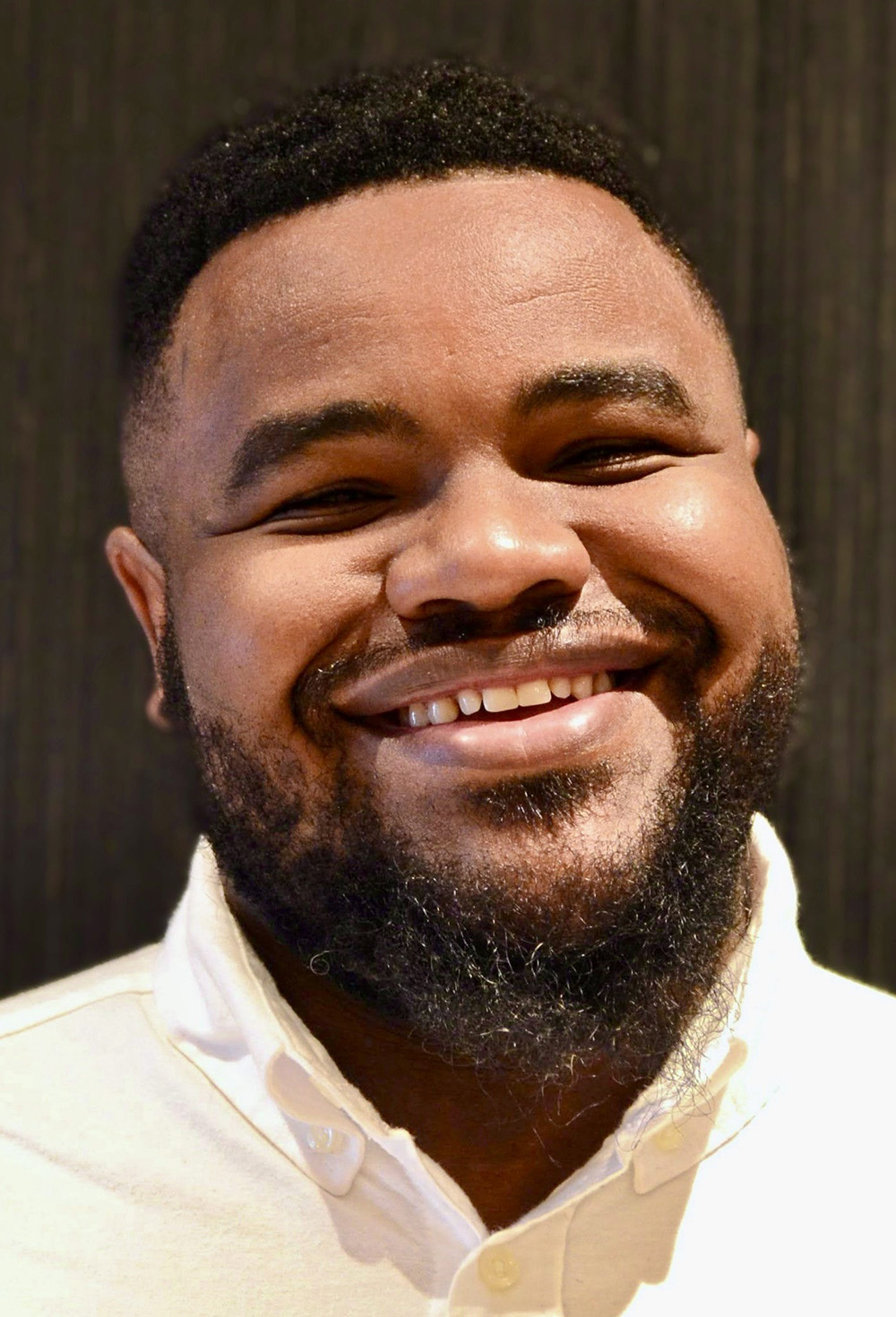
Braxton Wade
Braxton Wade is a Clemons Fellow with BNG. He is a graduate of the University of Richmond and Chicago Theological Seminary and lives in Richmond, Va.