

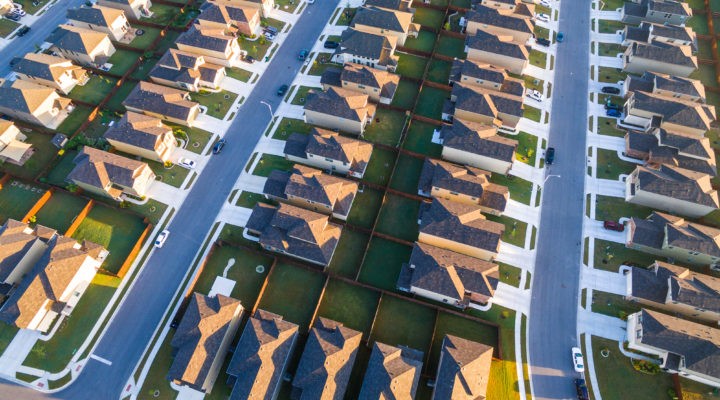
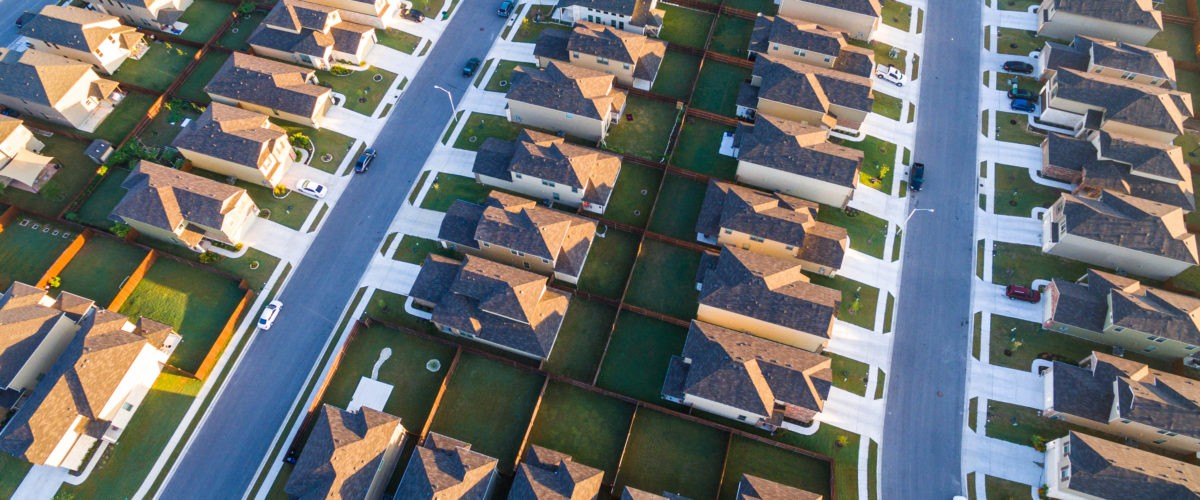
Housing and Urban Development Secretary Ben Carson visited Charlotte, N.C., in January 2020 to announce changes to Affirmatively Furthering Fair Housing rules.
 AFFH was an Obama-era initiative that targeted ongoing racial segregation through exclusionary practices in the construction of affordable housing. In short, local municipally funded housing agencies accepted federal monies for decades, but that money came with few restrictions about where such housing was built. The long-term result was the aggregation of low-income housing in relatively small areas.
In the United States, systemic income segregation also means systemic racial segregation, and so the federal government was using taxpayer funds to help construct segregated cities and towns.
The AFFH rules required that federal monies be used to disperse affordable housing into many neighborhoods, taking into account the historic inequities that have long kept cities segregated and unequal. Efforts at dispersing affordable housing created important chances for low-income families to access higher-opportunity settings and for the wealthy to encounter people and worlds outside their carefully curated bubbles.
The Trump Administration has now moved from announcing the change to formally eliminating that AFFH rule that disperses affordable housing. The anticipated effect of this rule change will be further cementing racial and income segregation into cities and towns. Efforts to keep cities segregated long have existed as matter of both public and corporate policy, including in a policy called “redlining.” Because the Trump Administration never can be satisfied with simple cruelty, but must also heap scorn and falsehood into American discourse, Carson called the AFFH a form of redlining.
“In cities like Charlotte, low-income areas were actually red-lined out of affordable housing development plans and federal resources were redirected to high-income areas,” Carson said at his January announcement.
The truth about redlining
“Redlining” in the real world (as opposed to the Trump world) was a series of policies that used public funds to create government-insured mortgages. Public policy makers determined into which neighborhoods that public money flowed chiefly along the lines of race. Subsidized mortgages went to certain white neighborhoods and did not go to other neighborhoods, especially those populated by Black residents. The mortgage-lending system built on redlining was a racist system designed to prevent the flow of capital to Black and brown neighborhoods, while at the same time building white wealth through government subsidy. Redlining created extensive subsidized housing, usually with custom countertops and elite trim work and large lot sizes — the sorts of characteristics that could build racial and economic segregation permanently into cityscapes.
“Carson attempted to subtly redefine a racist social system into something it was not.”
Carson attempted to subtly redefine a racist social system into something it was not. His boss, though, is never content unless he is saying the quiet part out loud. The man prefers a megaphone to a dog whistle. He tweeted, in all his racist, asinine glory, “I am happy to inform all the people living their Suburban Lifestyle Dream that you will no longer be bothered or financially hurt by having low income housing built in your neighborhood … . Your housing prices will go up based on the market, and crime will go down. I have rescinded the Obama-Biden AFFH rule. Enjoy!”
Never mind that a so-called “housing market” is not a mysterious force, but a collection of policy initiatives; forget the capitalized “Suburban Lifestyle Dream,” as though it were some demigod created ex nihilo; discount that the suburbs have been propped up by regressive tax policy since their inception; ignore that many suburbs near sizable cities are, in actuality, wildly diverse; pay no attention to the fact that there is no substance to the association of new affordable housing and crime rates; disregard that suburban youth and adults use illegal drugs at about the same rates as their urban counterparts; avoid rampant white-collar crime based in suburban homes and office parks; neglect that the wealth gap between white America and the rest of the country that has been built by government interventions like redlining, federally insured lending, mortgage interest deductions, exclusionary zoning practices, minimum lot sizes and so on.
Even if you accept the parade of falsehoods, everybody knows this is racist, classist, vile claptrap. Poppycock. Hogwash.
I’ve found that reflecting on President Trump and his chief enablers ceased being interesting some years ago, except in the way that he is a mirror to white Americans — and not just white Americans, but specifically white Christians. Our churches appear to contribute to us being more likely to support the president than non-church-going people. That support has waned at times, but it still remains strong. As of May, about half of mainline white Protestants, and 62% of white evangelical Protestants view the president favorably.
The tweets are consistent with the actual history of the country. Racist and exclusionary housing policies built metropolitan areas from compact cities into sprawling masses. Various levels of government and corporate institutions did this through law and practices that reinforced one another.
Meet Suburban Jesus
Those practices did not just create endless subdivisions, with countless cul-de-sacs and homeowner associations. They also encouraged suburban churches. Some of those were new congregations. Others moved from in-town locations, spurred by larger and faster highways and migrating parishioners. Those churches organized to build multi-purpose sanctuaries surrounded by oceans of parking, “Family Life Centers” with sports leagues year-round, and a few mission centers to serve as outposts for reaching those poor souls still stuck in the cities.
“The local zoning board makes theological decisions all the time.”
Few, if any, of those congregations have ever reckoned with the nature of the forces that drew them to their new homes. Programs kept Christians too busy to reflect. Seminaries failed to train preachers beyond elementary-level political analysis, rendering them incapable of understanding how their geography was informing their theology. The values of individualism, prosperity and the pursuit of property thrived.
A suburban church begat a suburban Jesus: a Savior who never challenged Rome because he really just wanted to love on people.
The “Suburban Lifestyle Dream” is yet another way white supremacy has slipped into Christian practice. The geographic character of our lives shapes the moral character of our lives. Choices about neighborhoods and transit, about sidewalks and housing types, are theological choices. The local zoning board makes theological decisions all the time. Too few Christians are paying attention; fewer still are using those policies for a justice that looks like God’s reign in their neighborhoods.
There is another way
One choice for Christians today — especially for white Christians — as we reckon with the history of our neighborhoods and our cities and our congregations, is to find a dream better than the “Suburban Lifestyle” one. Even learning to recognize that as a possibility will be hard, for we have been deeply formed under the vision of a lesser god called “property values.”
Repentance for bowing at that idol will require moving out of the seat of control — giving away land, making room for new neighbors, doing reparations.
That is a very different dream. I think the good news is that it is a dream worth having.
Greg Jarrell serves at QC Family Tree in Charlotte, N.C. His latest book is A Riff of Love: Notes on Community and Belonging.