

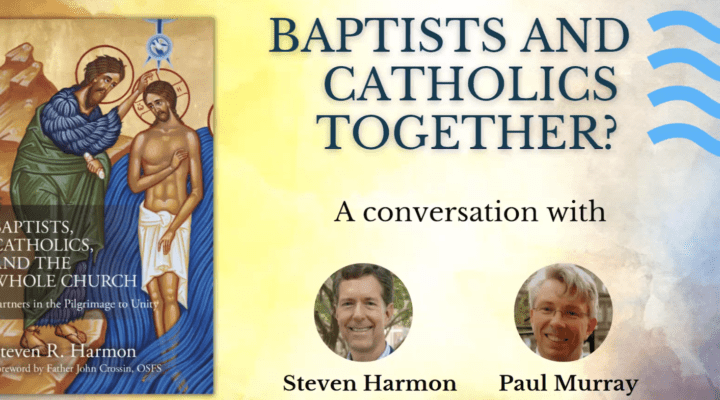
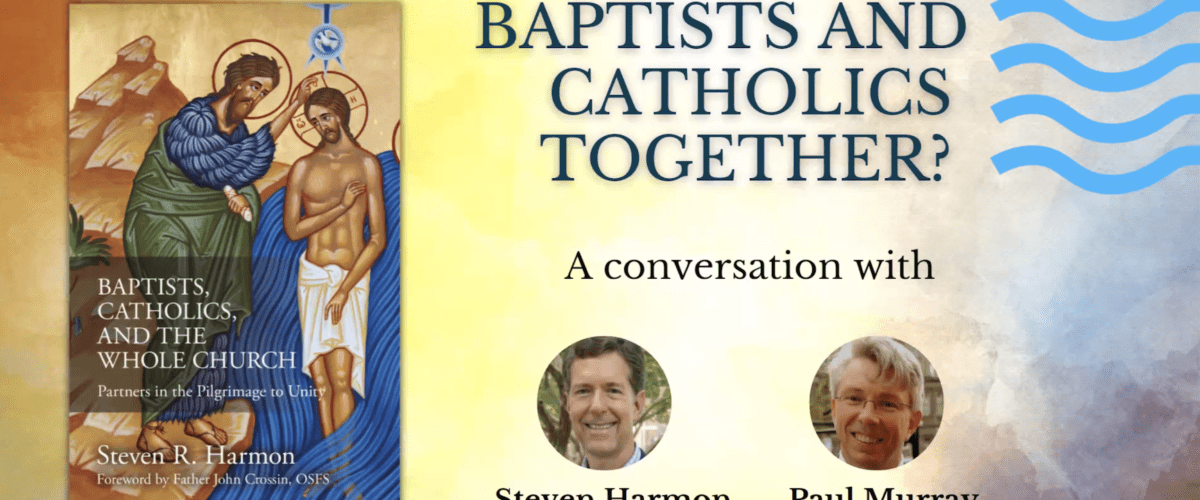
A Christianity united through ecumenism could bring guidance and healing to the cultural, political and environmental challenges confronting the U.S. and other nations, Baptist author and scholar Steven Harmon believes.
The professor of historical theology at Gardner-Webb University School of Divinity spoke during a Sept. 22 webinar delving into the benefits and difficulties of ecumenical dialogue. The event, “Catholics and Baptists Together? A Conversation with Steven Harmon and Paul Murray,” was hosted by New City Press.
The problems of racism, nationalism, populist authoritarianism, the COVID-19 pandemic and ecological degradation “are too strong for the divided church” to handle, said Harmon, author of the new book, Baptists, Catholics, and the Whole Church: Partners in the Pilgrimage to Unity.
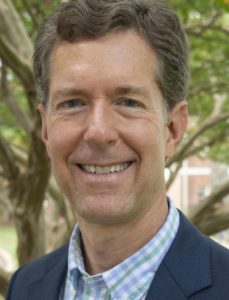
Steven Harmon
Harmon said the book is an effort to convince theological educators, minsters and laypersons across multiple Christian denominations of the practical value of longstanding discussions between Catholic and Baptist scholars on issues of theology, liturgy and other beliefs and practices.
The idea was to show that if leaders from two such “seemingly polar-opposite traditions” can find common ground on issues such as baptism and communion, “the rest of the church may be able to find themselves in those convergences, too,” said Harmon, himself a leader in conversations between the Baptist World Alliance and the Pontifical Council for Promoting Christian Unity.
“We do share a common Christological faith: one Lord, one summons to bear witness to the rest of the world. This is an invitation to the grassroots level to do something about this,” he said.
Harmon’s hope is that local churches and clergy will be inspired to find ways to act together on points of need in their communities and to “find ways to be the witness of Christ more visibly.”
But theologians involved in the dialogue have recognized the need “to clear up misunderstandings” about the dialogue and the ultimate purpose of ecumenism, Harmon explained. Some of the initial resistance derived from assumptions that the goal of ecumenism is to create “some kind of super church” consisting of merged denominations overseen “by some sort of umbrella hierarchy.”
Instead, the movement calls on Christians to recognize that their traditions have been blessed with unique gifts that can be shared or adopted without compromising their distinctive identities, he said. “Each one of the traditions may be able to recognize they do not have a corner on all of God’s truth and they do not fully embody all that Christ has called the church to be.”
Known as “receptive ecumenism” for its emphasis on being open to the gifts of other faith communities, Harmon said this discipline is a “more natural, Spirit-led” ecumenical way to enhance local mission and worship and part of “an ongoing pilgrimage toward a future we cannot fully envision but are being called toward.”
The pilgrimage concept is important in describing the journey of ecumenism and has been similarly invoked from ancient to modern times by Baptists, Catholics and others seeking Christian unity.
“The church we are seeking has not yet been.”
“The church we are seeking has not yet been,” Harmon said. “It is somewhere ahead of us in God’s future, and as we more fully participate together … then we become more fully the church under the rule of Christ. And we have to do that together, not separately.”
Common ground between Catholics and Baptists even has been found on matters over which they are theologically divergent, said Murray, an author and Catholic ecumenicist and professor of systematic theology at Durham University in the United Kingdom and the moderator of Harmon’s discussion.
While Catholics believe the Eucharist to be the real presence of Christ and Baptists do not, those deprived of it due to pandemic or other reasons share a strong yearning for the practice, he said during the webinar’s question-and-answer segment. “That hunger we feel is the Spirit in us.”
Harmon noted that baptism is another matter on which Baptists and Catholics hold differing beliefs but still can attain understanding. As a result, some Baptist congregations are accepting Catholics into membership without re-baptism, and some Catholic dioceses have done the same.
“There are all kinds of opportunities for convergence on Baptism,” he said.
Ministry work also can bring different traditions together. Harmon cited a Baptist church and Episcopal parish in the U.S. that collaborate on an annual vacation Bible school program. Each takes turns hosting the event and leading the program while adults from the two congregations meet for Bible studies.

Paul Murray
Murray said he’s seen such cooperation in England between Anglican, Baptist, Catholic, United Methodist, United Reform and Pentecostal churches.
Harmon was asked if he’s seen greater acceptance of ecumenism among young people. “Younger people get ecumenism intuitively, but they also see many of the divisions as being silly,” he replied. “They’ll say, ‘we are one. What’s the big deal?’”
Harmon said he tries to convince his students that being able to appreciate the gifts of other traditions requires them to be grounded in their own.
Callan Slipper, the National Ecumenical Officer for the Church of England, joined the webinar to warn that moving individuals, congregations and denominations toward such shared understandings is an uphill effort.
“Recognition of the need of ecumenism and a life of unity is not strong enough — it’s not part of our culture. And that is deeply tragic because if we want to see what God’s charter for mission is, it starts with unity,” he said.
Related articles:
Baptist-Catholic dialogue resumes despite challenges of pandemic
Baptists and Catholics together? Progress and promise despite a shaky start | Opinion by Steven Harmon
Longing for tradition: The example of Pope Francis and the Latin Mass and what it means for non-Catholics | Analysis by Derek Hatch