

Greg Jarrell is a writer, ordained minister, jazz musician, and BNG contributor living in the intentional QC Family Tree community in Charlotte, N.C.’s, Enderly Park region — which one Reddit thread describes as noisy because of airplanes and gunshots. But that last is an essential clue to who Greg is, since his fine book Our Trespasses: White Churches and the Taking of American Neighborhoods wrestles with the intersection of racism, real estate and real religion using Charlotte as its primary setting but sharing lessons that ripple across the country. Where people live and whether we live together are central questions about racism. I’m so grateful to Greg for his responses to these questions — and for the chance to interact with him about Charlotte and about Southern Baptist churches, both of which were part of my own upbringing.
Greg Garrett: You dig deep into urban renewal in Charlotte to unearth a number of issues about Black properties and white appropriation. Could you tell us a bit about why Charlotte is such a good example of this kind of white Christian trespass and what this example tells about the rest of America?
Greg Jarrell: Charlotte is just so uninteresting! Most Americans probably think of Charlotte having rocking chairs in the airport and a lot of suburban sprawl and that’s it. We’re Everytown, USA. You might want to live here, but you’d never go on vacation here.

Greg Jarrell
That impression doesn’t hold up to scrutiny — every place has its own colorful existence — but it’s not wrong either. You can find every type of mistake built into the American landscape represented here — urban freeways, urban renewal projects, massive sprawl, disregarded histories, persistent segregation, glitzy skyscrapers covering for deep injustice. I think that makes our city a good stand-in for the country at large. Readers around the country will be able to see unfamiliar place names in my work and to easily recognize similar places in their own towns.
It’s also helpful that Charlotte is a bit understudied for a city its size. There are a million books on Nashville or Atlanta or St. Louis, only a handful that have carefully studied Charlotte. That meant there were still a lot of surprises to dig up.
GG: You reference James Baldwin in the book, particularly his insistence on the primacy of history and the indecency of white people’s innocence and ignorance. What would you encourage white Christians to address in connection with the record you explore?
GJ: I always encourage white audiences to work simultaneously on the material and the cultural. By the material, I mean carefully tracking how white supremacy has accumulated advantage in our institutions and families, often at the direct expense of Black and indigenous institutions and families.
You’ll never add up all the cost — our lives cannot be measured in money — but you can begin to get a sense of the immense cost that racism has had in your own neighborhood or town. I went to great lengths to show how one institution might begin making an accounting for their ignorance and the false sense of innocence, which gravely harmed dozens of families. Learning some of that cost helps to suggest the types of costly corrective action you need to take.
“All our ancestors who were wiping out neighborhoods and destroying the economic legacies of Black families were nice folks.”
And at the same time, white folks have to work on the cultures of our institutions and families. One scary part of our history is that all our ancestors who were wiping out neighborhoods and destroying the economic legacies of Black families were nice folks. They loved their children, joined the local church, went to visit their mamas on Sunday, and so on.
And especially for those civic leaders active in urban renewal planning, they saw their actions as consistent with their Christian witness in the world. They had stories they told themselves — and stories their preachers told them — that made them think plowing down a child’s neighborhood in a giant land grab was an act of benevolence. That’s about culture. And without addressing the culture that continues to reproduce that story, then we won’t ever be healed from racism.
GG: Talk with us a little bit about Christian imperialism, the idea that certain lands (and peoples) are intended to be subject to white Christians. How did this concept contribute to the actions First Baptist Charlotte took in buying land from the Brooklyn area?
GJ: When the bulldozers were running in Charlotte, they were bringing to completion an idea that had persisted for decades already — that the all-Black neighborhood “Brooklyn” would have to become the territory of white people in order to bring it to maturity.
That’s the same idea, if you read thinkers like Willie Jennings, that births the very concept of race. It’s a mash-up of legal and theological doctrines that justify taking people from land and land from people. This idea had salience in urban renewal projects around the country.
When famed New York planner Robert Moses (who was Jewish) visited Baltimore in 1944 for a consultation, he told planners there, “The more (supposed ‘slum’) neighborhoods that are ‘wiped out,’ the healthier Baltimore will be in the long run. … We do not propose to tear down familiar and cherished landmarks. … Nothing which we propose to remove will constitute any loss to Baltimore.”
That’s a powerful erasure — the idea that poor or powerless people functionally do not exist, and that their losses are meaningless.
“It was as though the bulldozers were powered by the winds of God.”
Here at First Baptist Charlotte, and in our city’s leadership, all of whom were Christian, you can see them frame this same idea as “providence.” It was not so much that they were doing anything, but instead God was making it happen for them. It was as though the bulldozers were powered by the winds of God. This shows up in public speeches and sermons and hymn selections.
And it’s a story that persists. When I asked the pastor at First Baptist, in 2022, how his congregation might interpret God’s providence in light of the horrifying results of urban renewal, he said, “Our church would view it that … God redeemed the razing by bringing a church that would still be here 50 or 60 years later.” Since white Christians had the land, all the accounts were settled.
GG: You rightly condemn Baylor University — the world’s largest “Baptist” university — for its willingness to bulldoze Black and brown neighborhoods in service of its Christian mission. Many Baylor folks do not know about this land grab, or about the interstate highway zoning decisions prompted by a university president who wanted I-35 to run past Baylor, even though it meant the further destruction of Black and brown neighborhoods. What would you say to my colleagues and friends at Baylor about our responsibility to make reparations for these choices?
GJ: Start now. Learn all the details you can. Try to connect with former residents and gather what oral histories you are able to. Listen carefully along the way, never assuming you know the right answers. And look for how the triumphalist story — “Yeah, but look what a great thing we built!” — is still operating.
“National-level reparations are important, but we’ll only get there through many, many bold local initiatives.”
Loving, attentive, detailed local work is the most important way forward. Doing it faithfully offers a testimony to others. National-level reparations are important, but we’ll only get there through many, many bold local initiatives.
GG: Repentance, reparation and redemption are all called for by those of us with white privilege, but I fear we’re entering an era where reconciliation is going to be suspect and those who push back against white Christian nationalism will find themselves ostracized. What’s your best advice for how to do justice in the second Trump regime?
GJ: Courage is contagious. You’ve seen that recently with Bishop Budde’s sermon during the national inaugural prayer service. Millions of people saw her courage and knew they could be more courageous as well.
We’ll have to be wise as well, and cunning. Here in Charlotte, we’ve been mapping out plans for mutual care with our neighbors. We’re studying antifascist responses in history as we prepare to resist. And we’re listening carefully to Black and indigenous communities.
The current regime is not the first time Christofascists have taken over the government, and they’ve been overcome in the past. We intend to be standing shoulder to shoulder with those communities as neighbors and friends once this administration withers into dust.
Read more about Greg’s work in Enderly Park.
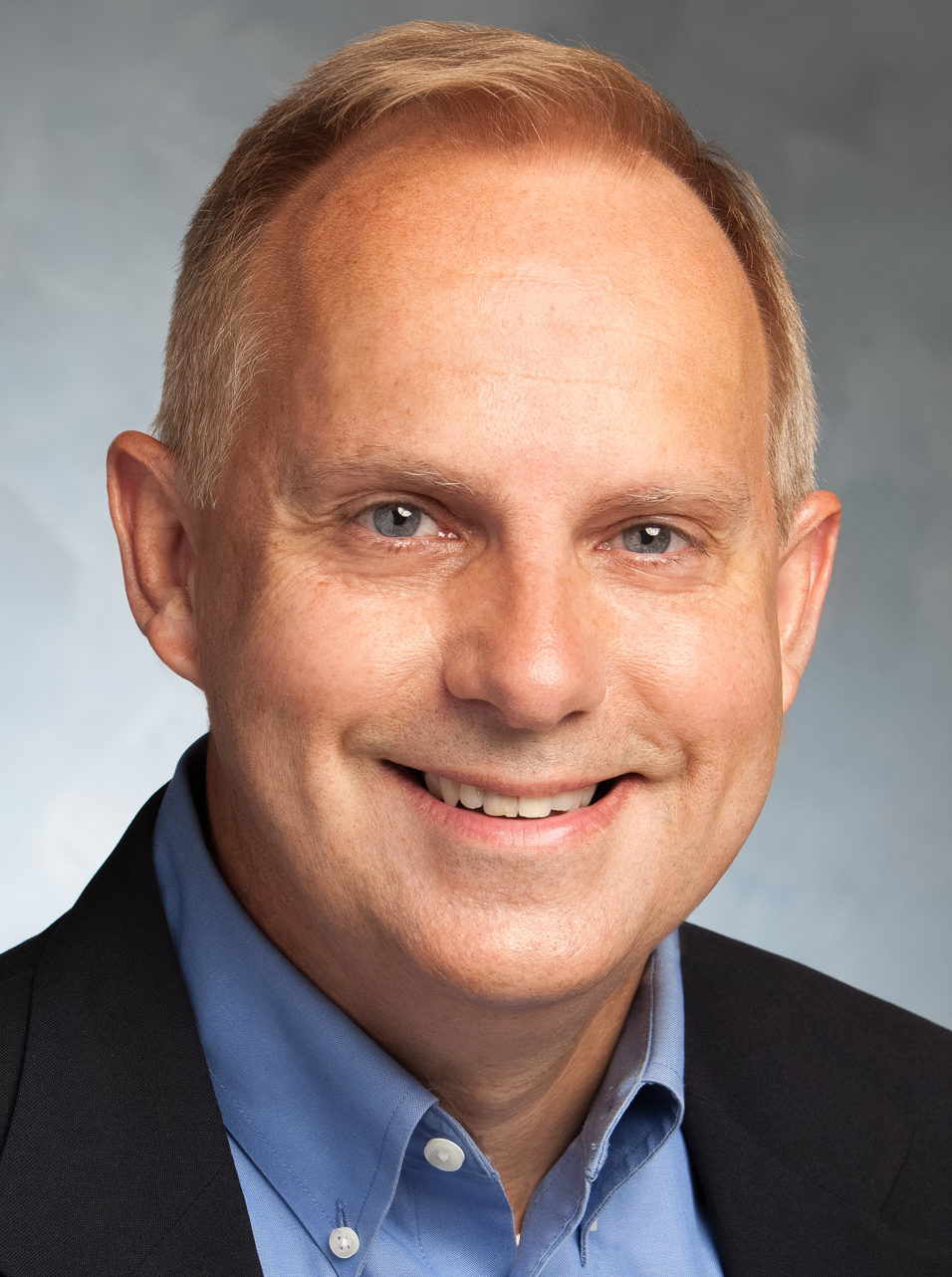
Greg Garrett
Greg Garrett is an award-winning professor at Baylor University, where he is the Carole McDaniel Hanks Professor of Literature and Culture. One of America’s leading voices on religion and culture, he is the author of 30 books, most recently the novel Bastille Day and The Gospel According to James Baldwin: What America’s Great Prophet Can Teach Us about Life, Love, and Identity. He is currently administering a major research grant on racism from the Eula Mae and John Baugh Foundation and finishing a book on racist mythologies for Oxford University Press. Greg is a seminary-trained lay preacher in the Episcopal Church and Honorary Canon Theologian at the American Cathedral of the Holy Trinity in Paris. He lives in Austin with his wife, Jeanie, and their two daughters.
More from this series:
Politics, faith and mission: A conversation with Robert G. Callahan II
Politics, faith and mission: A conversation with Andrea Russell
Politics, faith and mission: A conversation with Bishop Michael Curry
Politics, faith and mission: A conversation with Melissa Deckman
Politics, faith and mission: A conversation with Matthew D. Taylor
Politics, faith and mission: A conversation with Nancy French
Politics, faith and mission: A conversation with Robert P. Jones
Politics, faith and mission: A conversation with Brian Kaylor
Politics, faith and mission: A conversation with Colin Allred
Politics, faith and mission: A conversation with Tia Levings
Politics, faith and mission: A conversation with Linda Livingstone
Politics, faith and mission: A conversation with Samuel Perry
Politics, faith and mission: A conversation with Jimi Calhoun
Politics, faith and mission: A conversation with David Dark
Politics, faith and mission: A conversation with Randolph Hollerith
Politics, faith and mission: A conversation with Jillian Mason Shannon
Politics, faith and mission: A conversation with Bishop Mariann Edgar Budde
Politics, faith and mission: A conversation with Vann Newkirk II
Politics, faith and mission: A conversation with Sarah McCammon
Politics, faith and mission: A conversation with Winnie Varghese
Politics, faith and mission: A conversation with Kaitlyn Schiess
Politics, faith and mission: A conversation with Russell Moore
Politics, faith and mission: A BNG interview series on the 2024 election and the Church
Politics, faith and mission: A talk with Tim Alberta on his book and faith journey
Politics, faith and mission: A conversation with Jemar Tisby
Politics, faith and mission: A conversation with Leonard Hamlin Sr.
Politics, faith and mission: A conversation with Ty Seidule
Politics, faith and mission: A conversation with Jessica Wai-Fong Wong