


On Jan.21, President Donald Trump and a thousand invited guests filed into Washington’s National Cathedral to take part in “A Service of Prayer for the Nation.”
The lengthy service (it clocked in at two hours and 18 minutes) featured Scripture readings, traditional hymns, a wide variety of musical selections and prayers from an eclectic group of Protestant, Catholic, Jewish, Muslim and Buddhist spiritual leaders.
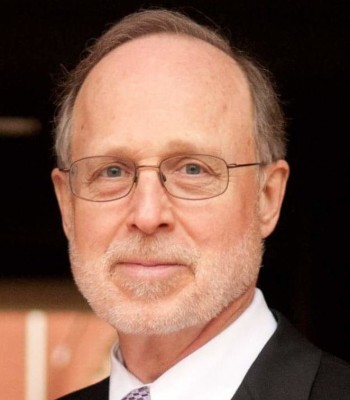
Alan Bean
The National Cathedral sponsored the first inauguration day prayer service in 1933 following the election of Franklin Delano Roosevelt. It has long been felt that, after a season of bitter campaigning, we need to remember why we are called the United States of America. We may not agree about how best to build a more perfect union, but it’s what we’re all shooting for. That, at any rate, is theory behind these inauguration-day services.
Once upon a time …
Once upon a time, there were liberal Republicans, conservative Democrats and plenty of centrists on both sides. Senators and representatives freely socialized after hours. Democrats like Joe Biden and Republicans like John McCain came of age in this world.
When a woman at a campaign stop accused Barack Obama of being “an Arab,” McCain famously disagreed. “No ma’am,” the senator corrected her, “he’s a decent family man, citizen, who I just happen to have disagreements with on fundamental issues.”
McCain believed what unites us as a nation is ultimately more important than what divides us. Even in the midst of a bitter presidential campaign, we remain One Nation Under God.
Those days may be gone for good. Advocates of church-state separation never have been comfortable with elaborate displays of civil religion. In today’s acrimonious climate, many Episcopalians view the service of prayer for the nation as a vestige of a long-dead era. Episcopal Bishop Mariann Edgar Budde decided to continue the tradition, but her homily addressed the elephant in the room: How can we overcome America’s “culture of contempt”?
If she had stopped there …
The Episcopal bishop offered three ways to counter contempt: dignity, honesty and humility. If she had stopped there, the service might have been quickly forgotten. But, as Baptists might say, the bishop left off preachin’ and went to meddlin’.
“For the 45th and 47th president, the American culture of contempt is a feature, not a bug.”
When we minimize or ignore the virtues of dignity, honesty and humility, she said, “we are just a few steps from labeling ourselves as ‘the good people’ versus ‘the bad people.’”
Then she provided a couple of quick examples of people who often are placed in the “bad people” category: LGBTQ youth and undocumented immigrants. After reminding the freshly inaugurated president that demonized people are justifiably frightened, she made a plea for mercy.
It is difficult to imagine an Episcopal bishop issuing such a plea for mercy to Ronald Reagan, George W. Bush, Barack Obama or Joe Biden. American presidents need to project an aura of strength, but there were limits. On the issue of immigration, for instance, Reagan and the second Bush showed a measure of mercy while Obama and Biden talked tough. Expressions of unmitigated contempt were scrupulously avoided.
But Bishop Budde was talking to Donald J. Trump, a man who never has been associated with the virtues of dignity, honesty and humility. For the 45th and 47th president, the American culture of contempt is a feature, not a bug.
Weaponized contempt
Trump weaponized the American culture of contempt so effectively because contempt is the fuel he runs on. This is especially true after four years of congressional hearings, scathing exposés published by former associates, criminal indictments, trials and convictions. Old flames of resentment have been whipped into a raging inferno. Unity doesn’t suit his purposes. He wants revenge.
In Trump’s personal lexicon, “compassion,” “sympathy,” “empathy” and “mercy” are synonyms for weakness. He has no interest in the common good. Compromise is antithetical to his ends. He wants to win, and he wants his enemies to lose. Painfully and in public.
The natural response to the public scorn Trump has endured in recent years is a deep embarrassment verging on shame. But the president’s superpower is shamelessness. He doesn’t feel shame for the same reason he can’t feel empathy. He is a textbook psychopath.
“He doesn’t feel shame for the same reason he can’t feel empathy. He is a textbook psychopath.”
If so, why did 77,284,118 people vote for the man? And how did he capture more than 80% of the white evangelical vote? And why did he fare so well with white Catholics and white Mainline Protestants?
It is possible that some of these “values voters” didn’t understand who they were voting for, but most of them did. Trump’s utter contempt for his ideological opponents is so pronounced, so flagrant, that no one could possibly vote for him unless his contempt resonated with theirs.
The American Christians who voted for Trump are hardly monolithic. Some are traditional Catholics agitated by the pronouncements of a compassionate pope. Some are independent charismatics convinced Mainline Protestants like Mariann Budde are under demonic influence. Some are Reformed “TheoBros” who take their political cues from John Calvin’s Geneva. Most were raised with the assumption that America was a majority white, majority Christian country and want to keep it that way. Like Trump, they see the culture war as a zero-sum conflict that can’t be won through persuasion or compromise. Nothing short of total victory will do. And if the good guys are going to win, we can’t waste time worrying about the losers.
‘Toxic empathy’
In his takedown of Bishop Budde’s sermon, Joe Rigney inveighed against “toxic empathy.” “When it comes to upholding strict standards of justice,” the World editor told his readers, “empathy is a liability, not an asset. It’s why in certain circumstances involving gross error and high-handed sin, God’s law forbids empathy and pity.”
Pastor Rob Pacienza of Coral Ridge Presbyterian Church in Florida accused her of promoting “a secular worldview” and a “woke ideology.” The unity the bishop values so highly, Pacienza told FOX News, “can only be achieved through a commitment to biblical truth, not cultural assimilation.”
Progressive Christians like Budde are just as committed to “biblical truth” as conservative Christians like Rigney and Pacienza, but they interpret the Good Book very differently. Honesty demands we admit that both “love your enemies” and “slay without pity” are both in the Bible. Since Jesus taught enemy love and forbade vengeance, progressive Christians reason, we must do the same.
“This leaves them with a loving God who condemns his enemies to eternal conscious torment.”
Biblicists like Rigney and Pacienza give equal weight to “love your enemies” and “slay without pity.” This leaves them with a loving God who condemns his enemies to eternal conscious torment. This understanding of God determines how they understand “the gospel.” We are to love our enemies by offering them the free gift of salvation in Jesus Christ. Should they persist in their evil ways, they must be utterly vanquished.
Budde worships a different God and preaches a different gospel. “Jesus came for the world,” she explained to Eliza Griswold of The New Yorker, “It’s the world for which he died.” The gospel, or good news, is that God loves the world and calls us to do the same. We must love everyone, beginning with our enemies. We must love the sick, the hungry, the incarcerated and the poor. We must love the undocumented people who have nowhere to lay their heads, and we must love the LGBTQ young people who fear the worst from a second Trump administration.
Unity cannot be achieved by rigidly enforcing “biblical truth.” Progressive Christians insist unity comes through dignity, honesty and humility.
It could be argued, of course, Bishop Budde showed just as much contempt for the president as he feels for her. Wasn’t she setting herself up as one of the good people while casting Trump and his supporters as the bad people?
We naturally feel contempt for our enemies. That’s a given. But do we fight it or embrace it? If the goal is to enforce our version of “biblical truth” on an unwilling populace, contempt is a virtue and mercy a vice. But if the goal is to work for unity by celebrating dignity, honesty and humility, we must war with the contempt in our hearts.
The gospel Mariann Budde preached on Jan. 21 is rarely heard in our land. Christian nationalists of every stripe assure the public that, regardless of what Jesus might have said, their “slay without pity” Christianity is the real deal.
In 21st-century America, progressive clerics rarely get their turn at the mic. In Trump’s America, that could change.
Alan Bean leads Friends of Justice based in Fort Worth, Texas, where he is a member of Broadway Baptist Church.
Related articles:
Now the US House wants to censor a preacher? | Opinion by Rodney Kennedy
Trump at the National Cathedral: We’ve already fought this war | Opinion by Mark Wingfield
At prayer service, Episcopal bishop calls on Trump to show mercy
The straight white men are not all right | Opinion by Susan Shaw
In new podcast episode, Mark and Ben try to talk about Trump