



Malcolm Foley is a historian whose doctoral work centered on lynchings and the church’s response to them. The pastor of Mosaic Waco and special advisor to the president for Equity and Campus Engagement at Baylor University is helping to drive the university’s ongoing work wrestling with our slaveholding past and offering an example of how we might move forward. It has been a joy and an encouragement to work with him in these roles. His new book The Anti-Greed Gospel: Why the Love of Money Is the Root of Racism and How the Church Can Create a New Way Forward offers a powerful word on what and why racism is, and it centers the ongoing problem of racial hierarchies where it always has been — on those it benefits. I’m so grateful for the chance to foreground his brilliant book and to offer his thoughts on where we’ve been and what we’re called to in the present moment.
Greg Garrett: Malcolm, early on in your book you set out your thesis that racism is not primarily about hate and ignorance, but about greed. Early in my research, I discovered the same. Could you lay out in brief what you want to say in the book about mammon and how what you’re teaching in the book might help us move toward real racial justice?

Malcolm Foley
Malcolm Foley: Most of our conversations about race and racism tend to be about identity, hate and ignorance, when those are really downstream effects. If we want to know what is truly evil about race and racism, we have to recognize that they do three things: lie, steal and kill. That is, the stakes are cosmic.
But historically, the category is born out of greed: the desire to accumulate wealth. Thus, America’s history of race and racism is really just a proxy battle in a cosmic war, the combatants of whom were named by Christ in the Sermon on the Mount.
In Matthew 6:24, Jesus warns us we cannot serve two masters: we will either love one and hate the other or be devoted to the one and despise the other. He could have chosen any enemy opposite God, but he chooses “mammon,” the Aramaic word for “riches.” This suggests to me if we want the child, race, to die, we have to kill what feeds it: Mammon. Only then will we begin to see the justice we seek.
GG: You have studied lynchings and offer up a defense of the journalist Ida B. Wells as one of the greatest figures in America’s fight for civil rights. Could you talk with us about lynchings (Wells said they existed to “keep the race terrorized”) and how they figure into your larger understanding of racism and greed?
“Greed starts the phenomenon of lynching, greed fuels it, and greed ends it.”
MF: When people think about lynching, they generally just think about mobs of angry racist white people killing Black people. All that is true, but it doesn’t get to the very root of the issue. One of the things I argue in the book is that greed starts the phenomenon of lynching, greed fuels it, and greed ends it. The violence begins and ramps up because post-Reconstruction, white Americans sought to wrest power and newly developed wealth out of the hands of those who had spent centuries being mercilessly exploited. Greed began the phenomenon.
Lynching continued through the propagation of lies (like the “Black beast rapist” narrative) that allowed Americans around the country to largely ignore the terrorizing and systematic suppression of Black communities. Greed continued the phenomenon.
Last, lynching did not fade because there was a moral revolution in the nation. Lynching faded because it became bad for business. At a time when the South was industrializing and seeking more capital investment, people around the world were disgusted by what they saw as the barbarism of lynching. Editorials came out of France and even Japan about American lynchings. That embarrassment stopped Southern whites from publicly mutilating Black men in front of thousands, but it did not stop the deeper desires to dominate and exploit.
GG: In the book you say we need a distinctly Christian imagination to break the bonds of race and self-interest. But you and I know and lament the fact that many Americans who identify as Christians are exercising a very different imagination. What should my readers understand about the differences between the Christian convictions about which you research, write and preach and white Christian nationalism?
MF: White Christian nationalism assumes the state is a boon for the church. I fundamentally disagree. The Christian Scriptures as a whole are anti-imperial documents, not in the sense that they are only against particular empires, but in the sense that they oppose the very logic of empire.
“Any institution that depends on military might and violence, propaganda and economic exploitation is at root an enemy of the living God.”
Any institution that depends on military might and violence, propaganda and economic exploitation is at root an enemy of the living God, as Rome, Greece and Babylon were, and as many states in our midst today are. No, the church is something quite different, for we are called to be outposts of the kingdom of God which, I argue in the book, necessarily commits us to building communities of deep economic solidarity, creative anti-violence and prophetic truth-telling.
Part of that truth-telling is reminding the Christian that any commitment to revenge, to domination, to exploitation, to the amassing of wealth, or to anything that does not manifest itself in the material and spiritual flourishing of one’s neighbor (also known as love) is an antichrist commitment. A distinctly Christian imagination believes the best way to win one’s enemy is to love them: to feed them, to clothe them and to materially invest in their wel-lbeing.
GG: You and I work for a great Christian university that has chosen to take its racial history seriously. Could you speak a bit about what your role as advisor to President Linda Livingstone entails and how Baylor University might offer some possibilities for movement on the issues we center?
 MF: Christian higher ed ought to be filled with institutions with a supreme courage. We are the people who stand in the shadow of the throne of God and the Lamb, which means we ought to be a people who are continually repenting and continually seeking to outdo one another in good works. If it is true that Christ took on flesh, lived a perfect life, died, raised and ascended for our sake and in order to bring us into union with Him, that demands our all. All I do is attempt to make sure that that manifests itself in the building of a just and equitable institution, an institution where everyone has the resources they need to be able to do their job and one where everyone understands that they matter — infinitely. Sometimes that means that for those who have been constantly told that they don’t matter, the message that they do matter needs to be even louder.
GG: Jemar Tisby has said doing this work takes a personal toll, and I suspect that’s true in your vocation as well. I’m so grateful for your chapter on “The Creative Kingdom.” Where are you finding life and hope at this moment? Who are the writers, artists, communities you’d encourage my readers to encounter who might encourage and shape us as followers of Jesus who are seeking justice?
MF: This is one of the most common questions I get about the book. Are there communities doing these things? Where do I find my hope? Frankly, I did not include examples of communities in the book because that is not where my hope is. I have a wonderful church I love deeply, but my hope is not in them.
My hope, and what convinces me to continue to trumpet the message of the Anti-Greed Gospel, is rooted in the fact that this is the work that Christ has called us to do. And if Christ called us to do it, he has given us the resources to do it. If he calls us to endure, he will give us the resources to endure. If he calls us to share, he will give us the resources to share.
My hope is in the fact that Christ has promised that he will give, to those who overcome, the right to sit with him on His throne just as when he overcame, he sat with his father on his throne. If that is my future, there is no force, person or power in heaven, on the earth or under the earth, that can stop me from seeking to be a beacon of the kingdom of God here and now.
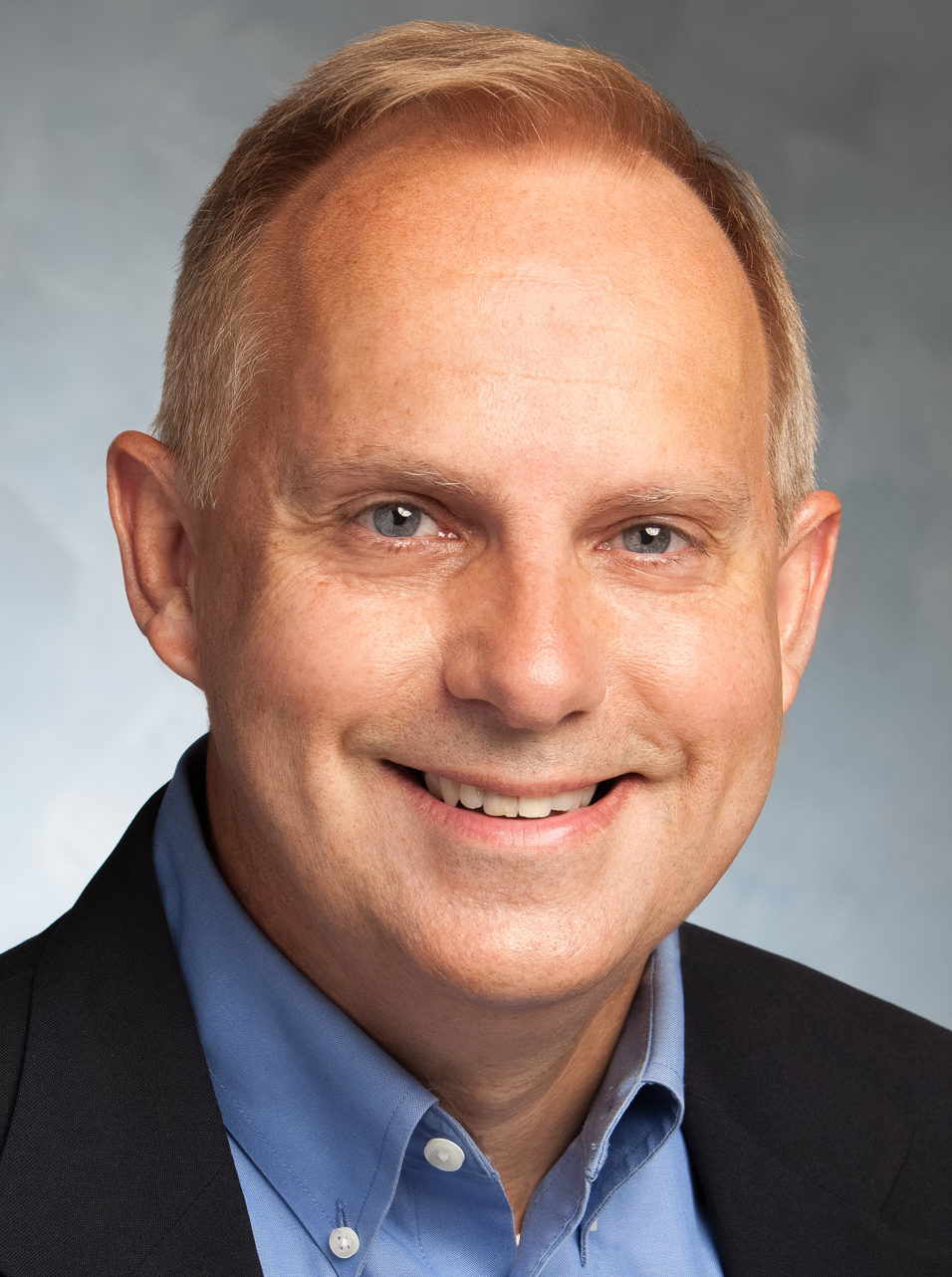
Greg Garrett
Greg Garrett is an award-winning professor at Baylor University, where he is the Carole McDaniel Hanks Professor of Literature and Culture. One of America’s leading voices on religion and culture, he is the author of 30 books, most recently the novel Bastille Day and The Gospel According to James Baldwin: What America’s Great Prophet Can Teach Us about Life, Love, and Identity. He is currently administering a major research grant on racism from the Eula Mae and John Baugh Foundation and finishing a book on racist mythologies for Oxford University Press. Greg is a seminary-trained lay preacher in the Episcopal Church and Honorary Canon Theologian at the American Cathedral of the Holy Trinity in Paris. He lives in Austin with his wife, Jeanie, and their two daughters.
More from this series:
Politics, faith and mission: A conversation with Jonathan Eig
Politics, faith and mission: A conversation with Greg Jarrell
Politics, faith and mission: A conversation with Robert G. Callahan II
Politics, faith and mission: A conversation with Andrea Russell
Politics, faith and mission: A conversation with Bishop Michael Curry
Politics, faith and mission: A conversation with Melissa Deckman
Politics, faith and mission: A conversation with Matthew D. Taylor
Politics, faith and mission: A conversation with Nancy French
Politics, faith and mission: A conversation with Robert P. Jones
Politics, faith and mission: A conversation with Brian Kaylor
Politics, faith and mission: A conversation with Colin Allred
Politics, faith and mission: A conversation with Tia Levings
Politics, faith and mission: A conversation with Linda Livingstone
Politics, faith and mission: A conversation with Samuel Perry
Politics, faith and mission: A conversation with Jimi Calhoun
Politics, faith and mission: A conversation with David Dark
Politics, faith and mission: A conversation with Randolph Hollerith
Politics, faith and mission: A conversation with Jillian Mason Shannon
Politics, faith and mission: A conversation with Bishop Mariann Edgar Budde
Politics, faith and mission: A conversation with Vann Newkirk II
Politics, faith and mission: A conversation with Sarah McCammon
Politics, faith and mission: A conversation with Winnie Varghese
Politics, faith and mission: A conversation with Kaitlyn Schiess
Politics, faith and mission: A conversation with Russell Moore
Politics, faith and mission: A BNG interview series on the 2024 election and the Church
Politics, faith and mission: A talk with Tim Alberta on his book and faith journey
Politics, faith and mission: A conversation with Jemar Tisby
Politics, faith and mission: A conversation with Leonard Hamlin Sr.
Politics, faith and mission: A conversation with Ty Seidule
Politics, faith and mission: A conversation with Jessica Wai-Fong Wong