


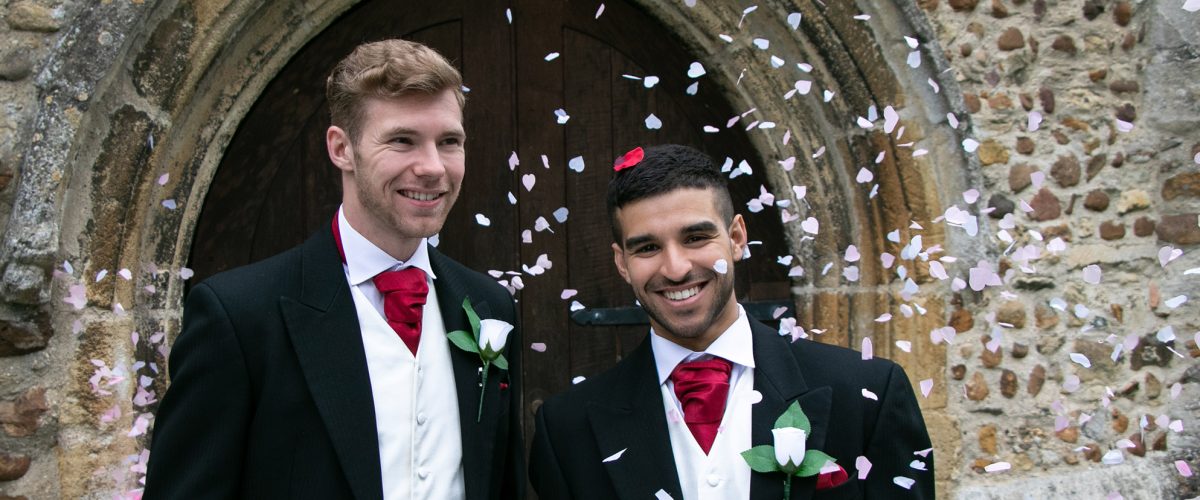
As legislators in some states seek to overturn the U.S. Supreme Court decision legalizing same-sex marriage nationwide, a new national survey finds public support for LGBTQ rights differs strongly by state, party and religious tradition.
Although marriage equality appears to be settled law, ensuring other protections for those in the LGBTQ community remains an ongoing point of contention, especially for transgender people, who are the specific target of Republican legislators and President Donald Trump.
Public Religion Research Institute reports this week that as of late 2024, most Americans continue to support nondiscrimination protections for LGBTQ individuals (75%), oppose allowing religiously based service refusals (58%), and favor same-sex marriage (67%).
However, there are pockets of extreme differences of opinion.

“Support for LGBTQ rights, including marriage equality and non-discrimination protections, have largely stabilized after some modest declines last year, with strong majorities — including majorities of most people of faith — supporting such policies,” said Melissa Deckman, CEO of PRRI. “Americans are more divided on the rights of transgender Americans, however, largely polarized along partisan lines.”
PRRI’s American Values Atlas found Democrats (89%) are the most supportive of LGBTQ nondiscrimination protections, followed by independents (78%) and then Republicans (62%). Additionally, Americans who live in states that have legal protections for LGBTQ people in jobs, public accommodations and housing are slightly more likely than those in states without these protections to favor nondiscrimination laws (78% vs. 71%).
Republicans (35%) are less likely than both Democrats (83%) and independents (56%) to oppose allowing small business owners to refuse service to LGBTQ people based on their religious beliefs.

While majorities in virtually all states support marriage equality, with the most support found in Massachusetts (87%), Vermont (86%) and the District of Columbia (82%), support is 10 percentage points higher in states where same-sex marriage would remain legal if Obergefell v. Hodges were overturned (73% vs. 63%).
On issues of transgender health care and acceptance, party affiliation makes an even larger difference.
Democrats (60%) are more than four times as likely as Republicans (14%) to oppose laws that require driver’s licenses and government IDs to show a person’s sex at birth rather than their chosen gender identity, while independents mirror the national average (37%). Among religious Americans, white evangelical Protestants (15%) are the least likely to oppose these laws, followed by Jehovah’s Witnesses (24%) and Latter-day Saints (25%).
Related articles:
Focus on the Family affiliate is the unifying force behind campaign to restrict transgender rights
Landmark study documents religious faith of LGBTQ Americans