



The federal government must resume processing and admitting refugees tentatively approved for resettlement before President Donald Trump took office in January, a U.S. court has ruled.
But like similar decisions before it, the April 9 order has yet to prompt compliance from the administration.
“Defendants now admit that they are not complying and do not intend to comply with either of this court’s preliminary injunctions,” plaintiffs in Pacito v. Trump charged in a brief filed with Judge Jamal Whitehead of the U.S. District Court for the Western District of Washington.

Jamal Whitehead
Whitehead’s latest decision rejected a White House request that he reverse his Feb. 25 preliminary injunction blocking Trump’s executive order freezing the U.S. refugee resettlement program. In addition, on March 24 the judge ordered the administration to reinstate contracted funds it has withheld from refugee resettlement agencies including plaintiffs Church World Service, the Hebrew Immigrant Aid Society and Lutheran Community Services Northwest.
“Yesterday, the court once again declared President Trump’s suspension of the U.S. Refugee Admissions program illegal, and yet the U.S. government has made negligible progress to restore refugee resettlement,” HIAS President Mark Hetfield said.

Mark Hetfield
As the case before Whitehead was unfolding, the federal government appealed his initial injunction to the U.S. 9th Circuit Court of Appeals, which stayed the first order but required the administration to process conditionally approved refugees.
But Trump has complied with neither courts’ orders, plaintiffs said in their brief: “To defend their open defiance, they splice together fragments of the Ninth Circuit’s stay order to assert an interpretation so tortured as to defy basic logic and erase this court’s rulings from the books.”
Church World Service said Whitehead has been asked to prod the administration into action.
“The judge is set to make a decision in the coming days on plaintiffs’ motion to enforce, which asks the court to outline concrete, specific steps for how the government must comply and resume processing, resettlement and funding for conditionally-approved refugees.”
The Trump administration was busy on other immigration fronts, as well, including a decision not to renew Temporary Protective Status for more than 10,000 Afghan and Cameroonian refugees, The New York Times reported April 11.
TPS is a legal immigration status allowing individuals from war-torn nations to remain in the country. If carried out, the DHS move would expose refugees from Afghanistan and Cameroon to deportation as early as May.
The refugee-resettlement agency Global Refuge expressed grave concern about the development, especially for Afghans facing the prospect of falling into the hands of the Taliban.
The whole idea behind TPS is to shield immigrants and refugees from grave danger, Global Refuge President Krish O’Mara Vignarajah said.
“Terminating protections for Afghans is a morally indefensible betrayal of allies.”
“Afghanistan today is still reeling from Taliban rule, economic collapse and humanitarian disaster. Nothing about that reality has changed,” she said. “Terminating protections for Afghans is a morally indefensible betrayal of allies who stood shoulder-to-shoulder with us to advance American interests throughout our country’s longest war.”
Afghans first became eligible for TPS in 2022 after the Taliban’s takeover of Afghanistan the previous year.

Krish O’Mara Vignarajah
“For Afghan women and girls, ending these humanitarian protections means ending access to opportunity, freedom and safety,” Vignarajah said. “Forcing them back to Taliban rule, where they face systemic oppression and gender-based violence, would be an utterly unconscionable stain on our nation’s reputation.”
But a day earlier, U.S. District Judge Indira Talwani said she would block the administration’s decision to end TPS status for Cubans, Haitians, Nicaraguans and Venezuelans, CBS News reported.
Immigrants from those countries entered the U.S. legally during Joe Biden’s presidency, and with financial sponsorship.
“Lawyers for the Trump administration argued that the plaintiffs lacked standing and that the move by the U.S. Department of Homeland Security … did not violate the Administrative Procedure Act. They also said plaintiffs would not be able to show the termination of the program was unlawful,” according to the CBS News report.
A win for Trump, at least for the moment, came when a federal judge ruled the administration could launch its proposed registry for undocumented immigrants age 14 and older.
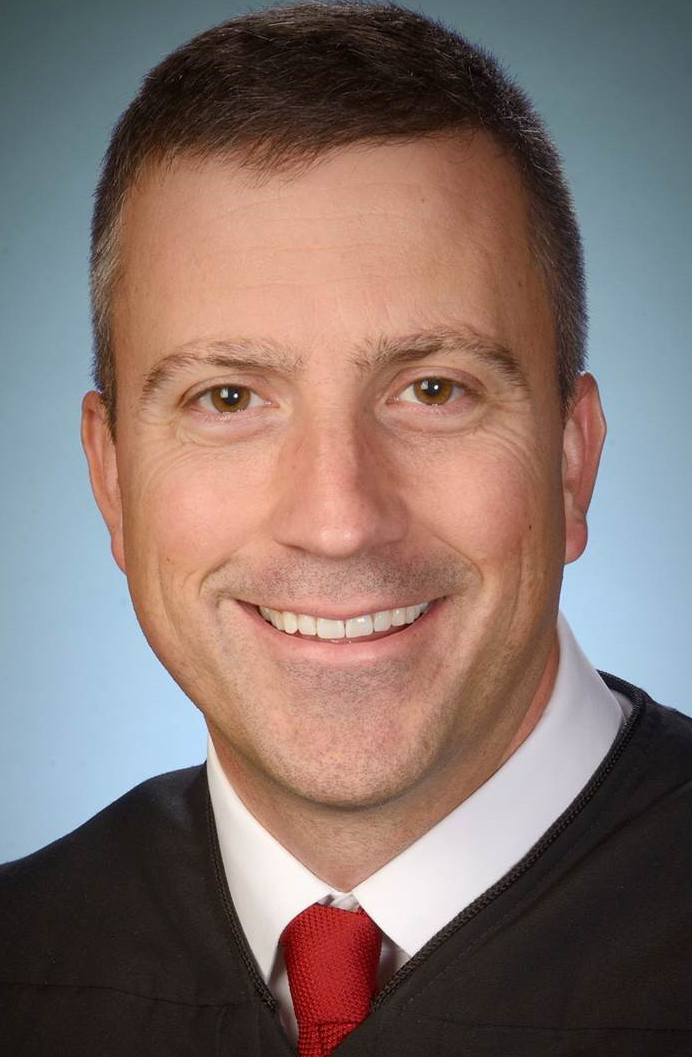
Trevor McFadden
U.S. District Judge Trevor McFadden determined the plaintiffs in Coalition for Humane Immigrant Rights v. U.S. Department of Homeland Security had no standing in the case and failed to demonstrate how the registry would cause actual harm to their organizations.
McFadden’s ruling cleared the way for the April 11 launch of the registry, which imposes incarceration and fines on unauthorized immigrants who do not provide fingerprints and other personal information to the federal government.
Another tactic the Trump administration is using to expedite and widen deportation efforts is to revoke the Social Security numbers of immigrants who entered the country legally during Biden’s presidency, according to The New York Times.
The move is designed to prompt those individuals to deport themselves.
“The goal is to cut those people off from using crucial financial services like bank accounts and credit cards, along with their access to government benefits,” the newspaper reported.
The procedure places those numbers in a file designed to ensure the Social Security benefits of deceased individuals are not being paid to others. “As a result of being added to the death database, they would be blacklisted from a coveted form of identity that allows them to make and more easily spend money,” the Times said.
Related articles:
In a week celebrating resurrection, Trump makes the living appear dead | Opinion by Rodney Kennedy
Trump administration wants all illegal immigrants to register
Harsh Florida law blocked while Trump administration sows more fear among immigrants