


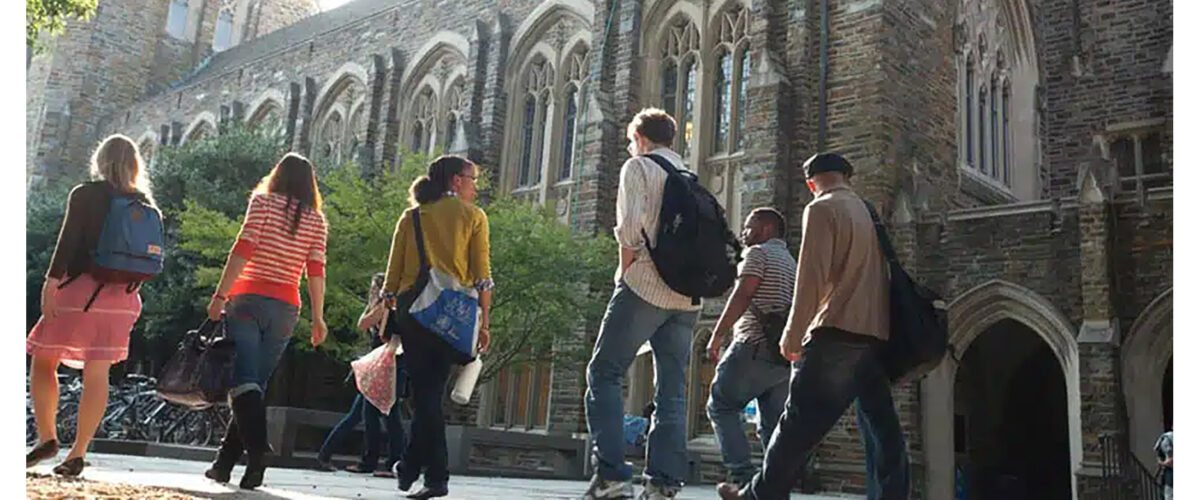
Leaders of United Methodist-affiliated colleges and universities are expanding their resistance to Trump administration efforts to interfere in the nation’s educational institutions.
The movement began in late February when Roland Fernandes, top executive of the General Board of Higher Education and Ministry, issued a statement opposing the dismantling of the U.S. Department of Education. In a Feb. 24 press release titled “Dismantling the U.S. Department of Education Harms Us All,” Fernandes cited Proverbs 8:15, John 8:31-32, Methodism’s founder John Wesley and the new Social Principles of The United Methodist Church as the basis for the agency’s resistance to Trump’s executive order to dismantle the Education Department.
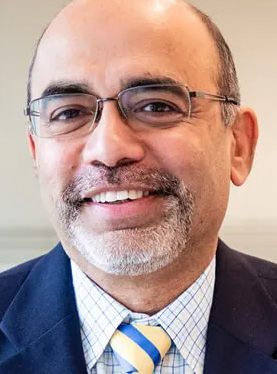
Roland Fernandes
“As United Methodists, we cannot remain silent in the face of such a fundamental threat to the common good,” Fernandes wrote. “We urge the preservation of the Department of Education, including its invaluable programs, as a defender of equal opportunity and a reflection of our shared belief that all people — created in the image of God — deserve the chance to grow in wisdom, grace and knowledge.
“We must not diminish our collective capacity to seek truth and advocate for justice,” Fernandes wrote. “To compromise education is to forsake our future.”
Fernandes also is among United Methodist education professionals who signed an April 22 statement from the American Association of Colleges and Universities pledging noncooperation with the Trump administration’s efforts to gain control of the nation’s institutions of higher learning. Signers of the statement totaled more than 500 as of April 29.
The AACU statement, “A Call for Constructive Engagement,” asserts: “As leaders of America’s colleges, universities and scholarly societies, we speak with one voice against the unprecedented government overreach and political interference now endangering American higher education.”
Mark Davies, a United Methodist clergyman and Wimberly Professor of Social and Ecological Ethics at Oklahoma City University Petree College of Arts and Sciences, posted on Facebook a list of the presidents and leaders at UMC-related institutions who’ve signed the ACCU statement:
- Jonathan Alger, president, American University
- Christopher Callahan, president, University of the Pacific
- Ronald B. Cole, president, Allegheny College
- John Comerford, president, Otterbein University
- Isiaah Crawford, president, University of Puget Sound
- Camille Davidson, president and dean, Mitchell Hamline School of Law
- Louise Fincher, president, Emory and Henry University
- Melissa Gilliam, president, Boston University
- Jeremy Haefner, chancellor, University of Denver
- Grant Hagiya, president, Claremont School of Theology
- Hilary L. Link, president, Drew University
- Scott D. Miller, president, Virginia Wesleyan University
- Kathleen Murray, acting/interim president, Hamline University
- Frank Neville, president, Millsaps College
- Vincent Price, president, Duke University
- Stephen Thorsett, president, Willamette University
- Matthew P. vandenBerg, president, Ohio Wesleyan University
- Sheahon Zenger, president, Illinois Wesleyan University
Previously a member of the UMC’s University Senate, which approves colleges and universities for church affiliation, Davies posted on April 28: “It is critical that we embrace the primary role of education as preparation of persons for responsible participation in community rather than simply to transform students into consumers and commodities within our economic system. The economic is only one part of the human community, and neither the human community nor our economic system can sustain themselves without a free, responsible, participatory, and democratic political community.”
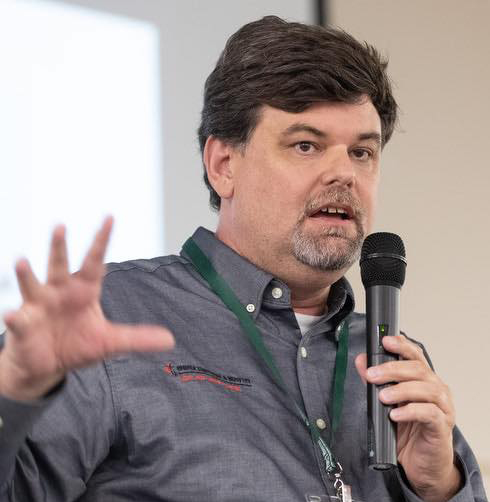
Mark Davies
Within a day of its posting, Davies’ statement had garnered more than 1,515 reactions, most in support of his opinion.
Also on April 28, Megan Zahneis reported in The Chronicle of Higher Education that more faculty groups are pressing their institutions to join the resistance to Trump administration intrusion efforts for their mutual defense. Zahnesis cited Rutgers University as the first to adopt a resistance statement.
“Many of the resolutions use similar language, noting that the Trump administration poses a ‘significant threat to the foundational principles of American higher education,’ including shared governance, research integrity and free speech,” she wrote. “Mutual-defense compacts, the resolutions propose, should operate on the notion that ‘the preservation of one institution’s integrity is the concern of all,’ which the authors of the original Rutgers document have compared to the North Atlantic Treaty Organization, whose member countries offer one another military and political protection in a collective-defense arrangement.”
In a similar action, the faculty of UMC-related Emory University in Atlanta unanimously approved an April 15 resolution supporting academic freedom along with protecting international students.
Although the U.S. government has begun to restore some international students’ visas, the threat of deportation remains, reported NPR April 28. “More than 1,500 international students across the country have been living in fear after their student visas were suddenly cancelled in recent weeks, even if they had done nothing wrong,” wrote Michel Martin, co-host of NPR’s “Morning Edition.”
Related articles:
Furman faculty say they won’t give in to outside pressure
Trump, Harvard and Bob Jones University: The resurrection of racism | Analysis by Rick Pidcock
Harvard vs. Trump, round 1 | Opinion by Edmond Davis
Trump officials cite Harvard Divinity as one of university’s ‘schools of concern’