

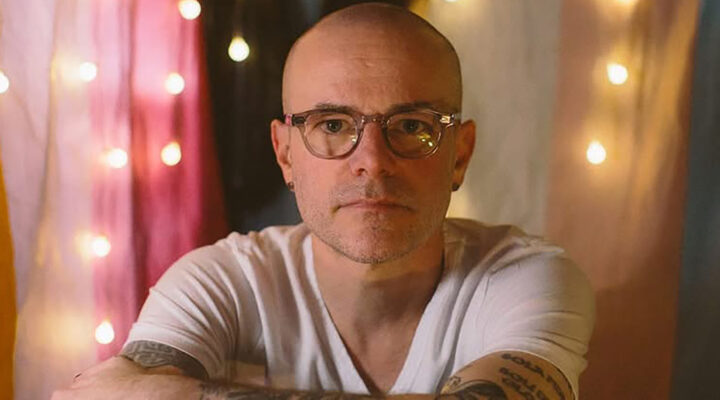
Derek Webb had plans. A tour commemorating the 20th anniversary of one of his early albums was in the works. There were thoughts of a new release mid-year and a subsequent promotional tour to round out 2025. But then February came, and everything changed.
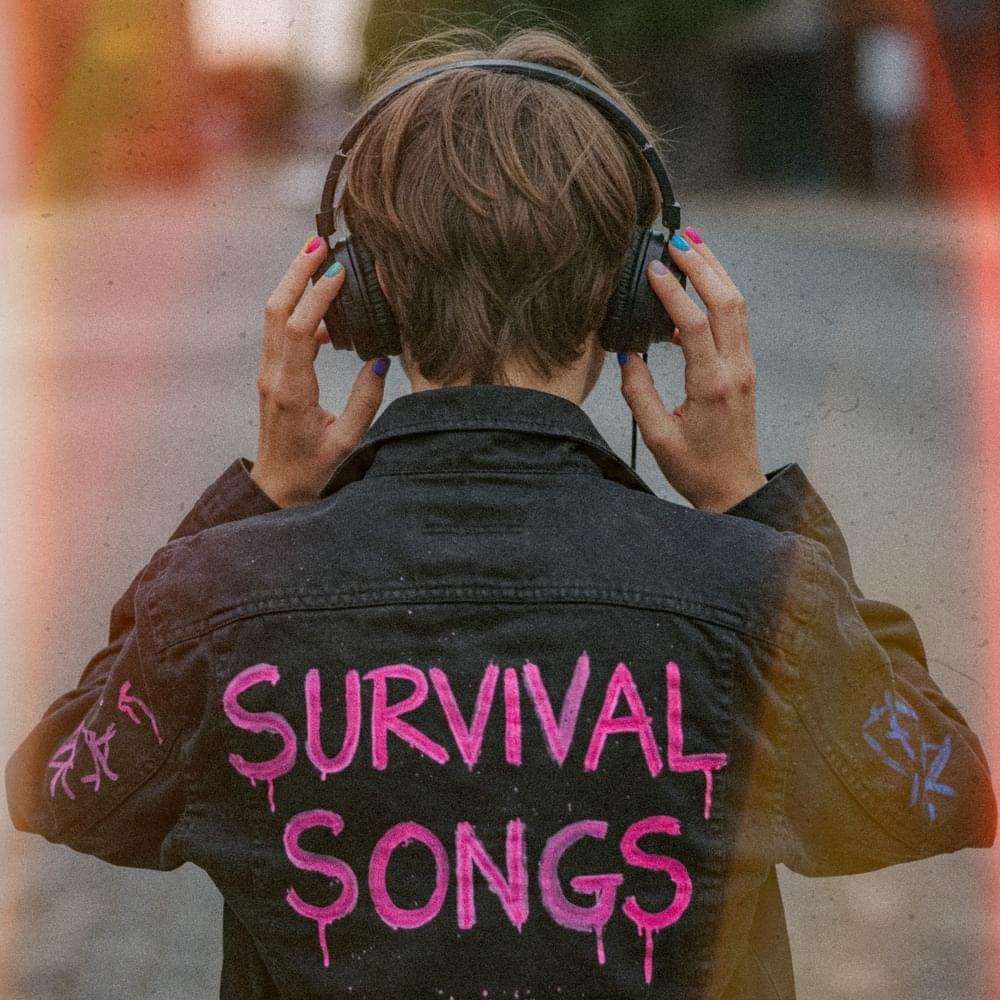
Webb scrapped his original plans when a completely different project found him — a set of songs that came with a sense of urgency. After a two-week writing frenzy and a feverish weekend recording session, Webb emerged with Survival Songs, an album of hope for queer youth and a mission to get the music to his target audience as quickly as possible.
The job of a creative person is to “look at the world and describe it,” Webb said. But he spent months not being able to describe the world he was seeing. The enormity of the needs he saw left him overwhelmed.
 “I didn’t even know where to focus my energy. I didn’t know where to focus my attention, and it really had me in a bit of a block,” Webb said. “I so desperately wanted to be writing and working, and I couldn’t.”
Things turned around quickly when Webb leaned into a basic writing tenant: Write what you know. For Webb, this meant a shift from trying to figure out what the world needed to “what do the immediate people in my life need?”
That’s when Webb realized the most vulnerable people in his immediate world were queer family and friends. He began asking himself questions: What are my friends telling me, and what am I intuiting that really might need to be said? What language can I prop up as a barricade in front of my friends and loved ones?
The questions propelled Webb into action. He went from worrying about his ability to write, to having an album’s worth of songs in two weeks. “In 30 years, I’ve never written an album that quickly,” he said.
Once the songs were written, Webb reached out to a friend who manages short-term rentals in Nashville to see if he had an empty unit that weekend where he could record. Webb was in luck.
The recording artist grabbed two guitars, a tambourine, a cajon and a small 12-track digital mixer and over the course of two and half mid-February days, recorded the nine songs written in the previous two weeks. He barely slept or ate, and he emerged with a nearly complete album.
Webb’s management suggested a Pride month release for Survival Songs but that felt too long. The need to get the songs to his target audience was too urgent to wait.
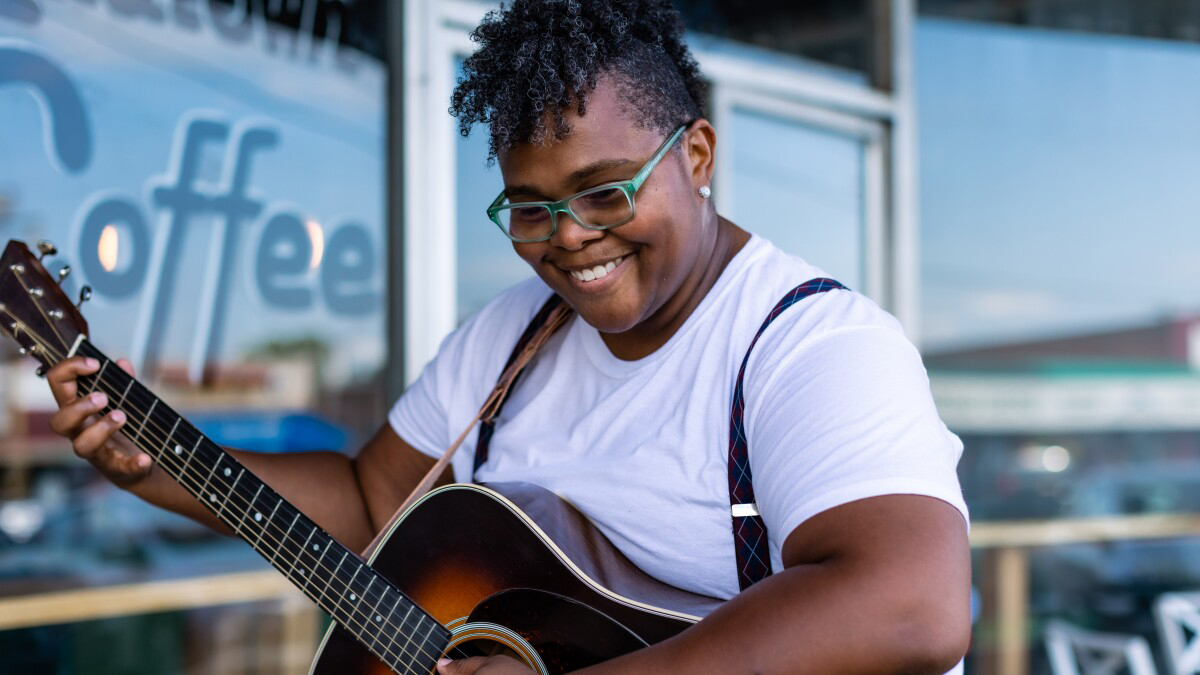
Crys Matthews
Singer/songwriter Crys Matthews said the political moment we are in creates an “urgency for artists.” Matthews, whose music is a blend of country, folk and Americana, believes music has a multifaceted role in times of unrest. She says in a time where books are burned and history is censored, “the only thing that isn’t banned is music.”
According to Matthews, music has the ability to “harness the power of people’s outrage” and provide them with words to discuss issues “that they may not necessarily have the language to talk about on their own.” At the same time, music plays a role in keeping people “hopeful and inspired,” she said.
“A lot of times as artists we’re shouldering that responsibility and there is an urgency to that,” Matthews said. She believes living under authoritarianism for an extended period of time comes with the risk of accepting the conditions as normal.
“And it is very much not normal,” she said.
Music also can serve as “the last line of defense” for someone feeling “desperately alone,” Webb said. He noted many people spend “their most intimate moments with themselves” with headphones or AirPods.
Particularly for queer youth, those moments can come with high stakes. The National Academy of Pediatrics published a study that found lesbian, gay and bisexual youth were more than five times as likely to have attempted suicide in the previous 12 months as others of their age, and recent research by the Trevor Project established a correlation between anti-trans legislation and suicide attempts.
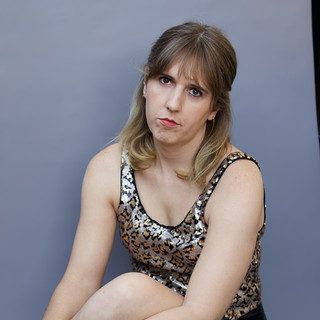
Mariela
Music is “absolutely life-saving,” said Rachel Hall, a trans artist who plays indie-pop music under the name Mariela. “It is a way to connect on a visceral level in addition to an intellectual level. You can write music that has lyrics that communicate a message, but you’re able to speak directly to the emotions with music in a way that you can’t in a just purely written format.”
“What’s at stake are the literal lives of people,” Webb added.
And, while suicide prevention may seem like a lot of weight to put on lyrics and melodies, data exist to support the impact of music on mental health. A literature review and analysis published by the American Medical Association found music was associated with statistically and clinically significant improvements in mental quality of life.
Hall said music allows people to experience complex feelings with their whole bodies and express their emotions in a way that doesn’t “involve a knife or a gun.” Music offers “a chance to be sad and feel all of the emotions in a less destructive way than we might otherwise,” she said.
As a trans artist, Hall is able to give her listeners not only an outlet for emotions but also a hopeful role model. Hall said she made an “intentional pivot” to be a vocal trans artist when she realized how much it would have meant to her to see a happy trans person thriving in their art while she was in the midst of transition.
Today, Hall is trying to be that example for others, like the newly out trans girl from Texas who interacts with her social media posts. “I love getting to be that for her, especially in Texas,” Hall said. “On my absolute darkest nights, I wish I had had a ‘me’ to look at.”
Elizabeth Jowski, a student staff member at Wesley Foundation, said queer young people need music that helps them feel seen. Survival Songs made her younger self in a rural conservative town feel “seen and affirmed,” she said. And her current self, who has had the opportunity to branch out and find acceptance, also finds meaning in the messages she sees as important reminders for queer people of any age who “may still be existing in predominantly conservative spaces.”
As far as Webb’s plans for the rest of the year, he’s still touring, but the focus is on getting his newest songs to the people who need them the most — the queer teens for whom he’s offering free admission to the intimate shows he’s giving in homes and other small spaces.
“The world needs songs. There are people who need a soundtrack right now to help get through this,” he said.