



On July 7, 2025, the U.S. District Court, Eastern District of Texas Tyler Division, issued the following ruling:
When a house of worship in good faith speaks to its congregation, through its customary channels of communication on matters of faith in connection with religious services, concerning electoral politics viewed through the lens of religious faith, it neither “participate[s]” nor “intervene[s]” in a “political campaign,” within the ordinary meaning of those words. To “participate” in a political campaign is “to take part” in the political campaign, and to “intervene” in a political campaign is “to interfere with the outcome or course” of the political campaign.

Bill Leonard
Bona fide communications internal to a house of worship, between the house of worship and its congregation, in connection with religious services, do neither of those things, any more than does a family discussion concerning candidates. Thus, communications from a house of worship to its congregation in connection with religious services through its usual channels of communication on matters of faith do not run afoul of the Johnson Amendment as properly interpreted.
The IRS did not abolish the Johnson Amendment, the 1954 law that prohibits all 501(c)(3) entities from participating in political campaigns while receiving tax-exempt status. Rather, the court acknowledged it:
generally has not enforced the Johnson Amendment against houses of worship for speech concerning electoral politics in the context of worship services. … For these reasons, the Johnson Amendment does not reach speech by a house of worship to its congregation, in connection with religious services through its customary channels of communication on matters of faith, concerning electoral politics viewed through the lens of religious faith.
I confess the phrase “electoral politics viewed through the lens of religious faith” sent a chill down my spine since, in the Baptist tradition which shapes my “religious faith,” “electoral politics” has often inspired and/or required more Baptist dissent than acquiescence. The IRS ruling smacked of a casuistry that would make a medieval Jesuit blush. (Google “Jesuit casuistry.”)
In an effort to alleviate the chill, I went running to the Baptist Joint Committee for Religious Liberty, where I found an insightful dissent to the IRS ruling prepared by the BJC’s legal counsel, Holly Hollman, who wrote:
“It is rare to see a government agency surrender its regulatory mandate not through legislative or regulatory amendment but by way of a linguistic sleight of hand.”
It is rare to see a government agency surrender its regulatory mandate not through legislative or regulatory amendment but by way of a linguistic sleight of hand. The IRS did just that last week. In a proposed consent decree filed in a federal district court in Texas, the IRS asserted that when clergy communicate about electoral politics with their congregations in religious services, it’s not electioneering in violation of longstanding federal law. Instead, it should be viewed as just a “family discussion.” This is not only an unorthodox legal maneuver; it’s bad advice for houses of worship.
Hollman notes “endorsing a candidate from the pulpit isn’t an act of familial intimacy,” since in addition to the pulpit, congregations declare their views online and on air in multiple media venues. Indeed, the National Religious Broadcasters, an organization prepared “to broadcast its endorsements of candidates,” joined two Texas churches in bringing the case before the district court.
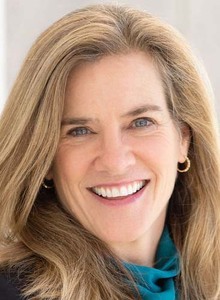
Holly Hollman
She also observes that while churches have free speech and can engage in “public debate,” the Johnson Amendment has long protected nonprofit organizations from being carried “into partisan warfare or transformed into laundering operations for campaign finance.” Congregations that want to “enter politics” would do well to count the cost.
American churches have long exercised multiple options in navigating partisan political issues:
- Some congregations have exercised public support for particular political candidates and positions, some daring the IRS to take action against them. Some of us may recall Sundays when, on exiting our churches, we found pamphlets on car windshields recommending certain “Christian candidates,” materials posted by various church groups.
- Other churches composed of Christians with varying political views have managed to avoid endorsements that might divide the communion or send some members packing. A 2023 survey conducted for Religion News Service by the Public Religion Research Institute revealed rather significant opposition to church endorsement of candidates. This included 62% of white evangelicals, 59% of Black Protestants, 77% of white mainline/nonevangelical Protestants, 79% of white Catholics, 78% of Hispanic Catholics, 72% of Hispanic Protestants and 77% of Jewish Americans.
- Might we infer from these statistics that a majority of American churches will hesitate to take advantage of the new IRS ruling?
- Many churches have a long history of inviting candidates to present their views to the congregation. Sometimes, those invitations imply the church’s support.
Let’s examine two concerns for congregational consideration.
How might these IRS adjustments impact American congregations? On one hand, it could free churches to exercise their collective consciences in support of specific candidates who adhere to certain Christian principles in the political sphere. On the other hand, it could drag congregations more deeply into the political arena, thereby, as Hollman writes, conscripting churches “into partisan warfare or transformed into laundering operations for campaign finance.”
“Political preachers beware; this ruling may be a policy change, but it is not an open invitation to churches to dive into political campaigns.”
The conservative journal First Things adds that “religious leaders” linking faith and politics “perhaps … can now breathe a bit easier knowing the current administration seems unwilling to consider communication from the pulpit as impermissible campaign activity. But to be clear, the Johnson Amendment is still on the books and no court has ruled it unconstitutional. Political preachers beware; this ruling may be a policy change, but it is not an open invitation to churches to dive into political campaigns.”
But what if the Johnson Amendment is retained in case endorsement of certain candidates or policies could bring churches into conflict with and/or investigation by the majority party in Congress or the White House? Remember in January 2025, when Bishop Mariann Budde of the National Cathedral in Washington, D.C., addressed the newly inaugurated president with these words: “In the name of our God, I ask you to have mercy upon the people in our country who are scared now?” She referenced “transgender children” and undocumented residents.
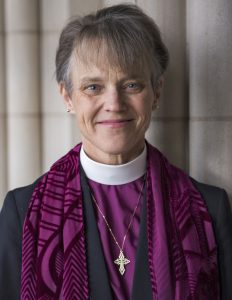
Mariann Edgar Budde
In response, some members of Congress concocted a statement of sanctions against the bishop, while others proposed moving the traditional service from the National Cathedral and to a more “respectful” sacred space.
Such actions raise the question: What happens if a church chooses the “wrong side” from the majority political opinion? Could churches confront political retribution for identifying with the candidates or political views outside the existing administration? If you think that can’t happen, just ask Harvard or Columbia universities, some prominent law firms, CBS or the Wall Street Journal.
Budde said it like this to the president of the United States and the rest of us: “Unity is a way of being with one another that encompasses and respects differences, that teaches us to hold multiple perspectives and life experiences as valid and worthy of respect; that enables us, in our communities and in the halls of power, to genuinely care for one another even when we disagree.”
That may not be the safest response to our current political times, but it sure sounds like gospel.
Bill Leonard is founding dean and the James and Marilyn Dunn professor of Baptist studies and church history emeritus at Wake Forest University School of Divinity in Winston-Salem, N.C. He is the author or editor of 25 books. A native Texan, he lives in Winston-Salem with his wife, Candyce, and their daughter, Stephanie.
Related articles:
Trump administration says it won’t enforce Johnson Amendment
1,000 nonprofits protest loosening Johnson Amendment
An invitation to speak prophetically but not endorse candidates