

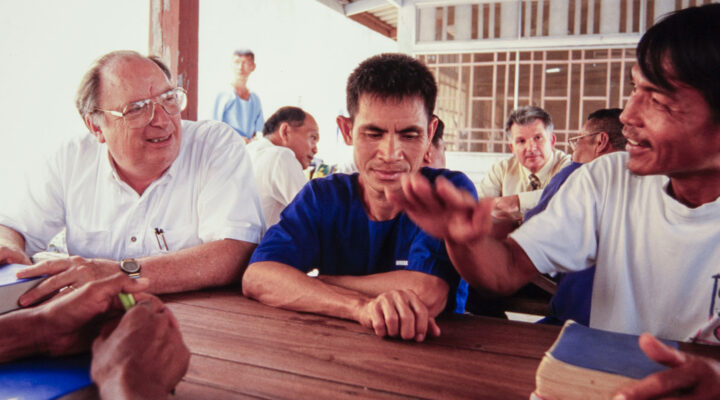
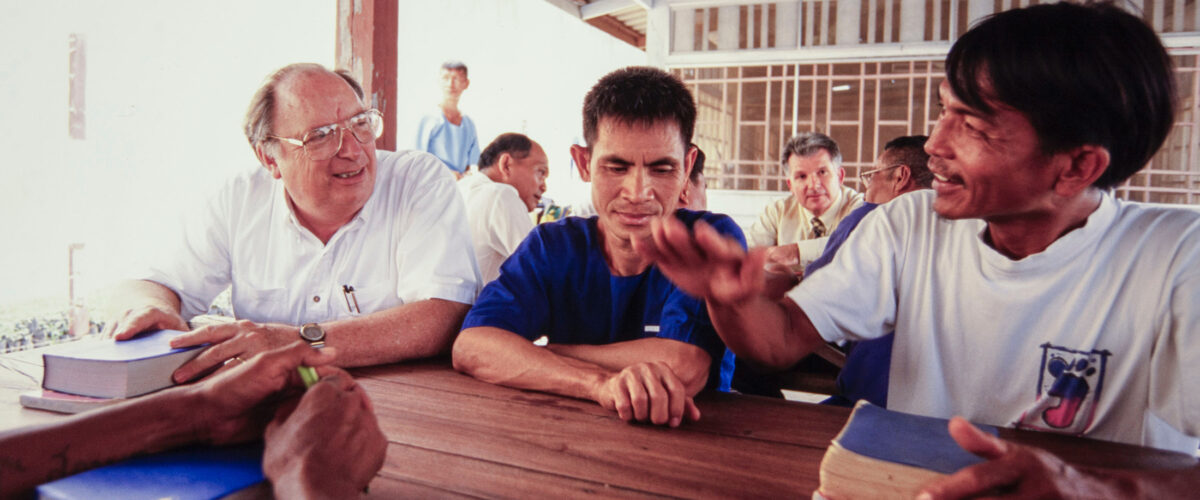
Jack Martin, who pioneered ministry to prison inmates in Thailand during his nearly 35 years as a Baptist missionary, died Sept. 20 after a long illness. He was 90.
Like many pioneers, Martin didn’t take no for an answer when he started mission work among prison inmates — perhaps the most hated and rejected people in overwhelmingly Buddhist Thailand.
And there were plenty of no’s early on: Thai prison wardens were suspicious. Thai Baptist churches, struggling for their own recognition in society, didn’t want to be associated with despised outcasts. The prisoners themselves thought they were beyond redemption; they didn’t believe a God of love might care about them.
None of that deterred Martin, a passionate soul winner beneath his talkative, wisecracking exterior.
A skeptical fellow missionary once asked him in the prison ministry’s early days, “Is this really what we’re out here to do?”

Glad and Jack Martin during their early years as missionaries in Thailand. They later became a dynamic duo in both student and prison ministry. (Martin family photo)
Martin’s response: “I don’t know what you’re out here to do. I’m out here to share the gospel.”
Before he retired in 2000, the ministry had spread to prisons all over Thailand and developed an extensive training and assistance program for ex-cons and the families of inmates. It has grown ever since under the leadership of Martin’s long-time Thai ministry partner, Soonthorn Soonthorntarawong — even winning recognition from the government and Thailand’s royal family.
Martin, a St. Louis native, and his wife, Gladys (“Glad”) Ola Way of Louisiana, met at Louisiana College in Pineville and discovered on their first date they both felt called to mission work. They married the following year. After he completed seminary studies — and served four Louisiana churches as pastor — they were appointed missionaries by the Southern Baptist Foreign (now International) Mission Board in 1965.
They boarded a ship for Thailand in 1966 with three children (and another on the way), studied Thai language in Bangkok and began their ministry in Rayong, a provincial town with a U.S Air Force base nearby. The Vietnam War was rapidly escalating across the border, so the Martins served as parent figures for American servicemen and women on leave, while Jack spent much of his time on the road, evangelizing and starting churches in the region.
The Martins began coming into their own as a dynamic mission duo when they moved to Bangkok in 1970 to lead the Baptist Student Center. They later spent 10 years in the resort city of Pattaya, starting churches and doing street evangelism before returning to Bangkok and the student center, where they made a major impact on several generations of young Thais seeking spiritual guidance.
Unexpected challenge
Hovering in the background, however, was a new and unexpected challenge: prison ministry. An influential government official befriended by the missionary couple asked Martin to begin working with foreign inmates, most of whom were jailed for drug possession and trafficking.
In retrospect, it made sense that Martin would say yes. He didn’t become a Christian believer until early adulthood, and he remembered how it felt to be lost and lonely. He first visited prison inmates even before becoming a missionary. As a young pastor in segregation-era Louisiana, he faced criticism from white church members for ministering to Black people in the community.
Slowly, very slowly, the new prison ministry spread to Thai inmates. It was tough going.
“There were days we’d come home and just cry when we couldn’t get any Thai Christians interested in prison work,” Glad Martin recalled. “They’d say: ‘These are bad people. Why do you want to have anything to do with them?’”
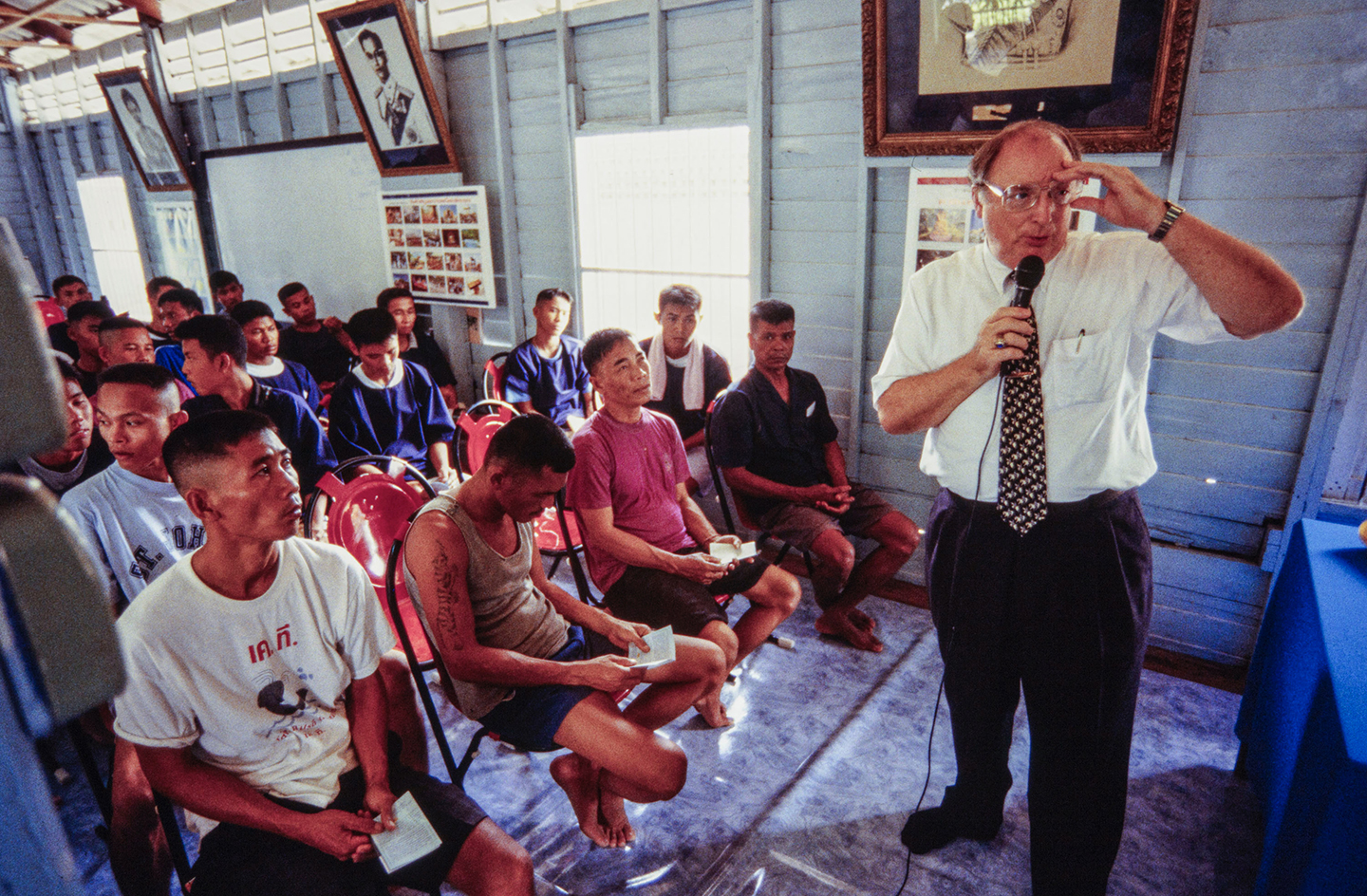
“God brought you here so he could tell you the way,” Jack Martin tells Christian converts at Ratchaburi Prison in Thailand. “This country needs people who have a clean heart, who have hope.” (1998 photo)
The hardest hearts and minds to change were those of Thai inmates themselves — not only because of their bleak circumstances, but because of the fatalism that runs deep in Buddhist Thailand. Most Thais believe their karma controls their destiny. Only “making merit” improves chances for a better future life. Society, and their own families, reinforce the deep sense of rejection most convicts already feel.
Martin once recounted the story of an inmate sentenced to life behind bars after killing his parents in a rage. He tried to kill himself three times but was stopped by a guard or another prisoner. On his third attempt, a Christian inmate intervened and told him there was hope.
“You don’t understand,” the despairing man said. “I killed my parents. I have the worst karma anybody can have. There is no hope for me forever.”
“Jesus loves you. God will forgive you,” the Christian inmate replied. He shared the gospel and eventually won the man to faith. Once he knew there was hope, the new believer began telling everyone he encountered, “There is hope! I’ve got to tell you about it.”
“He’s one of our (ministry) leaders today,” Martin said. “But we’ve had several try to commit suicide before finding Christ. They have such self-loathing, because in Thai culture, if you go to jail, you’re a criminal — and many people don’t forgive criminals.”
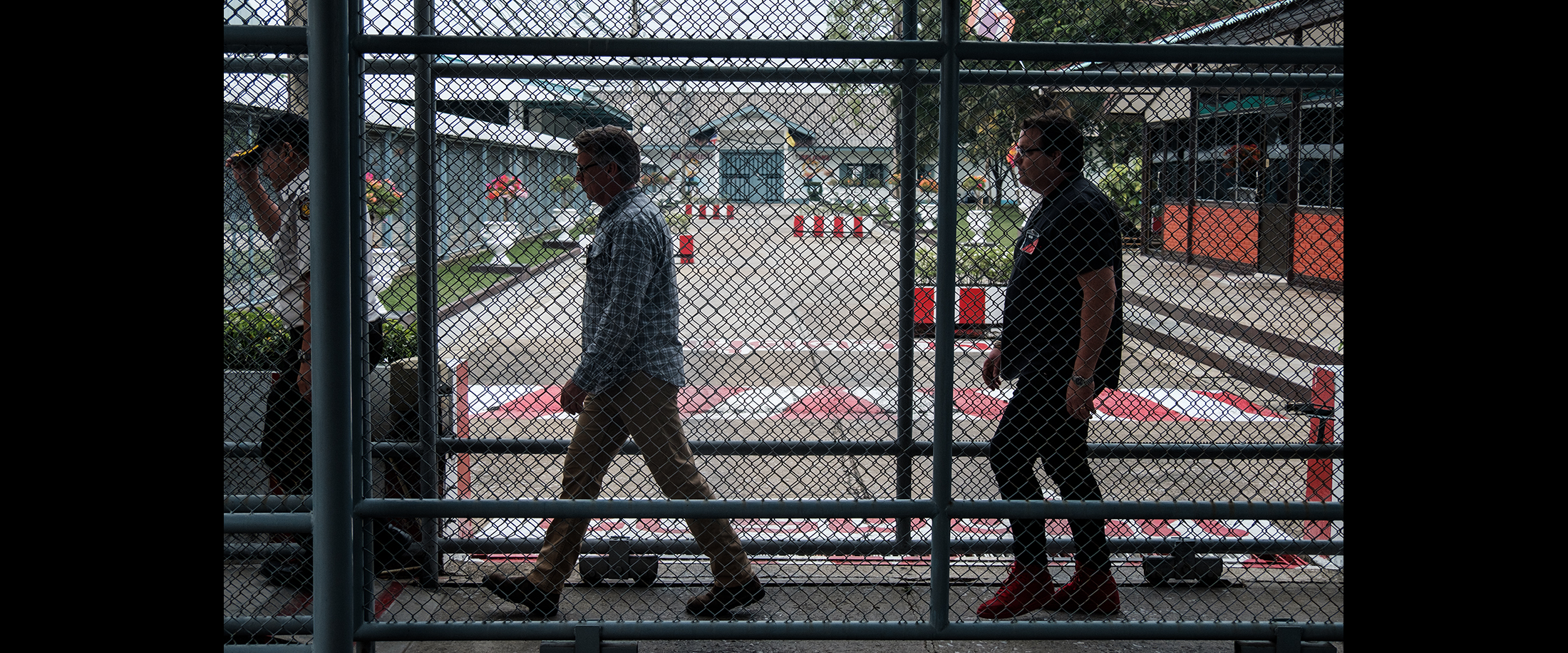
Earl Bridges and Craig Martin walk inside a Thai prison during filming of a “Good Road” episode.
One prison to 13
The Martins didn’t give up. The work gradually spread from one prison to 13. In 1976, Glad Martin began visiting women’s prisons, which became a major part of the ministry along with Bible correspondence courses for male and female inmates. Thai Baptist churches eventually got involved. Christian inmates transferred from one prison to another became “missionaries,” sharing hope with others.
Another milestone: Martin recruited a young Thai Baptist pastor, Soonthorn Soonthorntarawong, to partner with him in prison ministry. Like many Thai Christians, Soonthorn was reluctant at first.
“I first met him more than 40 years ago,” Soonthorn said in a video tribute to Martin. “Rev. Jack was such a warm and friendly man, easy to connect with. But what truly turned my life upside down was the day he asked me to join him inside a prison. That became the turning point of my life. When Rev. Jack said to me, ‘Let’s go into the prison and teach the inmates about God,’ I refused. I didn’t want to go. At that time, I was preparing to serve God in my local church, not in prison ministry. He kept inviting me. I always replied, ‘Let me pray first,’ but he never gave up.”
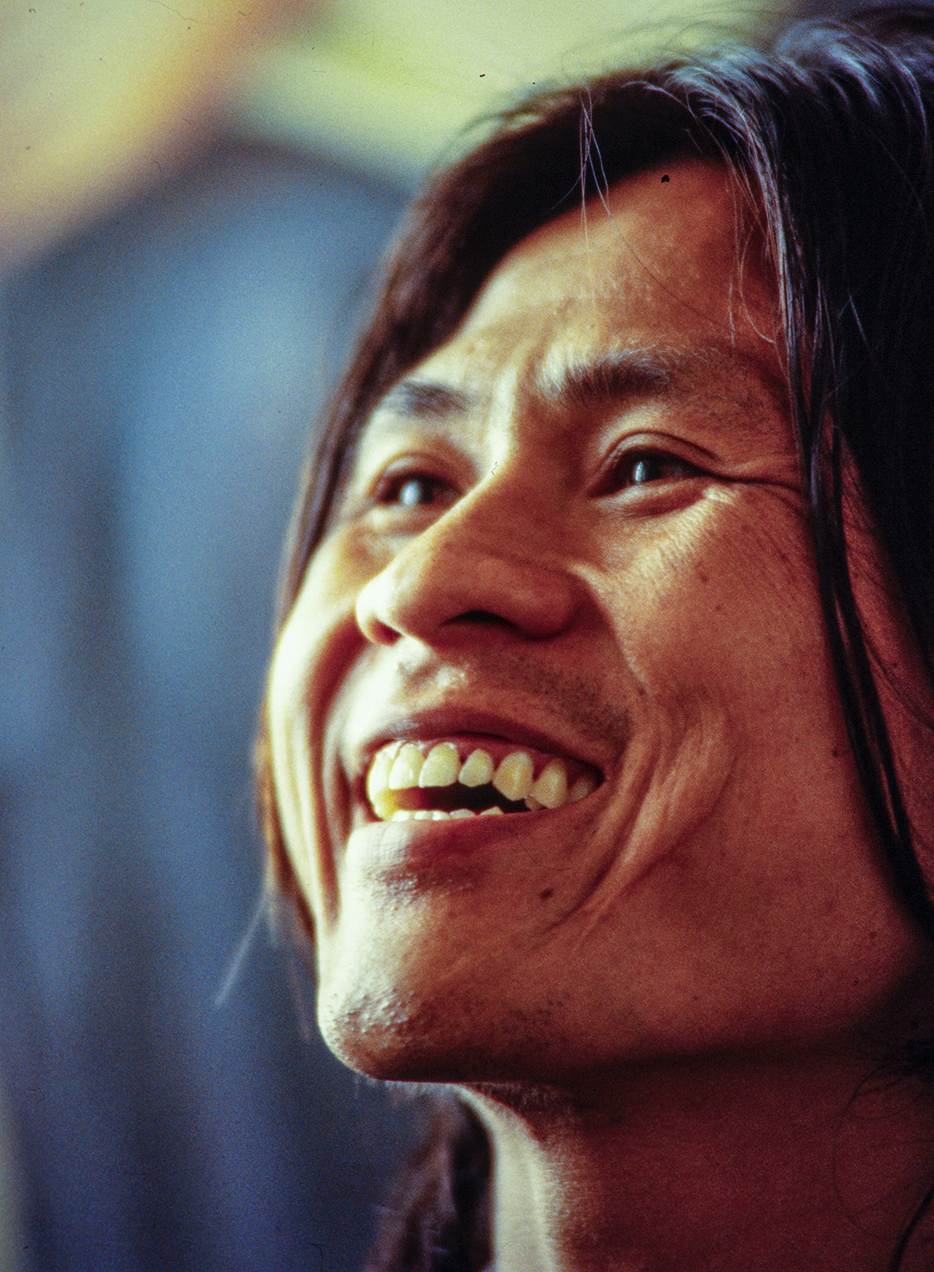
Thai prison inmates once despaired. Now they have hope through the prison ministry begun by Jack Martin. (1998 photo)
When Soonthorn finally accompanied Martin on a prison visit, “I saw inmates who were hungry to hear God’s word. Before leaving, several inmates came to me and asked, ‘Does Jesus really love us? Can he truly save us?’ And I answered, ‘Yes, Jesus loves you. Jesus can save you.’ As they walked away, they said to me, ‘Please come back. Tell us more about Jesus.’ Those words echoed in my heart.”
There were 37 inmates in that prison service. When Soonthorn went back a second time, there were 100.
“They had gone to bring others,” he related. “The sight amazed me and deeply moved my heart.” From that day on, he knew he was called by God to work with the Martins in prisons.
After the Martins’ retirement, the work has continued to expand to more prisons. Up to 500 inmates are baptized each year, according to Soonthorn, who now leads the prison ministry and the House of Blessing Foundation, which provides lodging, job training and education for released inmates and their family members as well as shelter and love for the children of inmates still in prison.
“All of this began with one man who inspired me, Rev. Jack L. Martin,” Soonthorn said. “He was an example of faithfulness, of kindness and of true servant leadership. He inspired me to embrace this calling. Today, the prison ministry in Thailand, and the House of Blessing Foundation, is the only organization that serves (prison inmates) in a truly holistic way, bringing the gospel inside prisons, helping ex-prisoners rebuild their lives, caring for troubled youth and raising the children of inmates — a ministry that brings hope, light and new life through Jesus Christ.”
In a poignant last meeting three days before Martin’s death, Soonthorn came from Thailand to visit him and talk about the profound impact of his ministry. Despite his illness, “Dad understood what Soonthorn was sharing,” said Martin’s son Craig. “It was a miracle on so many levels and a perfect ending to Dad’s life purpose.”
Glad Martin died in 2020. Jack Martin’s survivors include four children — Deborah Gonzales, Jamie McCalebb, Daren Martin and Craig Martin — eight grandchildren and three great-grandchildren. Craig Martin, a filmmaker and music producer, worked in media for many years with the International Mission Board and is a board member of Baptist News Global. He co-hosts a PBS travel show, The Good Road, which featured the Thai prison ministry in its first season.
A memorial service for Jack and Glad Martin will be held Oct. 25 at 11 a.m. at Bon Air Baptist Church in Richmond, Va. It will be livestreamed.