

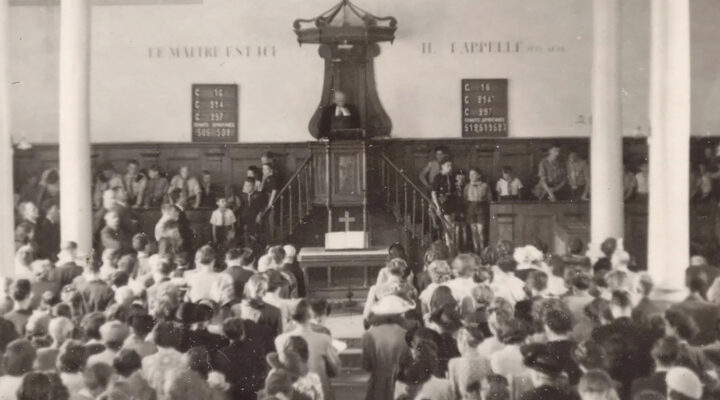
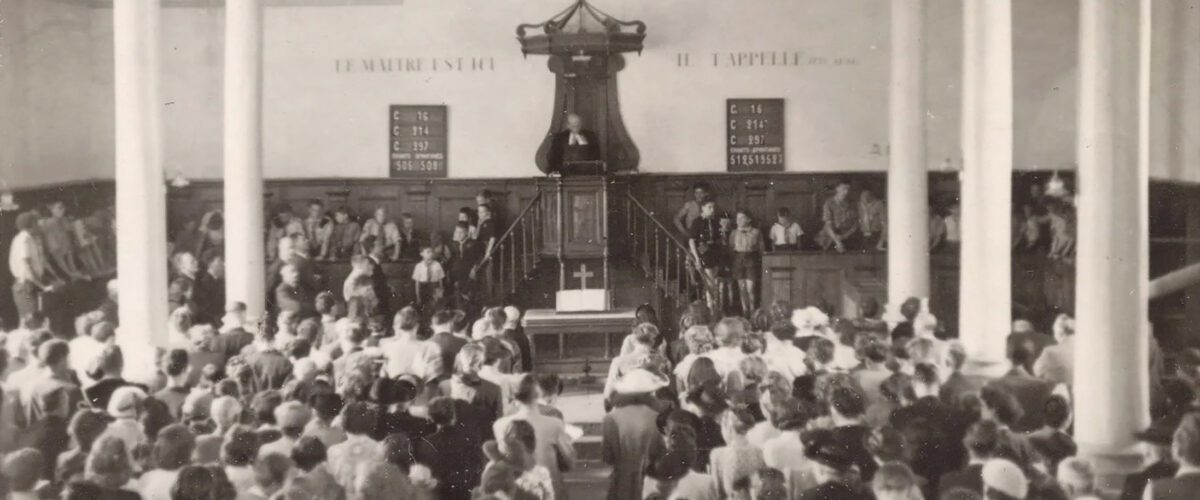
He’s been called a hero for standing up to the Nazis as they unleashed Hitler’s Final Solution to kill Europe’s Jews. But André Trocmé saw himself as a devoted follower of Jesus and Protestant pastor in a small French village who saw World War II as a chance to live out the truths of the gospel.
The story of how Trocmé and fellow villagers saved thousands of Jews from the Holocaust has been told in books and movies and honored in his recognition as one of the non-Jews named Righteous Among the Nations by Israel.
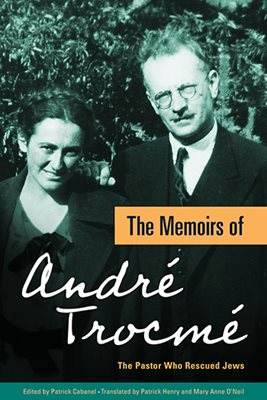
Finally, we can read his story in The Memoirs of André Trocmé: The Pastor Who Rescued Jews, a beautifully written account that he left for his children in the 1950s and has now been translated into English and published by Plough, an arm of the pacifist Bruderhof movement that was founded in Germany after World War I.
It’s a story of contrasts and convulsions. Trocmé was born into a wealthy family that lost everything and became refugees in World War I. He saw military service in Algeria, but the experience solidified his pacifism. He became a pastor in Le Chambon, a small French village, where he preached on pacifism and God’s love for all people.
“We don’t distinguish between Jews and non-Jews. That would be contrary to the teachings of the Gospels.”
“We don’t distinguish between Jews and non-Jews,” he wrote. “That would be contrary to the teachings of the Gospels.”
Trocmé continued discipling his flock as Hitler gained power in neighboring Germany. Once Germany took France in 1940, he began preparing his parishioners for resistance. By the time France’s Vichy government came to Le Chambon demanding villagers turn over any Jews, the village was resolved to rely on the “weapons of the Spirit” to defy the orders or die trying.
“If our comrades, whose only fault is their birth into a different religion, receive a deportation order or are required to list their religion in a census, we will encourage them to disobey these orders, and we will do our best to hide them,” he told his congregation.
 One Sunday, as war approached, Pastor Trocmé read a proclamation to his parishioners:
“First, as of today, let us abandon all division between Christians and all bickering among French people. Let us stop labeling one another with scornful terms: right-wing, left-wing, peasants, workers, intellectuals, proletarians or landowners. Let us stop blaming one another for wrongdoings. Let us begin again to have confidence in one another, to greet and welcome one another, recalling at each encounter, as the first Christians did, that we are all brothers and sisters in Jesus Christ.”
The congregation experienced a spiritual renewal that empowered members to remain faithful under worsening conditions.
“The participants doubled in number and younger people joined,” he wrote in the memoir. “Never had the parish lived a more intense spiritual life. Even more importantly, the prayer that rose from these groups was fervent, practical and tangible. It was here, and not elsewhere, that we received from God answers to the complex problems of sheltering and hiding Jews”
Meanwhile, the outbreak of war challenged Trocmé’s pacifism, but he found his commitment to peace growing even stronger.
“Once you definitively refused war as an option, you could persevere in peace, despite everything, by obeying God and believing in the miracle of love.”
“As Hitler became more and more brutal and threatening, most French pacifists abandoned a position founded on feelings rather than principle,” he explained. “Only those who rejected all violence possessed this ‘something other.’ Once you definitively refused war as an option, you could persevere in peace, despite everything, by obeying God and believing in the miracle of love, even in the presence of unrelenting, diabolical forces like Nazism.”
Resistance came with a price. Trocmé and other villagers were arrested. He received numerous death threats and spent 10 months underground as Vichy officials sought to arrest him. His resolve remained firm.
“We must teach young people that conformity and fear are the most serious sins,” he noted. “They led to the stoning of the prophets and the crucifixion of Christ. They allowed Christian nations to wage endless wars without realizing their guilt. Nonconformity for reasons of conscience is the first duty of Christ’s followers.”
He didn’t let on to his parishioners the anxiety and fears he wrestled with daily. Only God could console him. “I had to drink from the only spring that could satisfy my thirst: the waters of the absolute.”
How many Jews were saved by the villagers of Le Chambon has been disputed, with some accounts claiming the number was 5,000 or more, and more conservative tallies suggesting 2,000 or more.
Trocmé’s memoir is a detailed account of one man’s response to the particular challenges he faced as his world fell into war. But it also speaks to how Christians in other times and places should respond to the challenges they face.
“From crisis to crisis, the political pendulum swings, from right to left, from left to right,” he wrote. “The extremists always lead the way. They tear up the streets and smash the shop windows. The ‘politically neutral’ always close their eyes and ‘wait for it to pass.’ They get out while the getting is good. Meanwhile, the nonviolent, never neutral, never violent, maintain contact with their friends and enemies, correct falsehoods and join forces with all those fighting for justice, truth and peace.”
Related articles:
Never again? Remembering Auschwitz amid enduring anti-Semitism and increasing acts of hatred
The Holocaust Mjusaffecteum: Humbling irritations amidst genuine horror past and present
Firing Holocaust Memorial board members is about changing history’s story