

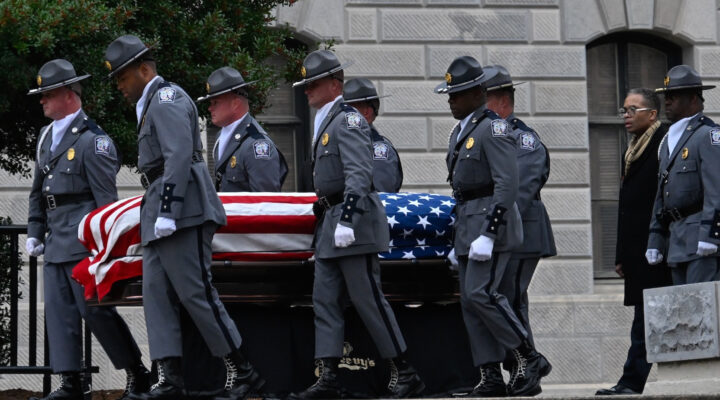
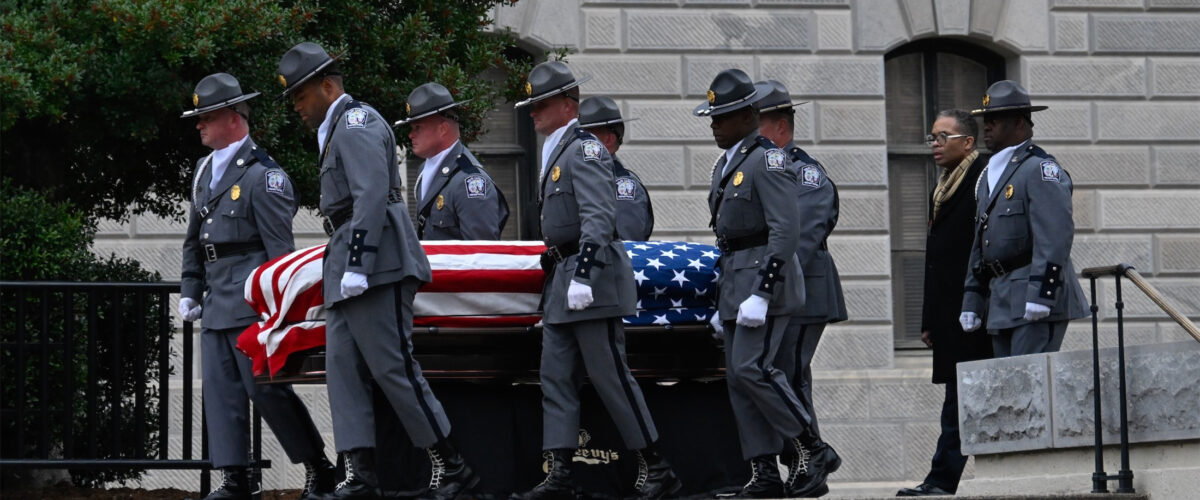
On Friday, our nation bid its final farewell to a Civil Rights icon. As thousands of mourners poured into House of Hope Baptist Church in Chicago to remember Jesse Jackson Sr., I was reminded of my own powerful moment with a man who seemed larger than life.
At 10 years of age, I stood in Washington, D.C., at the Million Man March, surrounded by what felt like an ocean of Black men. I remember looking up and seeing fathers, brothers, uncles and strangers standing shoulder to shoulder in a way that felt heavy and important even if I couldn’t yet explain why. I was small in that crowd, but I could feel the gravity of it. The energy wasn’t chaotic. It was steady. Quiet. Powerful. Men were praying. Hugging. Listening. Crying. I didn’t fully understand the politics of it, but I understood something sacred was happening.
Jesse Jackson moved through the crowd.
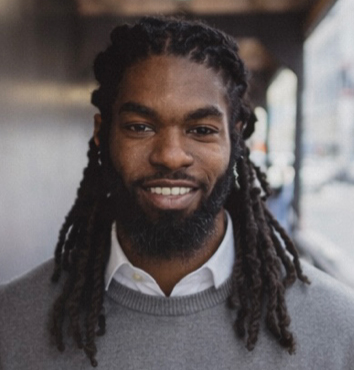
Nayo Johnson
There was no stage separating him from us. No barrier. No spectacle. Just a man walking among the people. I reached out my hand, and he shook it. It lasted only a second. No speech. No photo. No dramatic exchange. Just contact. At the time, I only knew he was important because the adults around me reacted like that moment mattered.
Years later, I realized what that handshake meant. That was a man who had walked beside Martin Luther King Jr. — not studied him, not quoted him but walked beside him. A man who had lived in the same era as Malcolm X, who witnessed the ideological debates, the tension, the strategy, the risk. That handshake wasn’t just a childhood memory. It was proximity to history. It was touching someone who had stood close enough to giants to feel their breath.
“It was touching someone who had stood close enough to giants to feel their breath.”
That was history, not as a lesson, but as a living person. Moments like that don’t live in textbooks. They live in people.
History does not disappear all at once. It fades in edits. It thins in lesson plans. It softens in tone until resistance sounds like disagreement and struggle feels like inconvenience. It disappears quietly, the way memory slips when the people who carried it begin to leave.
There was a time when history did not feel distant. At Shelton’s Primary Education Center, my pro-Black elementary school in Oakland, Calif., the air felt different when names like Martin and Malcolm were spoken. Their stories were not packaged as inspiration; they were taught as lives lived in tension, in courage, in risk.
Lessons felt alive because they were told like inheritance, not information. It was made clear these were not just figures to admire. They were people who stood in the middle of something and forced the country to move.
Then came the transition into other schools, other classrooms, other versions of the story. The names were still there. But something had shifted. Martin became a single speech. Malcolm became a single moment. The movement became a single year.
The difference was subtle at first. The history was still being taught, but the edges were gone. The complexity had been smoothed over. The arguments, the strategy, the fear, the pressure, the things that made the movement real, were replaced with neat timelines and familiar quotes.
It felt like learning about the same people from farther away.
That’s why the passing of Jesse Jackson feels heavier than loss. It feels like the closing of a doorway. One more person who could say, I was there. With each passing, the living memory gets thinner.
“When leaders who walked with giants pass away, the country loses more.”
Black history always has been taught through its leaders. Through elders. Through people who carried the story in their voice and in their body. Not because the system preserved it well, but because the community held it tightly.
When leaders who walked with giants pass away, the country loses more. The further away children get from eyewitnesses, the more history starts to feel like mythology. Something that happened long ago. Something disconnected from who they are. Something important, but not urgent.
That’s the real loss.
It is not just that a leader is gone, but that proximity is gone.
That is how Black history always has survived through closeness, through memory, through people who carried it forward.
Now the responsibility moves again.
When the witnesses leave, the story becomes easier to change. When the story changes, children inherit a lighter version of themselves.
Which means those who still remember the fuller story have a quiet obligation.
History, when left alone fades. But when carried, it lives.
Nayo Johnson is a BIPOC early childhood education engagement coordinator and a Public Voices Fellow of The OpEd Project in partnership with the National Black Child Development Institute.
Related articles:
Keep hope alive: The legacy of Jesse Jackson | Opinion by Jesse Nelson
Jesse Louis Jackson Sr.: An American icon | Opinion by Edmond Davis
My ‘Emmaus’ encounter with Jesse Jackson | Opinion by J. Basil Dannebohm