

My wife is in declutter mode, a seasonal psychological disorder similar to photosynthesis. Warming weather and increased hours of sunshine renew her fear that we will die inconveniently for our children, who will be forced to sort mountains of detritus left over from a full and adventurous life.
In fact, we have empty closets, a barely used attic and we decorate in what might be generously called Scandinavian Frugal. I have enough empty space in my closet to lend sanctuary to a frightened roofer fleeing the masked hoodlums of ICE.
My ankle is chaffed from the cuff and chain with which I attach myself to the bedpost for fear of being thrown out in my sleep.
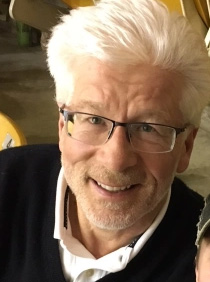
Norman Jameson
Despite my Spartan home office furnishings, Sue Ellen found excess in pockets of memory-inducing memorabilia. My bookshelf was too crowded, my closet held a photographer’s vest and an unused shelf unit.
Personally, I share the opinion of Billy Crystal, who in his memoir Still Foolin’ ‘Em, Where I’ve Been, Where I’m Going, and Where the Hell Are My Keys? encouraged us as we age not to throw out objects that prompt a memory. So what if that tchotchke takes up a little space? When you pick it up, hold it, rub it and lift the molecules of its texture to be raised by the gravity of your own, you remember. You go back to that day, that moment in time and you live there again.
Your body may not jump as high, recover as quickly, digest that whateveritwas with as much alacrity as it did then, but in your memory you can. And it does. And you don’t need an antacid.
And that’s why, when Sue Ellen came across a box of her own memories and brought them to me to ruffle through and share, the voice behind my barely concealed smile said silently, “Ah, I’m right again.”
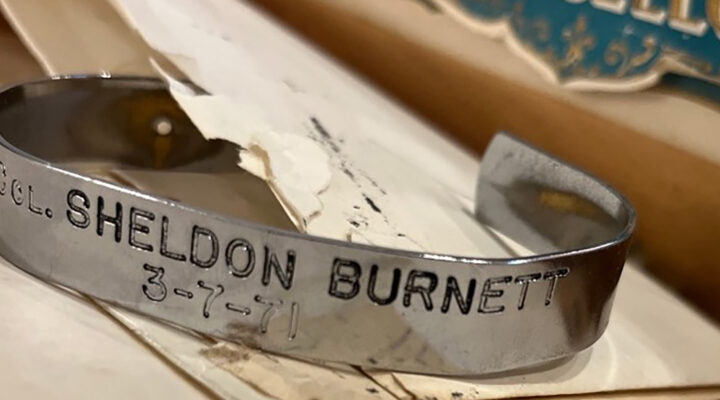
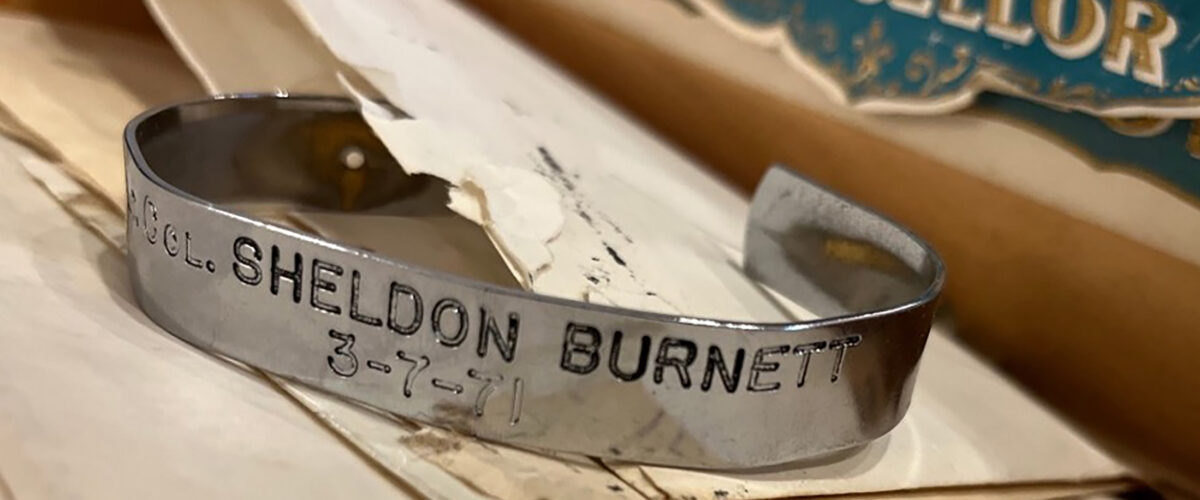
Included in her little box of memory-inducing treasures were love letters from me during our brief engagement in 1975; a picture of her 1974 Korean mission team; some certificates of completion for various pursuits; and a nickel-plated bracelet on which was engraved the name of Colonel Sheldon John Burnett, and a date — March 7, 1971.
We reminisced about that bracelet and wondered about the date. Sue Ellen remembered being one of millions who purchased for $2.50 and agreed to wear a bracelet bearing the name of an American soldier held as a prisoner of war or missing in action in Vietnam, during what my Vietnamese friends call “The American War.”
“Curious now, we looked up the origins of those bracelets and what the date meant.”
Curious now, we looked up the origins of those bracelets and what the date meant. They were conceived in 1969 by California State University, Northridge, students Carol Bates and Kay Hunter to raise awareness of missing soldiers. Bates chaired the bracelet campaign for Voices in Vital America, originally the Victory in Vietnam Association, a student organization that would go on to produce and distribute more than 5 million bracelets — as many as 40,000 a week at its peak interest.
The date, we learned, is the day the soldier whose name adorns the bracelet went missing.
Sue Ellen’s soldier went missing in March 1971, nearly three years after then Secretary of State Henry Kissinger sabotaged peace talks between North and South Vietnamese leaders to diminish the chances that Hubert Humphrey — President Lyndon Johnson’s vice president — would win the presidency over Richard Nixon. Johnson had secured the peace talk agreement and the glow of that achievement would have shined on Humphrey.
Those peace talks were agreed to in 1968. A ceasefire during the talks would have been likely, and the killing stopped.
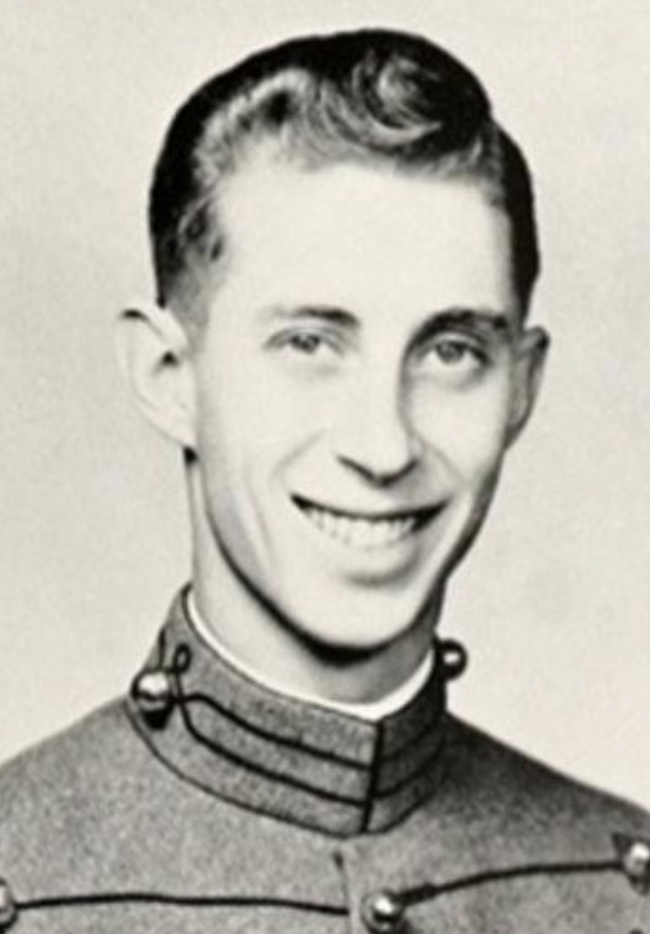
Sheldon John Burnett
The official death toll of American soldiers from that fruitless, misguided war is 58,220. Of those, 21,264 died after 1968. Including Col. Sheldon John Burnett.
We learned Col. Burnett, from Pelham, N.H., was aboard a helicopter on a personnel transport mission to an area along the Laos/Vietnam border. The copter was shot down. Burnett did not survive the crash and his remains were not recovered at the time. On Dec. 9, 2004, the Joint POW/MIA Accounting Command identified his remains. Burnett’s name is inscribed with his fallen comrades on the Vietnam Veterans Memorial Wall in Washington, D.C.
War is hell. In their quiet deliberations, even politicians know that. But when they nod or acquiesce to the diabolical whimsy of a barely there commander in chief, they view war as some kind of video game and they watch the bombs falling on military installations and hospitals and schools via the onboard cameras of the planes that drop them. And somehow the fact completely escapes them that human beings below are vaporized, and the bombs sow seeds of hate in the next generation of sons and daughters toward those who dropped them.
The art and science of politics is to navigate the complicated landscape of differences between constituents, between nations. When negotiations “fail” or are abandoned for lack of time or commitment or personal self-interest, war becomes the brutal evidence of politicians’ complete and utter failure.
“Every man has two deaths, when he is buried in the ground and the last time someone says his name,” according to a quote attributed to Ernest Hemingway.
Godspeed, Col. Burnett, and may your name, and that of untold thousands of American soldiers who politicians have sent to their deaths, be spoken of and remembered far into the future.
Norman Jameson is a career journalist and development officer, living in Winston-Salem, N.C. This article is republished from his blog, Words and Deeds.