

Two tensions can be true at the same time. We can admire a person’s courage and grace without blindly accepting their well-intentioned but dangerous beliefs.
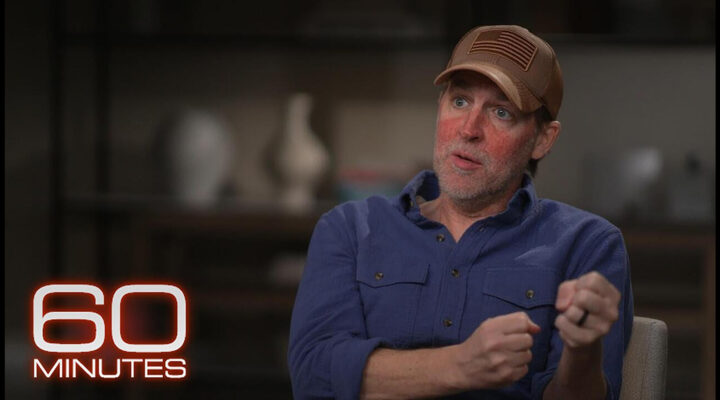
Many Christians recently shared on social media a segment of Scott Pelley’s 60 Minutes interview with Ben Sasse. Sasse served as U.S. senator from Nebraska from 2015 to 2023 before resigning to become president of the University of Florida.
In December 2025, he was diagnosed with stage-four pancreatic cancer. By April it metastasized to his liver and lymph nodes. My father currently has the same diagnosis and also is a conservative whom a colleague once described as a stick floating upstream. A key difference is that my father is 84 and Sasse is 54, so a heightened sense of tragedy marks Sasse’s impending off-time death.
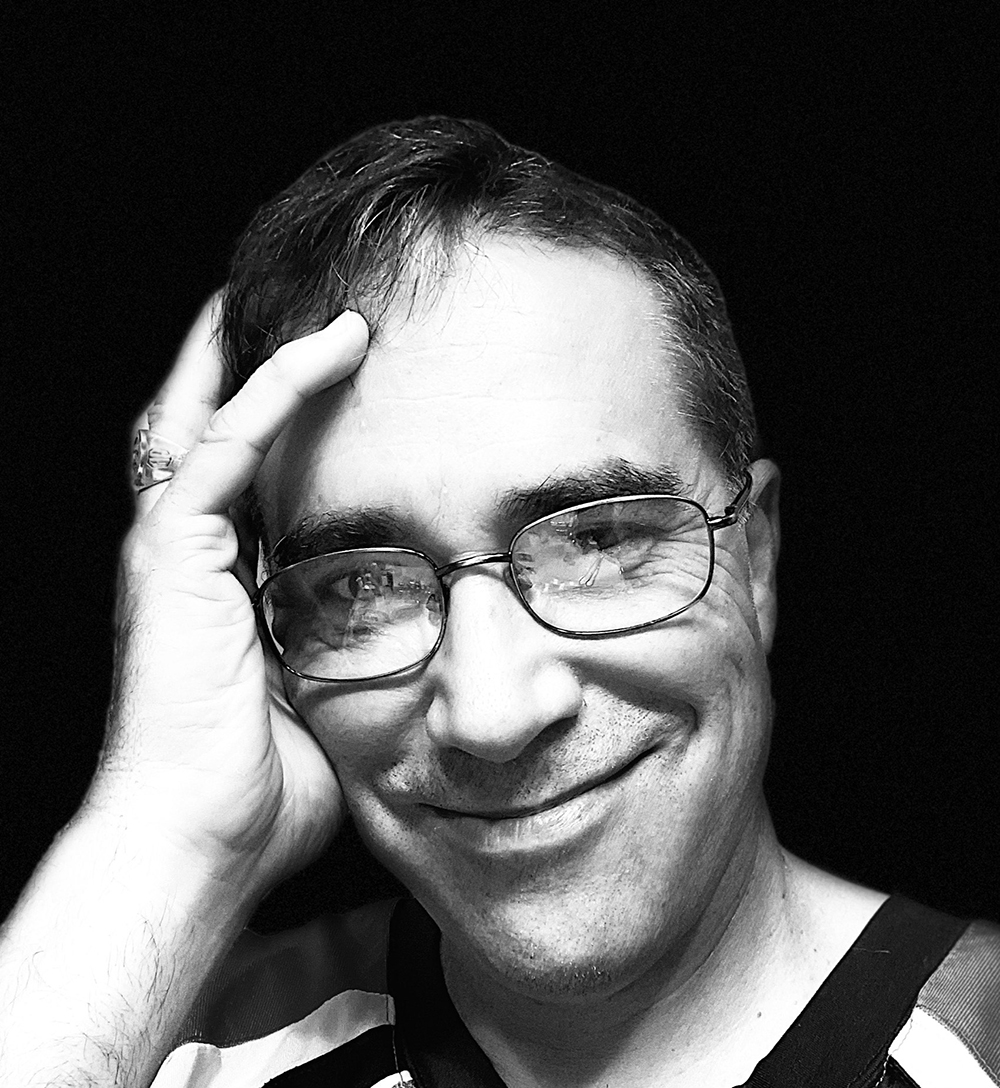
Brad Bull
In the interview, Sasse provides compelling commentary on life and politics. Unlike most Republicans, Sasse voted to convict Donald Trump in his second impeachment trial, and he rejected Trump’s claim the 2020 election was stolen. Meanwhile in East Tennessee, in the wake of the January 6, 2021, assault on the Capitol, my father — who had had a Trump for President sign in his yard — said, “The problem is Donald Trump’s arrogance.”
Many parallels exist between Sasse and the father I adore. Thus, my criticism of one assertion by Sasse is rooted in profound love and respect.
This piece will not solve the centuries-old debate over theological determinism — that God controls everything that happens — but some observers might benefit from another perspective than the theology expressed in the interview. Here are two segments redacted for length:
Pelley: To be to frank, you were expected to be dead by now. … What changed?
Sasse: Let’s go with providence, prayer and a miracle drug.
Pelley narrates that Sasse is taking an experimental drug called daraxonrasib, which has extended patients’ lives up to seven months. Sasse states, “In mid-December I was given a three- to four-month life expectancy. I’m on extended time already.”
Pelley: You are completely devoted to your faith — what’s known as Reformed Christianity — or Calvinism. One of the tenets of that faith is that God ordains everything, and I wonder why you think God has put you to this test?
Sasse: Death is wicked. Death is not how it’s supposed to be. Me getting cancer is pretty small on the grand scheme of things. But it’s a touch of grace, because it forces me to tell the truth. The lie I want to tell myself is that I’m the center of everything, and I’m going to be around forever, and I can work harder, and I can store up enough that I can atone for my own brokenness. I can’t. So, I hate cancer, but I’m also grateful for it. I tell a lot more truth to myself than I used to do it when I thought I was omnicompetent and interesting.
Pelley: There was a moment on 9-11 at the World Trade Center that I knew I was dead. In that lightning flash of an instant (voice breaking), the only thing that crossed my mind was leaving my family behind. And I wonder how you reconcile that.
Sasse: Yeah. I am incredibly blessed. My wife, Melissa … we’ve been married 31 years. … We’re gonna be apart for a time. But she’s tough and gritty and theologically rooted, and she’s gonna be fine. My daughters are … extraordinary. I wanna walk ’em down the aisle. … That’s not the math on my timecard. My son — we have a providential surprise … a decade younger than big sisters. He’s 14, and he’s gonna be fine. He’ll have other wise men and women to put a hand on his shoulder. I’m super bummed to not be there…. But it’s not a surprise to God.
Scott Pelley: And God, you believe, has a plan.
“There are no maverick molecules in the universe.”
Ben Sasse: Absolutely. There are no maverick molecules in the universe.
“No maverick molecules” sounds like the cliché thoroughly addressed by Kate Bowler in her book Everything Happens for a Reason and Other Lies I’ve Loved. My own take is that a case for either Calvinistic determinism or for indeterminism can be made using Scripture, and this short piece won’t unravel it. However, I do want to point out the harm Calvinistic determinism inflicts.
Many Christians get excited about any passionate expression of Christian faith. When I objected to a college football player saying his team won because God was on his team’s side, one of my friends animatedly said the player was glorifying faith by talking about God. Another person said, “God is not binary and can make one team win without making the other team lose.”
That’s the kind of bizarre mental gymnastics performed to avoid the discomfort of chaos. Some are so afraid of chaos, they would rather be a puppet of an all-controlling god, even if it makes God a sadist who teaches lessons by having a child drown in a septic tank — as happened in my home county.
Molecules are insentient. So, in one sense, Sasse’s statement is technically true. To behave in a maverick manner is to act independently or blaze one’s own trail. Insentient molecules can’t choose to behave independently, but that’s different from randomness versus planned.
In the context, Sasse’s remark implies molecules are controlled by a sentient force outside themselves. This implies God is controlling the molecules in the “forever chemicals” that have inflicted cancer and other travesties on so many, including children.
“Worst of all, theological determinism creates an existential threat.”
That brings us to the problems of using the concept of divine determinism to comfort our fear of chaos. My non-Christian friends report that claims like “There are no maverick molecules” make God a sadist. This drives them further from the benefits of faith.
Deterministic theology opens the door to foolish wags who would say the reason for illness is God’s retribution. In the case of Sasse, the left might say it was because of his opposition to same-sex marriage, while MAGA followers might say it was because of his opposition to Trump.
Worst of all, theological determinism creates an existential threat. Raise a concern about environmental pollution, and determinists tritely say, “God is in control.” This attitude pushes human responsibility to the side, leading to destruction rather than stewardship. Scientists warn we are nearing a point of no return — a stage-four cancer if you will — fueled by the carcinogen of Calvinistic determinism. A variant of Paschal’s wager tells us we have more to lose by believing we have no responsibility to care for our environment.
Let me be clear. As with my father, while I disagree with Sasse on many issues, I see him as a man of great honor. I hope I face death with as much poise. But asked, “Why are you suffering?” I find it more fair and healthy to hold two perspectives at the same time: “I don’t know. But I celebrate God’s presence and strength in all circumstances.”
That taps faith without making God an arbitrary dictator and without imposing our fear of chaos on others’ perception of God. That said, Sasse is handling his situation far better than I’ve handled far lesser pain, and I celebrate his spirit even while desperately wanting a healthier approach to chaos.
Brad Bull has served as a hospital chaplain, pastor and professor. He now works as therapist, writer and speaker.