

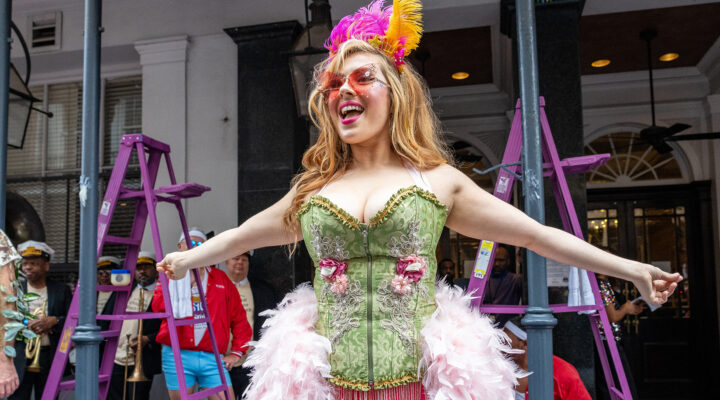
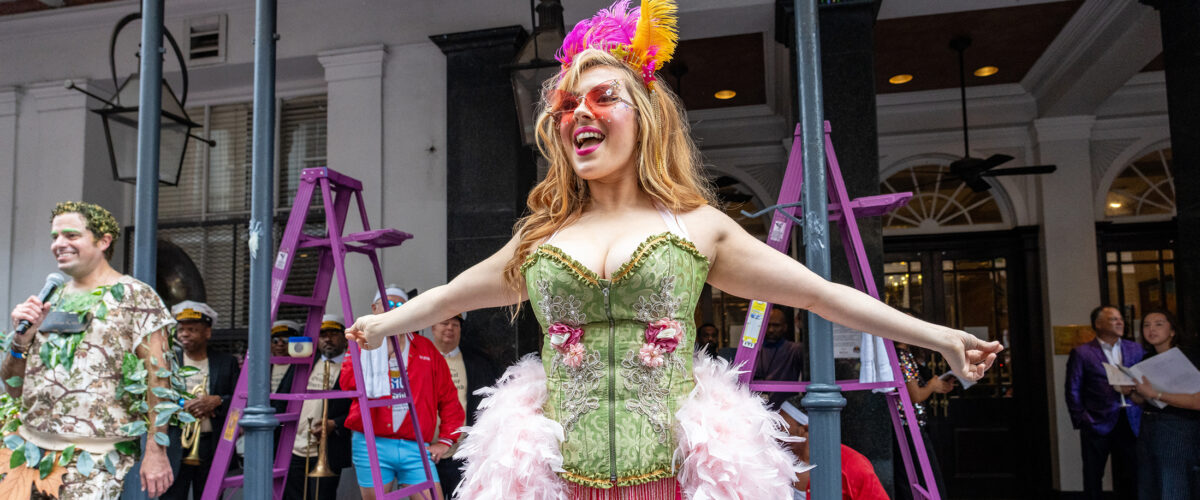
Growing up in rural South Georgia, my only exposure to New Orleans was Greasing of the Poles on the national news, on Mardi Gras day. It was so scandalous, these revelers sliding their bodies and props on poles in the streets, all in the name of Fat Tuesday.
I grew up in the Southern Baptist world, and the Protestant in me had no concept of a liturgical calendar, much less any concept of Mardi Gras. Of course, when Hurricane Katrina hit New Orleans, and the city hit national headlines, the collective knowledge about the city grew. It began to take a different form in my mind: no longer just a site of excess, but a place of historic, mysterious and liberating tenacity.
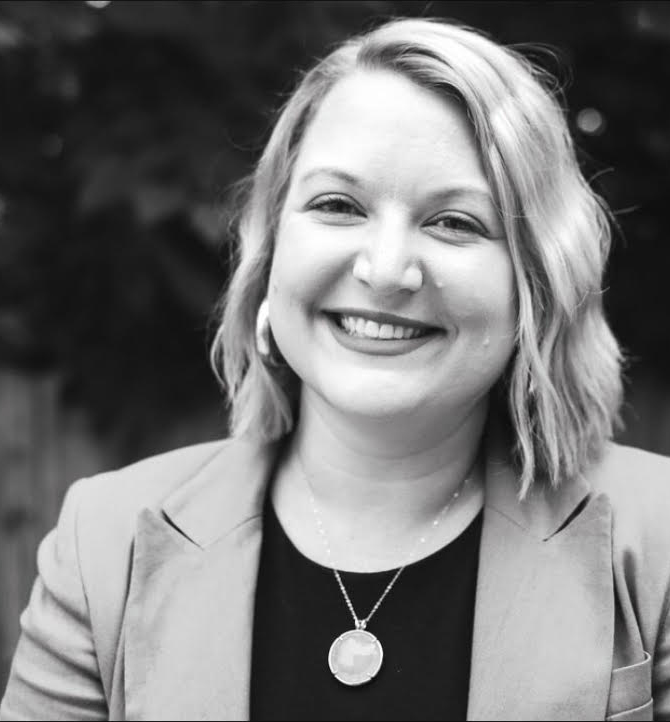
Paige Davis
A few years after Pat Robertson’s 2005 suggestion that New Orleans was experiencing the impact of “God’s judgment,” I found myself living there.
My then-husband and I had just spent six months in Greece, teaching English to refugees. In order to go overseas long-term with a program, he needed seminary credit hours. That landed us at New Orleans Baptist Theological Seminary.
Life changed unexpectedly and dramatically as we gained custody of our three nieces and had two biological children back-to-back; these changes quickly derailed our dreams of working overseas. I was a stay-at-home mom with five kids, a pastor’s wife and 21 years old.
Thus, ending up on multiple Facebook mom groups, with Stacie Orrico’s “There’s Gotta Be More to Life” playing on repeat.
In these online groups, I mostly observed. There were moms writing about the typical struggles of nonburping babies and whether or not to use a cover while feeding, but there also were conversations taking place about a world I never had been exposed to. Christian women were talking about their church working toward LGBTQ acceptance; Black women were sharing anti-racist books and resources; and neurodivergent women were talking about how hard it could be to navigate a world that wasn’t built for them.
The more I read of others’ experiences and heard their stories, the more my own worldview expanded. It took several years for me to untangle and fully let go of my sense of having all the answers figured out, including a painful coming-out process for myself.
“The more I read of others’ experiences and heard their stories, the more my own worldview expanded.”
Now as an enthusiastic learner, an openly queer person and a leader of a justice-focused nonprofit, it is amusing to look back at that version of myself. That 21-year-old is nearly unrecognizable today.
However silly, I still attribute these online groups to the initial tugging at the string which eventually unraveled my tightly wound worldview.
Examining what shifted my perspective to more inclusiveness and empathy, for both myself and others, has caused me to reflect on the polarizing state we are currently in. The work we do at The St. Charles Center for Faith + Action is perpetually examining the intersection of faith and social justice. As we do this work, I am regularly asking myself: How do we bridge these gaps and build real connections, despite our enormous differences, while still standing firmly in our convictions for justice?
Facebook is hardly the place now to find this kind of sanctuary for worldview expansion, and the data show we are struggling. According to a recent survey from Public Religion Research Institute’s 2025 American Values Survey, Democrats overwhelmingly attribute most responsibility for political violence to right-wing groups (73%), while Republicans attribute most responsibility to left-wing groups (72%). We are beyond disagreeing on policy; we are fundamentally divided on who our neighbors are and who we are to each other as humans.
This year, I returned to Greasing of the Poles dressed up like a can of tuna with a friend who dressed up like a can of ginger ale. We laughed at tourist antics, nodded knowingly at others in wild costumes and enjoyed the simple, sacred freedom of being who we are in a sea of differences. That is the innate beauty of New Orleans: You’re never the weirdest person in the room.
“Everywhere else it’s just another Tuesday.”
There is a phrase we say on Mardi Gras day: “Everywhere else it’s just another Tuesday.”
Compared to “everywhere else,” New Orleans naturally invites us all into a glorious unraveling that comes from real exposure to differences. New Orleanians aren’t the only ones who can experience this, of course; we all have access to that same key.
In a world that demands we harden ourselves and our beliefs, I have found the best way to change a person — myself included — is to put them in a room where they are a part of the community, rather than a judge of it. Social media algorithms won’t give us what we are looking for.
Going to the places where you feel like an outsider, where you’re meeting with your neighbors at a block party or having a conversation with someone who challenges your beliefs and assumptions, this is the messy, beautiful, unraveling of it all.
Paige Davis serves as executive director of St. Charles Center for Faith + Action, a New Orleans-based nonprofit that invites people of faith and conscience into deeper engagement with social justice. She holds a master’s degree in nonprofit administration and serves as a board member for the PFLAG New Orleans chapter, building community partnerships that help communities move from belief to bold action.