


I’ve been tired, and I know I’m not alone in that.
People are tired. Not inconvenienced. Not stressed but tired, bone tired as the seasoned saints used to say.
Wars are waging in the Congo, Iran and Palestine while cable news has nearly convinced us that’s normal. Gas prices have climbed so high that working families are doing brutal arithmetic at the pump that has nothing to do with math and everything to do with dignity. Black and brown voters are watching doors close that their grandparents bled to open. People — our people — are being detained, disappeared, separated from their families by agents who don’t leave names. Maps are being redrawn not by the will of the people but by the will of whoever holds the power to redraw them.
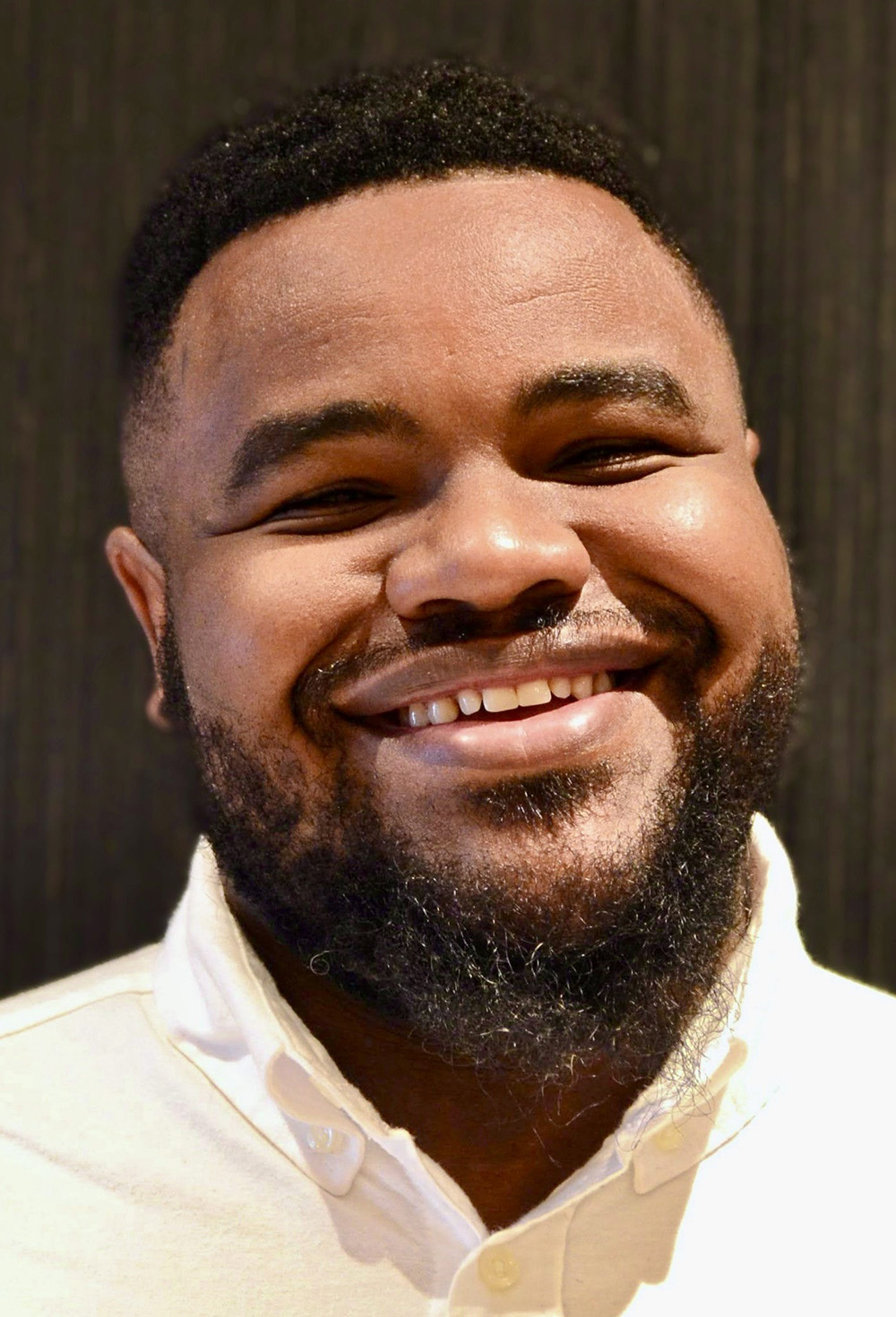
Braxton Wade
And then life gave me four moments in the span of a few weeks that I cannot shake. Four moments that broke me open and, somehow, put me back together. Four moments that became the only sermon I know how to preach right now.
A 16-year-old’s funeral
A few weeks ago, I stood at the graveside of a former parishioner, a 16-year-old Black young man. He was loved. And he was killed by senseless gun violence — the kind that doesn’t make national news anymore because we’ve decided, as a country, that some deaths are just the weather. Something that happens to us, not something we choose.
I stood there with his family and did what pastors do. I held the grief, I said the words, I trusted that somewhere beneath the ache, the resurrection is still true. But driving home, I wept.
Not with the contained, pastoral weeping of someone who has learned to hold it together in public. I wept the way you weep when you are finally alone and the weight of the world catches up with you all at once. I wept for him. I wept for his mother. I wept for every family standing at a graveside that didn’t have to be. I wept because I am tired of preaching at funerals that never should have happened.
A child missing his deported father
Not long after, I had lunch with a friend. Her husband was detained by ICE more than a year ago. No warning, no goodbye. One ordinary morning, he was here — and then he wasn’t. She has been doing the impossible work of raising their children, managing the household and attempting to believe in a country that took her husband and offered no timeline, no answers, no mercy.
“She told me about the hardest moment of every day: the moment her 7-year-old looks up and asks, ‘When is Daddy coming home?'”
Over lunch, she wept — the kind that comes from a place so deep it surprises even the person doing it. Between the tears, she told me about the hardest moment of every day: the moment her 7-year-old looks up and asks, “When is Daddy coming home?”
I cannot look away from that boy’s face.
A pastor running on empty
The very next morning, I sat across from a pastor — one of the good ones. They have given years to a congregation that has taken more than it has returned. And they sat across from me and told me the truth. They’ve been preaching on empty for longer than they want to admit. Most weeks the sermons land, some people even say “good word” at the door. But inside — nothing. The well is dry.
And it’s not just the ministry that’s emptying out. The marriage is strained, their joy has gone quiet. They are, as they put it, struggling to keep their head above water.
I left carrying a question I couldn’t shake, “Who is caring for the ones who are caring for everyone else?”
A stranger at the grocery store
That night struggling to sleep, I found myself wandering the aisles of Wegmans around 11 p.m. This woman and her three kids were there, and something made me stop. She was standing in the aisle with the particular stillness of someone trying to hold themselves together in public.
“This woman and her three kids were there, and something made me stop.”
We started talking the way strangers sometimes do. She opened up like she had been desperate for some adult conversation. She lost her job last August. Her divorce was finalized in October. She has applied for more than a hundred jobs — a hundred times she has written her name and her history and her hope onto an application and sent it into the silence. She maxed out her credit cards keeping her children fed.
And last week, she was evicted from her home. She needed a place to stay. That night.
I got her checked into a hotel for two nights. It wasn’t a solution — it was manna, bread enough for the morning. As I stood in the lobby of the hotel and handed her the key card, she looked at me with eyes that had been crying for months and said, “Because of who bumped into me tonight, I can face tomorrow. God is real.”
She wasn’t talking about me. She was talking about God — who showed up in a grocery store aisle, on an ordinary Tuesday, in a country that had failed her in almost every institutional way imaginable. God who already was there before I arrived.
Manna
When the Israelites cried out in the wilderness — hungry, afraid, furious with God and Moses both — God didn’t give them a feast. God gave them manna, bread that appeared with the dew each morning, gone before noon, and could not be hoarded. Hope and grace, renewed daily. Just enough.
The church is not the Promised Land. Let’s release that fantasy. We are the manna — bread that appears in the wilderness, enough for today, impossible to manufacture on our own. Not speeches about bread, not liturgies about bread. Bread. Sustenance. Today.
“We are the manna — bread that appears in the wilderness, enough for today, impossible to manufacture on our own.”
The woman in the parking lot didn’t need my theology. She needed a hotel room and someone not to walk past. The pastor didn’t need a conference — they needed someone to say, “I see you, and I’m not going anywhere.” My friend doesn’t need our thoughts and prayers. She needs us to say her husband’s name, show up to the hearing, stand with her when her son asks the question she cannot answer. And the young man at the graveside needed us to arrive before the funeral — a church so present in his community that violence had fewer places to take root.
We keep arriving after. Prophetic witness is learning to arrive before the well runs dry.
What my friend at the lunch table is doing — getting up every morning, taking that boy to school, keeping the lights on, refusing to let his father’s absence be the last word — that is not optimism. Optimism collapses under a year of that weight. That is manna faith. The daily, defiant, I-don’t-know-how-but-I’m-showing-up-again kind.
And to the pastor across from me at breakfast: You are not failing. You are not empty because you did something wrong. You are empty because you have been giving. The sabbath was not a luxury of arrival — it was wilderness practice, a defiant declaration that the world does not require your depletion to keep spinning.
The most prophetic thing some of us can do right now is rest. And trust the manna will come without us.
The world is looking for saviors and finding autocrats. It is looking for safety and finding surveillance. It is looking for rest and finding more noise.
The church — this church, the one that stands at the graveside and means it, that sits with the empty pastor and doesn’t rush toward an answer, that bumps into a woman in a grocery store and doesn’t walk past — this church is a sign of the kin-dom. Not a perfect sign. But a sign.
We are not called to fix the world. We are called to be something in it. To be the rest for the tired. The bread for the hungry. The voice that speaks the name of the disappeared. The hands that hold the line on voting rights — not because we believe in a party, but because we believe every face was made in the image of God, and that image cannot be gerrymandered away.
I almost didn’t write this piece. But I kept thinking about her — standing in the hotel lobby with a key card, looking at me like I was the first person in months who had actually seen her and saying, “God is real.”
She preached to me that night. Her sermon, “You don’t have to fix everything. You just have to show up.”
We are the manna. We appear with the morning. We offer what we have. We trust it is enough for today. And tomorrow, by the grace of God, hope and grace appear again.
Braxton Wade is a Clemons Fellow with BNG. He is a graduate of the University of Richmond and Chicago Theological Seminary and lives in Richmond, Va.