



Cancer has reduced my father’s robust frame to skin-covered bones. His bombastic voice has deflated to a chirping whisper. But his 84-year-old blue eyes still sparkled when he abruptly made a comment that, to fully appreciate, requires decades of context.
Why did my dad change churches after 30 years when he had not relocated from the house next door to the church he was leaving? He angrily left because they voted to drop the word “Baptist” from their name. The congregation didn’t stop affiliating with the Southern Baptist Convention; they just saw the data on modern folks’ discomfort with denominational labels — and folks flocking to churches with hip names like “Willow Creek” and “Arrowhead.”
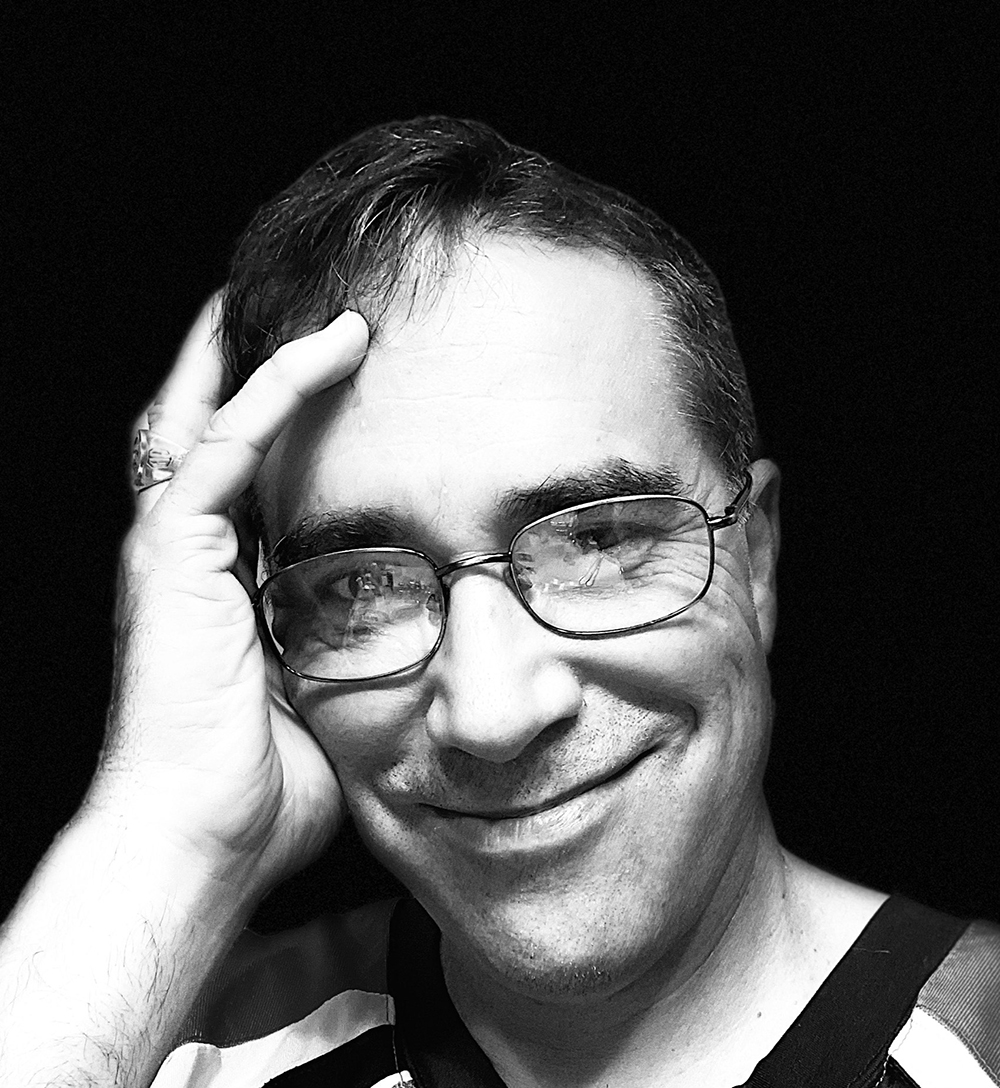
Brad Bull
In a discussion about his allegiance to the SBC, I once said, “Dad, you told me you trusted Herschel Hobbs more than any theologian alive. So, how can you say you’re a Southern Baptist after the 2000 Baptist Faith and Message took Hobbs’ 1965 version and turned it inside out, upside down and backward?”
It was Dad’s brand of loyalty. If a doctrinal statement could be changed, it could be changed again, but only if people stayed within the organization to change it.
Then why had he left his local church? Because that body had not been loyal to the organization to which he had higher loyalty: The SBC. I assured him my highest loyalty was to Jesus Christ.
Born in 1941 and growing up in the SBC’s heyday, he had been a boyhood member of Royal Ambassadors. He graduated from SBC-affiliated Carson-Newman College and the SBC’s Southwestern Seminary. After degrees at Texas Christian University and the University of Tennessee, he went on to serve 35 years as a beloved and (in)famously conservative professor of education at Carson-Newman. A few summers of my childhood, he worked as a counselor at a nearby SBC-affiliated boys’ camp. One year I was homerun king in Bible Baseball, which included questions about the structure of the SBC.
Thus, it was a surreal juxtaposition for dad and me to have a brief but heartfelt exchange immediately followed by my reading of an article about resolutions to be offered at the upcoming SBC annual meeting. The article included this heading and passage:
On euthanasia and assisted suicide
It is no surprise the SBC would consider a resolution firmly rejecting euthanasia and assisted suicide ….
“We reaffirm our continued opposition to euthanasia and assisted suicide in all its forms, including practices now described as ‘medical aid in dying’ and ‘death with dignity,’ which intentionally seek to end human life,” the resolution states.
Imagine reading that passage just after having experienced this: Immediately prior to my arrival, Dad had left blood-filled diarrhea across two rooms. My mother and one of my sisters had just finished stripping sheets and cleaning the bedroom and bathroom and were now elsewhere in the house, decompressing.
“When we were in seminary, we didn’t pay attention about euthanasia.”
Dad — a lifelong teetotaling nonsmoker — was curled facing me on the far side of his and Mom’s queen-sized bed. His dazzling but tortured blue eyes met mine. Abruptly, referring to himself and my mother, he eked out, “When we were in seminary, we didn’t pay attention about euthanasia.”
Knowing what I heard but not what he intended, I asked, “What do you mean?”
“Euthanasia was not something I ever thought about. But now. When the pain hits, I could take something.”
“I’m sorry you’re in so much pain.”
Just as abruptly as he had made the first comment, he ended, “I need to go to sleep now.”
I leaned as far across the bed as I could and kissed the back of his left hand that lay limply on the bed. I stood, intending to let my eyes impart my love and empathy into his, but his eyes were already closed.
That night I jumped out of bed and, forgetting my slippers, eventually stepped in either vomit or diarrhea. Easily washed. But dad was clutching his chest and crying, the pain impossible to wash away.
Mom finally got hospice on the phone. His nurse had had a death in the family; the overnight backup had been calling Dad’s phone — which was muted — rather than calling Mom’s phone. The backup nurse arrived mid-morning. After a shot of morphine, Dad fell asleep in seconds.
Next week, the SBC will consider a resolution that dogmatically mixes all the colors of life and death into the same can, resulting in a blob of no distinctions. Most of the delegates (which the SBC calls “messengers”) will have traveled in cars or airplanes; some will be diabetics taking insulin; most will be wearing eyeglasses. Yet many, without a trace of irony, will vote that “nature must take its course.” They will think this based on simplistic dogma rather than considering euthanasia’s complicated nuances.
“Life is good. Ending suffering is good.”
It’s the kind of dogmatism that led a church member to mischievously smile when he asked me if 9-11 World Trade Center victims went to hell for jumping from the buildings to avoid burning to death.
By contrast, many will be aware of the complexity of decisions established on the four pillars of medical ethics: autonomy, justice, beneficence (doing good) and nonmaleficence (doing no harm). They will realize that while a scalpel causes harm in one sense, if used for open heart surgery where the harm is required for healing, then the action is ethical. They will know the principle expressed in Rushworth Kidder’s book How Good People Make Tough Choices: While moral decisions involve choices between good and bad behavior, ethical decisions require a choice between two goods.
Life is good. Ending suffering is good.
Preventing a rogue government or insurance company from ending lives for financial expedience or bigotry is good. But promoting clear-headed individual autonomy also is good.

Fidelity to Scripture is good. But realizing fidelity requires honesty is also good, and it’s dishonest to ignore that King Saul, when mortally wounded, fell on his own sword (1 Samuel 31). King Abimelech, gravely wounded, requested his armor bearer to dispatch him (Judges 9). Scripture does not condemn these end-of-earthly-life behaviors of either Saul, Abimelech or the servant.
When his pain was effectively managed, Dad recently said to me: “I really appreciate all the visits I’m getting. But people keep saying, ‘I’m sorry,’ and I don’t understand it. They didn’t say they were sorry when I told them I was going to Hawaii. You either believe or you don’t. I believe.”
Maybe staying or going can each be an act of faith.
Brad Bull has served as a hospital chaplain, pastor, professor and therapist.
Related: