


“Dividing voters based on race is wrong and unconstitutional.”
Those are the words of Arkansas Attorney General Tim Griffin, according to a statement he issued concerning his effort to terminate a federal judicial redistricting agreement established more than 35 years ago.
Powerful words. But they invite an equally powerful question: If dividing voters based on race is unconstitutional, why did Griffin defend Arkansas’ controversial congressional redistricting map, which moved heavily Black neighborhoods out of the Second Congressional District?
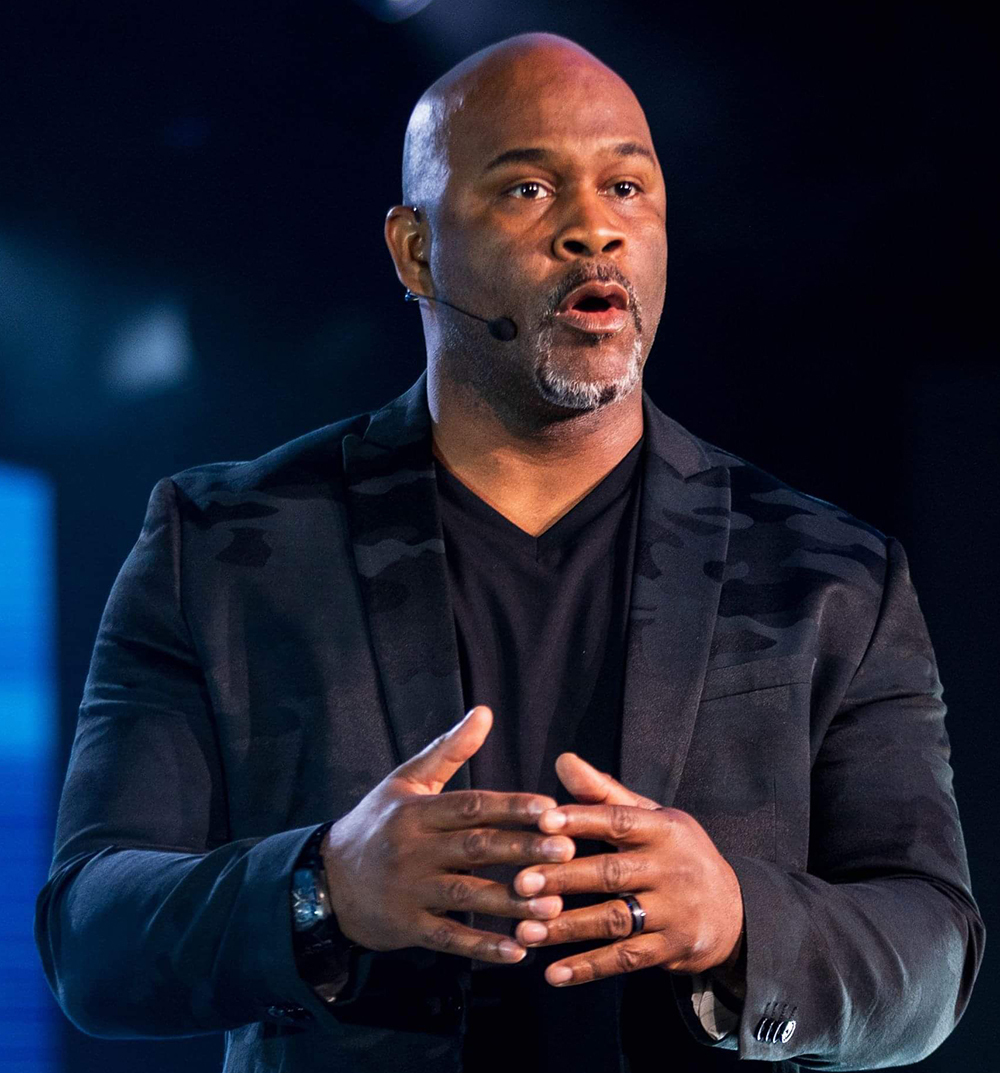
Edmond W. Davis
That contradiction — or what critics consider a contradiction — has become one of the most consequential political and constitutional questions emerging from Arkansas after the Nov. 3 midterm elections.
Veteran Arkansas journalist and highly decorated former Arkansas Times editor Max Brantley called attention to Griffin’s latest actions in a Facebook commentary concerning the attorney general’s reported motion to terminate the consent decree in Hunt v. Arkansas.
The original 1991 federal consent decree established judicial election subdistricts intended to provide African American voters with greater opportunities to elect judges of their choice.
Why did Arkansas need such an agreement? Because racial discrimination and unequal political representation were not imaginary problems. They were documented realities. A U.S. Commission on Civil Rights report examined the state’s history of discrimination in judicial elections and the significance of the settlement.
Now Griffin argues the agreement’s race-conscious districting arrangements violate constitutional equal-protection principles.
But here’s the problem. In 2021, Arkansas Republicans approved a congressional map that divided predominantly Black neighborhoods in Pulaski County among three congressional districts.
Griffin defended that map when civil rights plaintiffs challenged it.
A three-judge federal panel upheld the congressional map in June 2025, finding the challengers had not established their racial-discrimination claims. That ruling deserves acknowledgment.
Nevertheless, an important question remains: Why should consideration of race be condemned in one redistricting dispute while the political consequences of another map receive a vigorous legal defense? The cases involve different legal standards, purposes and evidence. Yet consistency in constitutional arguments matters. Griffin’s reported action is not merely a local controversy. It reflects a broader national struggle over how America interprets voting rights, racial discrimination and equal representation.
Across America, the Nov. 3 midterms produced dramatic political changes. Texas elected Democrats to its governorship and U.S. Senate seat. Mississippi witnessed an extraordinarily close Senate contest. Yet Arkansas, Idaho, Oklahoma and Wyoming remained Republican strongholds. Arkansas’ MAGA mansion survived, although its political foundation developed cracks.
“Should constitutional equality be interpreted consistently, regardless of which political party benefits?”
According to Arkansas Advocate reporting published by KUAR, Democrats gained at least 10 Arkansas House seats, breaking the Republican supermajority. Republicans still control state government, but the shift creates new legislative leverage. And Griffin’s reported court action raises a question that transcends party affiliation: Should constitutional equality be interpreted consistently, regardless of which political party benefits?
Arkansas is not the only state confronting legal challenges to longstanding judicial voting-rights protections. Louisiana provides a particularly relevant comparison. In 2021, then-Attorney General Jeff Landry sought to dissolve a consent decree concerning Black representation in Louisiana Supreme Court elections.
In August 2024, the Fifth Circuit U.S Court of Appeals ordered the decree dissolved. Additional 2026 Louisiana litigation concerns changes affecting historically protected judicial election subdistricts. The national implications are considerable.
If longstanding remedies addressing racial discrimination are terminated, what replaces them to ensure voters previously excluded from meaningful political representation retain fair electoral opportunities? That is a constitutional question — not simply a Democratic or Republican one.
While Tim Griffin challenges the judicial districting agreement, another prominent Arkansas figure made history. Retired circuit judge, Baptist pastor and Army veteran Wendell Griffen became the first African American elected Pulaski County judge, winning 65.5% of the vote.
The county judge is primarily an executive position rather than a courtroom judgeship. Nevertheless, Griffen’s election demonstrates that Black candidates can build successful multiracial coalitions within Arkansas. That accomplishment deserves recognition. But one historic election cannot erase the state’s documented history of unequal representation.
As a Christian and social historian, I believe government officials should be measured by principles greater than political allegiance.
If dividing people by race is wrong, that principle must be applied fairly. If discrimination is unconstitutional, that protection must extend to every American. And if government claims to respect equal representation, its policies should withstand serious examination. These principles apply to Republicans, Democrats and independents alike.
The larger controversy concerns more than one attorney general, one political party or one judicial agreement.
It concerns whether Arkansas can reconcile the constitutional ideal of equal treatment with the historical necessity of remedies for proven racial discrimination. Arkansas still holds the state power of the pre-midterm elections of 2026 with the objection of a few Democratic checkmates, but why Arkansas?
Tim Griffin has every right — and professional responsibility — to present constitutional arguments before the courts. But the public has an equally important right to examine those arguments against the state’s broader political and legal history.
Arkansas remains a Republican fortress. Yet its supermajority has fallen, a competitive congressional election has drawn national attention, and a Black leader has made history in its largest county. Meanwhile, Griffin’s reported legal challenge puts Arkansas’ voting-rights history under another national microscope.
The ultimate question is not whether Tim Griffin can win his case. It is whether Arkansas can consistently protect constitutional equality while confronting the historical consequences of racial exclusion. A state can redraw its political boundaries. It cannot redraw its history. And if Arkansas believes constitutional equality matters, then equal political opportunity must matter, too.
Edmond W. Davis is a social historian, journalist, professor and documentary host. He is founder of the National HBCU Black Wall Street Career Fest. A native of Philadelphia, he lives with his wife and son in the Little Rock, Ark., area. Davis is committed to cultural empowerment and educational equity through storytelling and civic engagement.