


The morning after the midterms, I called my mother. And somewhere in the middle of our conversation, she began to cry.
At first, I didn’t understand. I knew the election results. I knew what had happened the night before. Then she began to explain what those victories meant to her. I heard something in her voice I hadn’t heard in a long time. Relief.
Her voice cracked as she spoke, and suddenly I understood. These weren’t tears of sorrow or disappointment. They were the tears of a Black woman who had watched this country demand so much from women who looked like her, only to give so little in return.
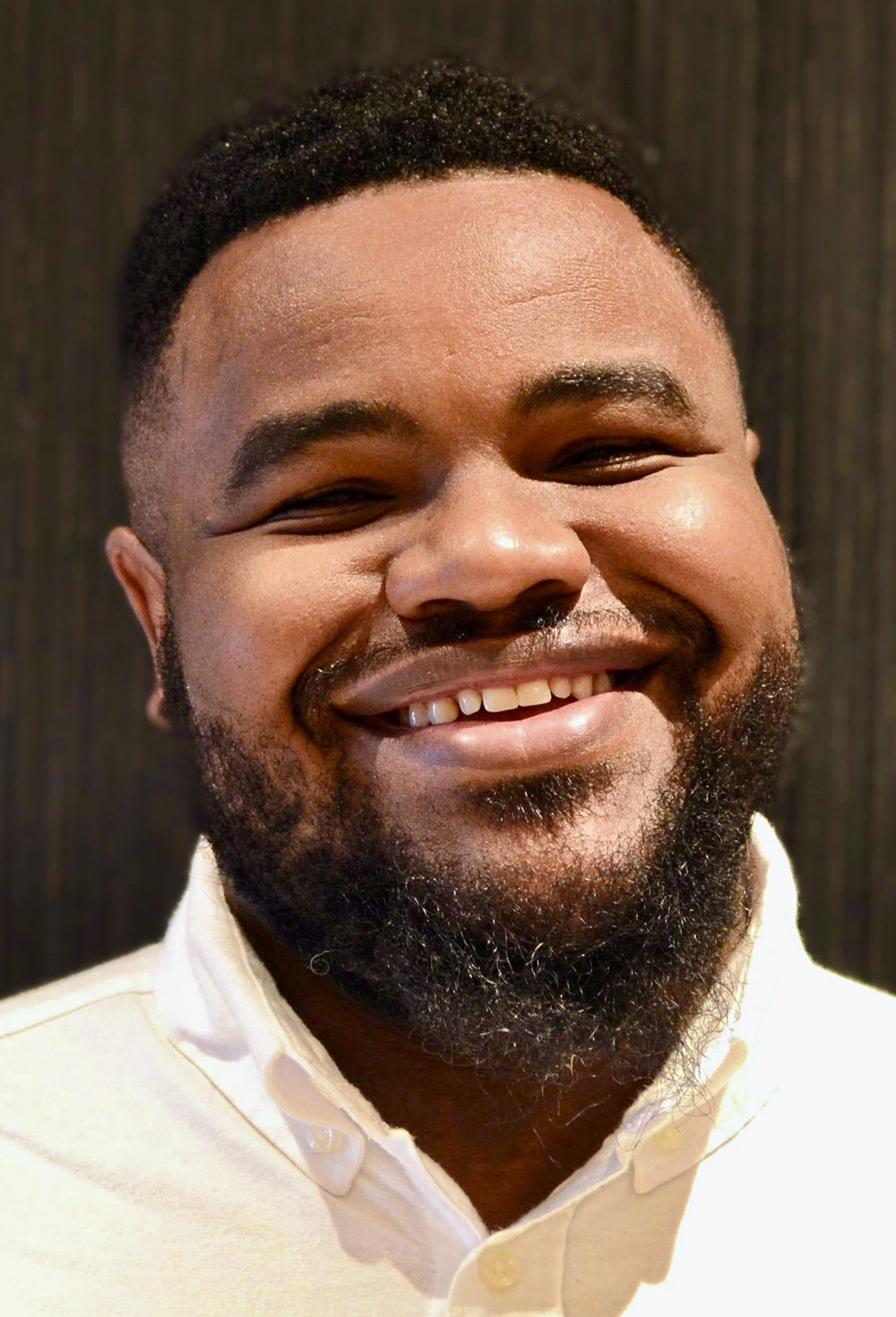
Braxton Wade
And as I listened to her voice breaking under the weight of that relief, tears began rolling down my own face. For a moment, neither of us needed to say much of anything. We were celebrating something larger than a political victory. We were celebrating Black women.
In 2024, America watched Kamala Harris, the first Black woman to become a major party’s presidential nominee, lose to Donald Trump. For many of us, the defeat was deeply personal. We watched a Black woman navigate relentless scrutiny, racism and sexism, only to see the country choose a different future.
In the months that followed, institutions retreated from commitments to racial equity, and Black women faced an economic reckoning. The numbers tell part of the story. According to the Bureau of Labor Statistics, by October 2026 there were about 229,000 fewer employed Black women age 20 and older than there had been in January 2025. That is a net change in employment, not a count of individual layoffs. Behind those figures are households, careers and dreams interrupted.
There was reason enough to surrender to cynicism. To believe America was incapable of becoming the democracy it has so often promised to be. But Black women had other plans.
Two years after Harris’ defeat, they returned to the ballot as candidates, organizers, visionaries and victors. And what a victory it was.
In Georgia, Keisha Lance Bottoms became the first Black woman elected governor of a state in American history. Think about that. More than 250 years after the nation’s founding, a Black woman will finally occupy a governor’s mansion — and in a state in the Old South.
Georgia also elected Tanya Miller as attorney general, Penny Brown Reynolds as secretary of state, Nikki Porcher as labor commissioner, Keisha Sean Waites as insurance commissioner, Katherine Juhan-Arnold as agriculture commissioner and Lydia Powell as state school superintendent. Their victories change the face of statewide government.
In the U.S. Virgin Islands, Stacey Plaskett was elected governor, making history in a territory too often missing from the national political conversation.
“Black women have organized campaigns, mobilized voters, educated communities and defended democracy while being denied access to positions of leadership.”
In Illinois, Juliana Stratton won a seat in the United States Senate. When she takes office, she will join Angela Alsobrooks of Maryland and Lisa Blunt Rochester of Delaware, marking the first time three Black women have served there simultaneously.
In Colorado, Melat Kiros became the first Black woman elected to Congress from the state.
And in North Carolina, LaKesha Womack unseated incumbent Republican Tim Moore in the 14th Congressional District.
Womack is an ordained deacon in the African Methodist Episcopal Zion Church. A community organizer, she has spoken about how faith should shape policies addressing poverty and health care. In an interview with Charlotte public radio station WFAE, she said, “I can’t preach about the hungry if I’m not willing to advocate for policies that will eradicate poverty.”
As a preacher, I hear something familiar in that conviction: Insistence that the good news of Jesus has something to say about the world beyond the sanctuary walls. Her victory reminds us that the Black church’s public witness never has belonged exclusively to men.
These victories expand the possibilities of who exercises political power. For generations, Black women have organized campaigns, mobilized voters, educated communities and defended democracy while being denied access to positions of leadership they helped others attain.
Good enough to build the movement but rarely invited to lead it. Good enough to deliver the votes but rarely entrusted with the power. Good enough to save democracy but too often told to wait their turn to govern it.
That history did not begin with Kamala Harris.
It belongs to Fannie Lou Hamer, who endured violence for exercising her right to vote and challenged America’s democratic contradictions.
It belongs to Shirley Chisholm, who sought the presidency when America could barely conceive of a Black woman in Congress.
It belongs to Rosa Parks, whose resistance was the deliberate courage of a seasoned activist.
And it belongs to Mahalia Jackson. At the 1963 March on Washington, Jackson reportedly tapped King and said, “Tell them about the dream, Martin.” And King did. One of the most celebrated moments in American history was shaped by the voice of a Black woman reminding a Black preacher not to abandon the dream.
There is something profoundly theological about that moment. Black women have long possessed the audacity to imagine what America could become, even when America refused to recognize what they already were.
“Black women have long possessed the audacity to imagine what America could become.”
I think about Stacey Abrams, whose organizing helped transform Georgia’s political landscape even after her own electoral defeats. I think about Michelle Obama, who calls Americans to the responsibilities of citizenship. And I think about Kamala Harris, whose candidacy expanded the political imagination of young Black girls who deserve to see themselves reflected in the highest offices of government. Their contributions cannot be measured only by elections won or lost.
Still, I want to resist the familiar temptation to turn these victories into another sermon about Black women’s resilience. I am tired of celebrating Black women only for their ability to survive. Resilience is remarkable, but it never should become an excuse for a nation to continue inflicting the wounds that make resilience necessary. Black women deserve more than admiration for their endurance. They deserve economic security, opportunity, leadership and freedom from carrying everybody else’s burdens.
That is why the employment numbers belong beside the election results. A woman can celebrate a historic governor’s race while wondering how she will pay next month’s rent. A ballot-box victory cannot erase a lost paycheck.

Stephanie Thomas, Connecticut’s 75th Secretary of State and the first Black person elected to the office, holds a sign “Vote=Voice” while being honored during “Connecticut Sun’s Women of Inspiration Night” during the WNBA game between the Golden State Valkyries and the Connecticut Sun on August 26, 2026 at Mohegan Sun Arena in Uncasville, CT. (Photo by Erica Denhoff/Icon Sportswire via Getty Images)
Representation is not liberation. Electing Black women does not automatically guarantee justice, and political office is no substitute for sustained transformation. But representation matters because power matters. Policy matters. Who sits at the table matters. Who gets to imagine the future matters.
I cannot help but hear the echoes of the Black Church in moments like these. The church of my ancestors celebrated before the struggle was finished. They sang freedom songs while freedom remained incomplete. They shouted on Sunday even though Monday promised injustice. Their joy was not a denial of reality. It was a declaration that reality did not have the final word.
That is what I heard in my mother’s voice that morning. She understood something before I did. She knew these victories didn’t mean the struggle was over. Racism, sexism and economic insecurity had not disappeared. But after years of disappointment, after watching doors close and promises break, she could finally exhale.
And hearing her exhale gave me permission to do the same. Because somewhere in Georgia, a Black girl could wake up knowing the governor-elect of her state looks like her. Somewhere in Illinois, another could imagine herself walking the halls of the United States Senate. Somewhere in North Carolina, a young woman in a church pew could see a minister preparing to enter Congress.
The old church keeps coming back to me. Because when I read Scripture, I find women kissed by nature’s sun who refused to surrender their futures to the limitations of their circumstances.
I see Shiphrah and Puah, who defied Pharaoh because preserving life was more sacred than obeying unjust power. I see Deborah, who led when others hesitated. I see Ruth, who refused to allow loss to determine the boundaries of her future. I see Esther, who understood that privilege means little if we are unwilling to use it on behalf of others. I see Mary, who dared to believe God could bring something extraordinary into the world through her ordinary life. And I see Mary Magdalene, standing outside an empty tomb, entrusted with news that death had not won.
Perhaps that is the good news Black women have been preaching to America all along: Defeat is not the end of the story. Rejection is not the end of the story. Injustice is not the end of the story.
Even when the night has been long, even when the tears have been many, even when the promise has been delayed, joy can still come in the morning.
So, I am celebrating Keisha. I am celebrating Stacey. I am celebrating Juliana, LaKesha, Melat, Tanya, Penny, Nikki and all the Black women whose names may never appear in a national headline, but whose work is shaping the future. I am celebrating my mother, my sisters, my grandmothers and the generations of Black women who taught us how to believe when believing seemed foolish.
America may have told Black women no. But Black women kept showing up. They kept organizing. They kept leading. They kept dreaming. They kept running. And this time, they won.
Somewhere, I imagine Mahalia Jackson is still calling out to us: “Tell them about the God’s dream.”
Braxton Wade is a Clemons Fellow with BNG. He is a graduate of the University of Richmond and Chicago Theological Seminary and lives in Richmond, Va. He is currently a Ph.D. student at Yale Divinity School.