

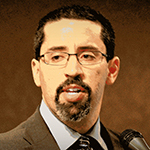
 By Corey Fields
I sometimes attend neighborhood watch meetings. The idea behind such gatherings is a very good one. When neighbors know each other and work together, the neighborhood is stronger and crime rates decrease.
Most folks I encounter are good folks who just want to live a productive life and take all precautions against crime. I have to admit, though, that sometimes it seems there’s an underlying, unspoken agenda detectable in people’s comments and questions: the desire to keep their lives isolated from anyone with whom they care not to associate.
Occasionally, someone will ask a question about what to do about this or that person walking down the sidewalk. The community officer asks, “Have you ever said hello?” Basic friendliness is such a novel idea. But the officer has tried to emphasize that speaking to people you don’t recognize can deter criminals because it shows your ownership in the neighborhood. “Well, no,” comes the response, “I just didn’t think he belonged here.”
While the community officer always encourages the neighbors to call him when they have a concern, they sometimes get these calls of “general suspicion” and he has to explain that one needs a substantive reason for asking an officer to make contact with someone.
In a TED Talk, longtime Baltimore police officer Melvin Russell lamented similar experiences:
There is no way in the world that we, as a community, should be calling the police for kids playing ball in the street. No way in the world that we should be calling the police because my neighbor’s music is up too loud, because his dog came over to my yard and did a number two. We have surrendered so much of our responsibility.
In other words, people just avoid each other anymore and don’t have enough of a relationship with their neighbors that they could comfortably go talk to them about a minor problem. Interestingly, Russell also took a shot at what he sees as a new unfortunate reality among churches:
They have shifted over the last 10, 20 years from being community churches, where you walk outside your door, round the corner and you’re in church. They shifted from that and became commuter churches. So you now have churches who have become disconnected by default from the very community where they’re planted.
Wendy McCaig, a former seminary classmate of mine, directs a community development ministry in Richmond, Va. Years ago, she wrote an article that has stuck with me. She insightfully wonders if many of the things we do to serve our community and help others in need may actually serve as a protection mechanism that keeps us from truly encountering them. Wendy has seen many “service groups” from churches come into poor neighborhoods, and has noticed a pattern:
Some cooked, some shared information about their church, some danced and others shared spiritual messages. However, I am not sure they could tell you the names of eight people who live in Hillside Court, their gifts or their dreams. … We have all heard countless sermons on the importance of “serving” but how many sermons have we heard about “neighboring?”
We all know Jesus said to love our neighbor, but maybe we need to back up. Maybe too few of us even know our neighbor.
An interesting movement has surfaced called “Know Your Neighbor.” It produced a video that begins with people of different faiths and backgrounds sharing some of the strangest questions or comments they’ve received from others. It includes an Egyptian man recounting how someone said to him that he couldn’t possibly be an Egyptian because “Egyptians are extinct.”
It takes courage to know someone who is different from us on a deep level, but that’s also when God seems to work the most transformation in our lives. We must get past fear — the fear of encountering different beliefs, the fear of not knowing what to say, the fear that everyone in a certain people group is out to get us.
Rose Hamid is a 56-year-old flight attendant who lives in North Carolina. She’s the Muslim woman who stood in silent protest at Donald Trump’s Jan. 8 rally in Rock Hill, S.C. She was, for some reason, escorted out. “I come in peace,” her shirt said. In an interview after the incident, she said that she had spent some time with the people around her before the rally, talking, getting acquainted and eating popcorn. When she stood during the rally, some nearby caused a disturbance about her that got the attention of security. As she was escorted out, the people she had met and spoken with were either silent or said, “We’re sorry.” Those who had not spoken with her were the ones shouting at her to get out, go back home, etc.
Things change when we actually know a person, when we can put a face on a label or an issue.
I think of the way New Jersey governor Chris Christie recently surprised many observers with his compassionate approach to drug addicts in a video from a campaign stop in Belmont, N.H. He was making an appeal that we should treat addiction as an illness instead of a crime. He drew from his mother’s addiction to nicotine and a law school friend’s addiction to doctor prescribed pain killers. It’s not so easy to take a hardline approach when it’s a friend or family member.
Twentieth-century Jewish philosopher Emmanuel Levinas said the only thing that really converts people is “the face of the other.”
The Christian call to love our neighbor must involve seeking relationships with people we may only know by their group label. It must involve speaking of others in ways that reflect how they wish to be spoken of and understood. (In some circles, I think that’s known as “political correctness.” If so, we could use more of it.)
The apostle Paul said that God’s entire law can be summed up in the command to love our neighbor as ourselves (Gal. 5:14). In today’s climate, that may be too tall an order. So perhaps we can at least know our neighbor. Say hi. Ask questions. Hear another’s story.
You never know. Our neighborhoods might become safer. We might learn to solve problems together. We might even entertain angels, unaware (Heb. 13:2).